India stands at a defining crossroads. On one side lies a civilization that was once called the “Golden Bird,” the Sone Ki Chidiya, the wealthiest, most self-reliant society the world had ever seen. On the other side lies a fast-globalizing nation whose younger generations can name every trending app, celebrity, and foreign festival, but often draw a blank when asked about their own roots, values, and heritage.
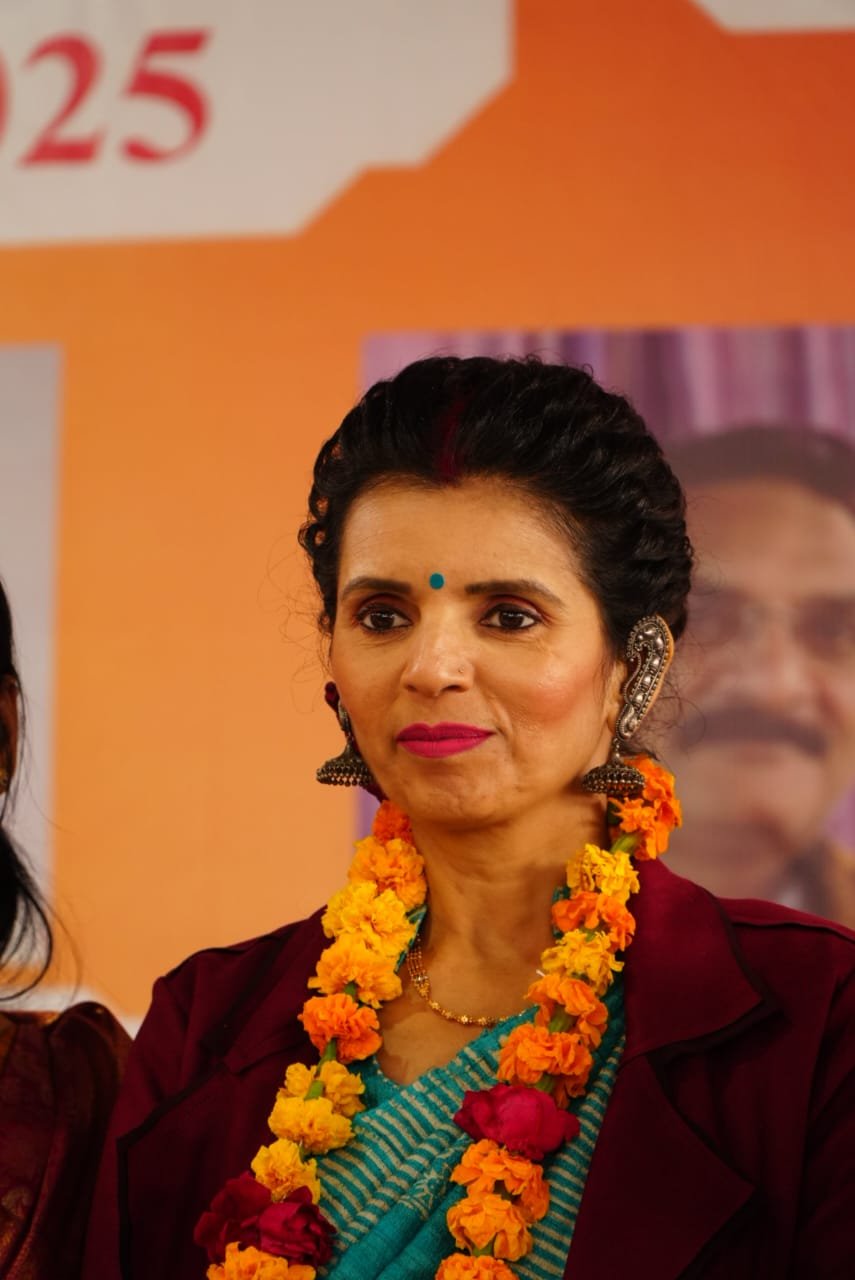
This is precisely the gap the SSS Bharat vision seeks to bridge. Built on three timeless pillars Samruddha (Prosperous), Samarth (Capable), and Sanskrutik (Cultural) SSS Bharat is not just another initiative. It is a movement to rebuild India from its foundations: its villages, its youth, and its cultural identity. Spearheaded through the Sanatan Sanskrutik Sangh under the leadership of entrepreneur and cultural activist Haripriyaa Bharggav, this vision answers one urgent question that every conscious Indian is now asking: How do we build a developed India without losing the soul of India?
In this blog, we explore why the SSS Bharat vision is more relevant today than ever and why it may be one of the most important cultural and developmental conversations of our generation.
The Three Pillars: Samruddha, Samarth, Sanskrutik
At the heart of the SSS Bharat vision are three interconnected ideas. Together, they form a blueprint for a nation that is economically strong, socially empowered, and culturally rooted.
1. Samruddha Bharat: A Prosperous, Self-Reliant India
A Samruddha Bharat is an India that is economically sovereign, where every citizen is self-reliant, and no one is forced to depend on others for survival. This is not merely about GDP numbers or stock market highs. It is about genuine, ground-level prosperity that reaches the farmer, the artisan, the small entrepreneur, and the village household.
The vision draws inspiration from India’s own glorious past. Before colonial rule, India was one of the largest contributors to the world’s GDP. We had our own indigenous systems, our own trade networks, our own knowledge economy. This prosperity was not accidental it was the product of a civilization that valued self-sufficiency, or swavalamban.
Today, the SSS Bharat vision argues, true freedom cannot exist without economic self-reliance. Progress built on borrowed money and external dependency is, in many ways, an illusion of prosperity rather than the real thing. Atmanirbharta, self-reliance, is therefore not a nostalgic idea. It is the modern key to reclaiming India’s rightful place on the global stage.
2. Samarth Bharat: A Capable, Empowered India
A Samarth Bharat is a capable and empowered India, a nation where every young person is connected to their roots and every generation stands firmly on its values.
Capability here means more than skills and degrees. It means inner strength, cultural confidence, and a sense of purpose. A generation that knows its sanskaar, its values, does not bend in any storm. That rootedness becomes a source of resilience, creativity, and leadership.
This pillar places special emphasis on Yuva Shakti (youth power) and Matru Shakti (the power of women and mothers). A truly capable nation empowers both, giving women their rightful role as the transmitters of culture and giving youth the tools to lead with confidence rather than confusion.
3. Sanskrutik Bharat: A Culturally Rooted India
A Sanskrutik Bharat is an India that knows its own identity, where our culture and our values become our greatest strength rather than something we quietly abandon in the race to modernize.
Globalization gave India access to the world but in the exchange, many fear it also chipped away at our sense of identity. The SSS Bharat vision reframes culture not as a relic of the past, but as a living, breathing strength that can power the future.
Together, these three pillars form the foundation of a new national imagination one where economic strength, human capability, and cultural identity reinforce one another instead of competing.
The Need of the Hour: A Generation Losing Its Roots
Perhaps the most compelling case for the SSS Bharat vision lies in what its founders call the “need of the hour.”
Consider this: the responsibility of passing on Indian culture and values to Gen Z and Gen Alpha was meant to rest with the Millennials and Gen X. But somewhere along the way, that transmission broke down. The result is a generation that fluently follows every global trend yet, when asked about its own culture, often comes up blank.
This is not a minor generational quirk. It is described as one of the biggest crises facing India today. Globalization gave us the world, but in doing so, it quietly took away a piece of our identity. A child today may have the latest gadget, the best school fees paid, and a shelf full of achievements, yet lack the one thing that anchors a human being: a clear sense of who they are and where they come from.
The SSS Bharat vision issues a powerful call to every parent, every mentor, and every capable individual:
- Along with school fees, give your children sanskaar (values).
- Along with gadgets, give them identity.
- Along with achievements, give them values.
The message is clear. The unity India needs today will not come from a rally, a banner, or a political slogan. It will come from our homes, our upbringing, and our roots. Real transformation is not top-down; it is built one family, one child, one value at a time.
This is why the vision insists that cultural preservation is not the job of the government alone. It is the shared responsibility of every saksham (capable) person who has achieved something in life and now owes it to the next generation to hand down not just success, but substance.
Rebuilding India from Its Villages Up
One of the most distinctive aspects of the SSS Bharat vision is its unwavering belief that the real strength of a developed India lies in its developed and secure villages.
This is a bold reframing of what “development” means. For decades, progress has been measured by urbanization by how many people leave villages and move to cities. But the SSS Bharat vision flips this narrative. The goal is not to empty out villages, but to make them so prosperous, cultured, and self-reliant (atmanirbhar and sanskaarit) that people return to them with pride, not out of compulsion.
Imagine villages where:
- Livelihoods are strong enough that migration becomes a choice, not a necessity.
- Culture and values are actively nurtured alongside economic growth.
- Young people see their hometown as a place of opportunity and dignity.
For over the past year and a half, this vision has been put into practice through the Sanatan Sanskrutik Sangh, working steadily on the ground in the historically underserved Bundelkhand region through social and religious initiatives aimed at ideal, model rural development (aadarsh gramin vikas).
This village-first approach is not just idealistic; it is strategic. A nation is only as strong as its foundation, and for India, that foundation has always been its gaon (village). Rebuilding the village, therefore, means rebuilding the nation itself.
Unity Beyond Sect: The Sanatan Philosophy at the Core
The cultural engine behind SSS Bharat is the Sanatan Sanskrutik Sangh, and at its philosophical heart lies a profoundly unifying idea.
According to this vision, Sanatan Dharma is not confined to a single sect or religion. It is understood as the shared spiritual foundation that includes the Vedic, Jain, Buddhist, and Sikh traditions all moksha-oriented (liberation-seeking) paths that spring from the same eternal roots. Over time, fragmented interpretations caused these paths to be seen as separate. But the underlying belief here is that they are all expressions of one divine tradition, following the same eternal principles of truth, liberation, and devotion.
The mission, therefore, is to unite and strengthen these dharmic traditions by rising above caste (jaati) and class (varna), bringing people together rather than dividing them. This is captured in the timeless ideal of “Vasudhaiva Kutumbakam”: the world is one family.
The organization champions the protection of five sacred elements that anchor Indian civilization:
- Matru Shakti: the power and dignity of women
- Yuva Shakti: the energy and potential of youth
- Gau: the reverence for the cow and rural economy
- Ganga: India’s sacred rivers and water bodies
- Gaon: the village as the soul of the nation
Alongside these, it emphasizes the protection of the Panch Bhuta, the five elements of nature, placing environmental stewardship at the center of cultural life. In an age of climate anxiety, this integration of ecology and spirituality feels remarkably ahead of its time.
Through initiatives like the Sanatan Ekta Yatra and Sanatan Raksha Yatra, the movement has brought together saints, religious leaders, and cultural figures across these traditions, emphasizing national unity, interfaith dialogue, women’s empowerment, and youth participation in preserving India’s heritage.
Learning from History: Why Self-Reliance Matters
The SSS Bharat vision is deeply informed by a clear-eyed reading of history. Understanding why India declined is essential to understanding why this vision matters now.
The decline of the “Golden Bird” was not accidental. Before colonial rule, India commanded one of the largest shares of the world’s GDP, powered by its own indigenous systems, its own trade, its own knowledge, its own self-sufficient economy. What followed was a systematic deconstruction of these systems, deliberately dismantling India’s self-reliance and creating deep economic dependency.
The most dangerous part, the vision warns, is that over time we began to mistake that very dependency for modernization. We started celebrating progress built on borrowed foundations, confusing the illusion of prosperity for the real thing.
The lesson is unmistakable: real freedom is impossible without self-reliance. Knowing your own legacy is not an exercise in nostalgia; it is protection against living inside someone else’s narrative. As the vision powerfully puts it, a person who does not know their own history ends up living according to someone else’s story.
This is why cultural awareness and economic self-reliance are treated not as separate goals, but as two sides of the same coin. A rooted, confident India is naturally a self-reliant India.
The Roadmap: Education, Culture, and the Next Generation
A vision is only as strong as its execution. The SSS Bharat movement translates its ideals into concrete, forward-looking action with a special focus on education and youth.
One of the most significant future initiatives is the creation of Vedic Pathshalas, educational institutions dedicated to teaching the Vedas, Puranas, Sanskrit, and traditional values to children. Beginning in Bundelkhand and expanding across India, these schools are designed to nurture the next generation with strong cultural foundations, ensuring that children grow up rooted in authentic knowledge rather than distorted interpretations.
The movement also embraces modern media and digital platforms to reach young audiences. From devotional compositions like the Sanatan Song (available on major streaming platforms) to cultural awareness programs, cultural feature films rooted in Indian values, and an active social media presence, the vision recognizes a simple truth: to reach a generation that lives online, culture must speak the language of the times. This also creates space for modern Indian cinema to become a meaningful medium for presenting Indian values and cultural narratives to contemporary audiences.
This blend of ancient wisdom and modern medium is what makes the SSS Bharat vision so relevant today. It doesn’t ask young people to abandon the modern world it asks them to enter it with a strong sense of self.
The founding belief captures it beautifully: “When the roots of a tree are strong, no storm can bring it down, and when the roots of our culture are deep, no force can weaken our identity.”
Why This Vision Matters Right Now
So why does India need the SSS Bharat vision today and not tomorrow?
Because the window is closing, every year that passes without deliberate cultural transmission is a year in which another cohort of children grows up disconnected from their heritage. Every year of unchecked, migration-driven urbanization hollows out another set of villages. Every year of celebrating dependency as development pushes true self-reliance further away.
The SSS Bharat vision matters today because it addresses three of India’s most pressing challenges at once:
- An identity crisis among Gen Z and Gen Alpha, who risk becoming culturally rootless in a globalized world.
- An economic dependency that masquerades as modernization while undermining genuine self-reliance.
- A hollowing of rural India, where villages are emptied rather than empowered.
By weaving together prosperity, capability, and culture, SSS Bharat offers not just a critique of what’s wrong, but a constructive, hopeful roadmap for what’s possible. It reminds us that a developed India and a cultured India are not competing goals; they are the same goal.
Conclusion: The Sankalp for a New Bharat
The SSS Bharat vision is, at its core, a sankalp, a solemn resolve to rebuild India into a nation that is once again Samruddha, Samarth, and Sanskrutik.
It is a call to remember that the true strength of a nation lies not only in its economy or its infrastructure, but in the values passed from one generation to the next, in the vitality of its villages, and in the pride a people take in their own identity.
This is not the work of any single leader, organization, or government. It is a shared responsibility of every parent, every mentor, every capable and saksham individual who wishes to see India rise without losing itself in the process.
The Golden Bird can fly again. But only if we choose to give it strong roots.
Hamara vision. Hamara sankalp. Saath chaliye. Our vision. Our resolve. Let’s walk together.