Some of my most vivid childhood memories from Lalitpur are not of classrooms but of gatherings. The Ramlila grounds in the days before Dussehra, where the whole town assembled night after night to watch boys from our own mohallas become Rama and Lakshmana. The village melas where bangles, sweets, folk songs, and wrestling bouts shared the same dusty field. The kathas and kirtans where three generations of a family sat on the same durrie, the grandmother explaining to the grandchild what the storyteller meant.
Nobody called these “cultural preservation programs.” Nobody wrote reports about their “impact.” Yet I can say with certainty: those gatherings taught me more Ramayana than any textbook, more music than any syllabus, and more belonging than any lecture on unity ever could. Long before I understood the word sanskriti, I had experienced it because someone, every year, took the trouble to organize an event.
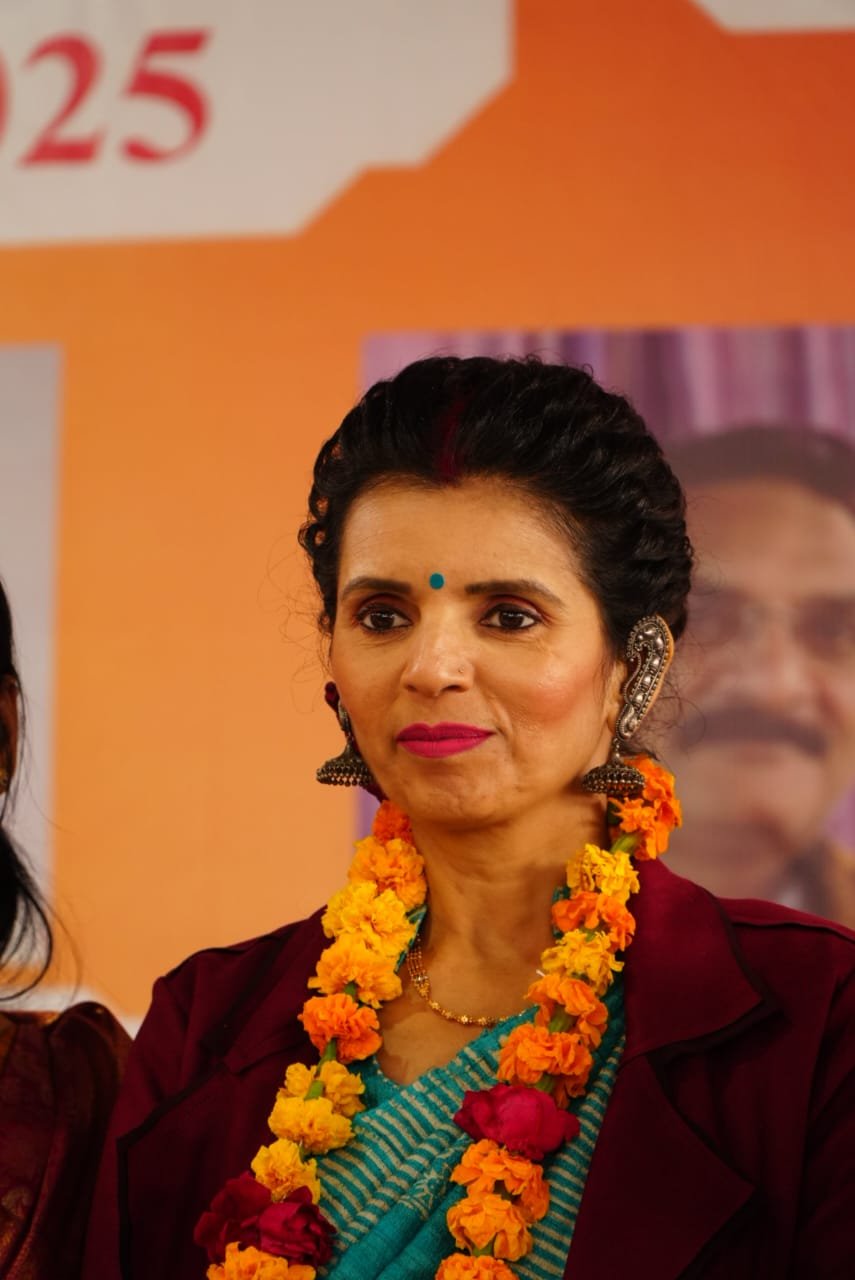
Today, as Chairperson of the Sanatan Sanskrutik Sangh, organizing cultural events has become a central part of my life’s work. Through these initiatives, I have also witnessed how such gatherings play a vital role in promoting Sanatan Dharma by bringing people together to experience its values, traditions, and timeless wisdom. This journey, which has shaped my vision and work, has been deeply connected with the efforts of Haripriyaa Bharggav in encouraging cultural awareness and preserving the spirit of Bharat’s heritage. And I have come to a firm conclusion, which this blog will explain: cultural events are not decoration around the work of preserving Indian traditions; they are the work. A tradition that is only written down is archived; a tradition that is celebrated together is alive. Let me show you why.
Culture Is Not Read It Is Performed
Here is a truth our civilization understood profoundly: culture is not primarily information. It is experience, habit, emotion, and memory and none of these can be transmitted through text alone.
You can read a hundred pages about Holi and understand less than a child who has played it once. You can study the Ramayana academically for years and be moved less than a villager watching Bharat fall at Rama’s feet on a Ramlila stage. Our traditions were designed to be performed, tasted, worn, sung, danced, and shared, absorbed through all five senses at once, in the company of others. That is why our ancestors, who preserved the Vedas syllable-perfect for millennia, never relied on manuscripts alone. They embedded the culture in a living calendar of utsavs, vrats, melas, yatras, kathas, and sanskaras, so that even a person who never read a single book would still receive the entire tradition simply by participating in community life, year after year.
This is the genius that modern preservation efforts often miss. A museum preserves objects; an archive preserves texts; but only an event preserves practice. And a tradition survives exactly as long as it is practised, not a day longer.
The Four Pillars, Activated Together
I often speak of the four pillars of Bharatiyata Indian-ness: Bharatiya Bhasha (our languages), Bharatiya Bhusha (our dress), Bharatiya Bhojan (our food), and Bharatiya Bhajan (our music and devotion). Now notice something remarkable: a well-organized cultural event activates all four pillars simultaneously, and no other instrument of preservation can do this.
At a Janmashtami utsav or a Navratri garba, the announcements, songs, and prayers flow in our own bhasha, teaching children words no English-medium school will ever teach them. Families arrive in their finest traditional bhusha the saree, the dhoti, the lehenga, the pagdi and the young discover that their own attire carries a beauty and dignity no imported fashion can match. The prasad and the community feast serve bhojan rooted in our regional food heritage. And the entire gathering rises on bhajan the kirtans, the aartis, the folk songs, the classical performances that carry our ragas from one generation’s throat to the next.
One evening’s event, four pillars strengthened at once. Multiply that by the hundreds of festivals in our calendar and the lakhs of villages and mohallas that celebrate them, and you begin to see the true scale of the preservation machinery our ancestors built, disguised, brilliantly, as celebration. Our festival calendar is not a holiday list. It is a curriculum, and every event is a class in which the whole community enrols without ever feeling taught.
The Great Gatherings: Bharat’s Genius for the Mega-Event
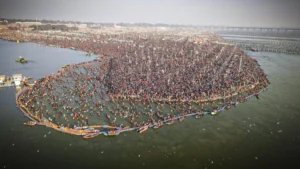
If anyone doubts the power of events to preserve civilization, let them look at the Kumbh Mela, the largest gathering of human beings on earth. Crores of people, assembling at the appointed confluence at the appointed time, following a rhythm our tradition has maintained for thousands of years, without invitation cards, without advertising, drawn by nothing but shraddha. Sadhus from remote Himalayan caves, householders from every state, scholars, seekers, and the simply curious all converge, and for those weeks the entire spiritual and cultural wealth of Bharat is on display in one place: every sampradaya, every school of philosophy, every style of devotion. A young person who spends three days at the Kumbh receives a darshan of their civilization’s vastness that thirty years of schooling cannot provide. The Kumbh is not merely an event in our culture; it is our culture, holding an assembly of itself.
And history shows that our leaders understood the strategic power of the public event. When Lokmanya Tilak sought to awaken national consciousness under colonial rule, what did he do? He did not only write editorials; he transformed Ganesh Utsav from a household observance into a grand public festival, and suddenly lakhs of Indians had a legitimate space to gather, organize, sing, and remember who they were. The Swadeshi movement of 1905 likewise moved the nation not through pamphlets alone but through public acts and gatherings where the community’s resolve became visible to itself. The lesson is permanent: when a culture assembles, it awakens. Durga Puja pandals in Bengal, Ganesh mandals in Maharashtra, Ramlila committees across the Hindi heartland, temple utsavs in the South, Bihu and Onam and Pongal and Lohri in their regions each is a recurring engine that re-charges the community’s cultural battery every single year.
And beyond the public festivals stands another quiet category of events our tradition perfected: the sanskaras, the sixteen sacred ceremonies that mark a life from birth to final farewell. The naamkaran, the annaprashan, the vidyarambh, the vivah each is, in essence, a cultural event convened by a family, at which relatives gather, rituals are performed, mantras are heard, blessings flow, and one more life is formally woven into the fabric of the tradition. When families perform these fully, not as rushed formalities but as true gatherings with meaning, explained, every wedding and every naming ceremony becomes a preservation event, teaching an entire extended family its own heritage from the inside.
Events Build the Unity That Rallies Cannot
I have said many times that the unity Bharat needs will not come from any rally or banner it will come from our homes, our sanskars, our roots. Cultural events are where those roots intertwine into a forest.
Watch what happens at a true cultural gathering. The businessman and the labourer stand in the same aarti line. Children of every community dance the same garba. At the community bhandara, everyone eats the same prasad sitting on the same ground. Hierarchies that divide us on ordinary days dissolve in the shared experience of celebration. This is unity that no speech can manufacture because it is not argued; it is experienced.
This conviction is the very foundation of the Sanatan Sanskrutik Sangh‘s flagship initiatives. Through the Sanatan Ekta Yatra and the Sanatan Raksha Yatra, we have brought saints, religious leaders, and cultural figures of the Vedic, Jain, Buddhist, and Sikh traditions onto shared platforms, living demonstrations of my deepest belief that all these moksha-oriented dharmic streams flow from one eternal Sanatan source. We are all Sanatani. But here is the point: I could write that sentence in a hundred articles and move fewer hearts than one evening where people actually see a Jain muni, a Buddhist bhikkhu, a Sikh granthi, and a Vedic acharya seated together, honouring one another. The event is the argument. When unity is witnessed, it becomes undeniable, and when it is witnessed by thousands, it becomes a movement. Our yatras deliberately champion Matru Shakti and Yuva Shakti, supporting the spirit behind women’s empowerment initiatives that encourage women to participate actively in social, cultural, and community leadership. They also carry the message of protecting Gau, Ganga, Gaon, and the Panch Bhuta because an event is also the most powerful stage from which a society announces its priorities to itself.
The Economics of Celebration: Feeding the Keepers of Tradition
There is another dimension of cultural events that is rarely discussed but absolutely vital: they are the economic lifeline of our tradition-bearers.
Ask yourself: who earns when a festival is celebrated on a grand scale? The murti-kaar who sculpts the vigraha. The phool-wala and the mandap decorator. The folk singers, dhol players, and classical artists who perform. The weavers whose sarees are bought for the occasion. The halwais, the bangle-sellers, the puja-samagri shops, the mela stallholders. An entire ecosystem of traditional skills, many of them passed down within families for centuries is funded, year after year, by our calendar of celebrations. The utsav is the annual salary of the sanskriti.
This is why the fading of an event is never just a loss of festivity it is unemployment for the keepers of tradition, and within a generation, the extinction of their craft. A Ramlila that stops is not one cancelled show; it is the end of the local families who made the costumes, played the instruments, and carried the dialogues in memory. Conversely, every event we revive or strengthen re-employs the tradition’s guardians. When we organize cultural programs, when we choose handloom for the festival, when we hire folk artists instead of a DJ, when a mela is patronized generously, we are not spending on entertainment; we are investing in the supply chain of our civilization. Culture survives where its practitioners can feed their children with dignity.
Bringing the Youth to the Utsav and the Utsav to the Youth
The greatest challenge of our time, which I have called the need of the hour, is that Gen Z and Gen Alpha are growing up fluent in global trends and blank about their own sanskriti. Cultural events are, I am convinced, our single best answer to this crisis for three reasons.
First, events speak the youth’s language: experience. This generation may resist sermons, but it hungers for experiences and our traditions, presented as living events, are the most immersive experiences on earth. The same youngster who yawns at a lecture on heritage will dance all nine nights of Navratri, queue for hours at a grand pandal, and travel across the country for the Kumbh. The door to a young heart is not instruction; it is invitation.
Second, events give youth a role, not just a seat. The moment a young person moves from spectator to participant, playing a part in the Ramlila, organizing the mandal, performing the bhajan, managing the seva counter, the tradition stops being their parents’ property and becomes their own. Every cultural event is a leadership school in disguise, and youth who organize their culture will defend their culture.
Third, events now extend into the digital world, where our youth already live. A single utsav, thoughtfully shared on reels, the live streams, the stories behind the rituals can reach lakhs who never attended. This is why the Sanatan Sanskrutik Sangh pairs every ground event with digital outreach, and why our devotional and cultural content, from the Sanatan Song to our video initiatives, is designed to travel where the young scroll. The physical event creates the flame; the digital event carries the light. Neither is complete without the other, and organizers who ignore this pairing are preserving culture for an audience that is no longer looking.
What My Own Journey Has Taught Me
Let me add a few lessons from personal experience because our work at the Sangh, and even our creative ventures, have all revolved around the power of the organized gathering.
When we released our Hindi feature film built on five stories of Sanatan values across nearly seven hundred theatres in eleven states, we consciously treated every screening not as a commercial show but as a small cultural event reaching out to rural and single-screen audiences, and offering gifts to three viewers at every show so that celebration and seva walked together. This approach reflected the spirit of spiritual philanthropy, where cultural initiatives become a means of service, connection, and spreading values beyond individual benefit. The response taught me that people do not merely want to consume culture; they want to gather around it. The same story watched alone on a phone and watched together in a packed single-screen hall are two different experiences, and only the second one builds community.
Our yatras taught me that an event’s afterlife matters more than its attendance. The saints who shared a stage continued their dialogue afterwards; the volunteers who organized together became lifelong workers for the mission; the towns through which a yatra passes remain stirred long after it moves on. A good cultural event is a stone thrown in still water; the gathering is the splash, but the preservation happens in the ripples.
And every event has reaffirmed my founding belief: people are not indifferent to their heritage; they are simply waiting for someone to create the occasion. Build the platform, and Bharat arrives with its whole heart.
A Gentle Charge to Every Reader
So let me end not with a summary but with an invitation because this subject, more than any other, demands participation over agreement.
Organize something. It need not be grand. A monthly katha in your society’s common hall. A proper Ramlila or utsav in your mohalla instead of a token one. A festival celebrated fully at home, with children given roles and explanations, and neighbours invited in. A local mela supported generously; a folk artist hired for your family function; a classical concert attended with your teenager. If you are an entrepreneur, sponsor the town’s cultural calendar the way you would sponsor anything else that builds your community’s future because it does. This spirit reflects the growing importance of social entrepreneurship in India, where individuals and organizations create meaningful social impact by supporting communities, traditions, and sustainable development. If you are a parent, remember that one festival experienced wholeheartedly will root your child more deeply than a hundred instructions. And wherever you gather, gather across boundaries; invite the streams of our one Sanatan river to flow together, as our yatras do.
Our ancestors did not preserve this civilization by mourning for it. They preserved it by celebrating it relentlessly, beautifully, together, every single year for thousands of years. The diya was passed hand to hand at gatherings, not in silence. That is still the way. When the roots of a tree are strong, no storm can bring it down, and every cultural event we organize is another day spent watering the roots, in the company of the whole family of Bharat.
Let the utsav continue. Let the yatra never stop.
Jai Sanatan. Jai Bharat.