In many Indian villages, the most important export is still people. Young men and women board trains and buses to distant cities, leaving behind fields, families, and homes. They go not out of ambition, but because there is no work at home.
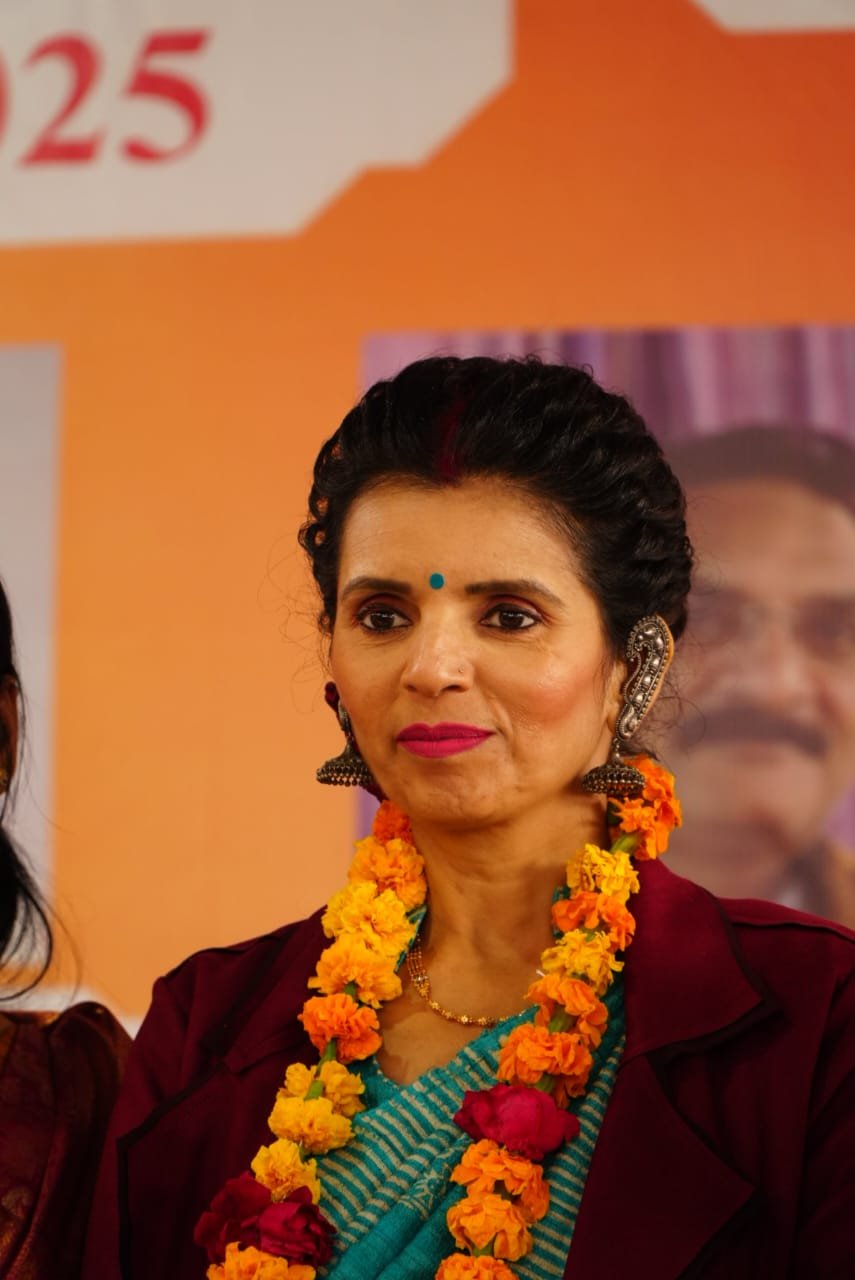
Haripriyaa Bharggav wants to reverse that journey. Her vision of SSS Bharat, an India that is Samruddha (prosperous), Samarth (capable), and Sanskrutik (culturally rooted), rests on one conviction: the real strength of a developed India lies in developed, secure villages. In her words, the goal is to build self-reliant, values-rich villages that people leave not out of compulsion but return to with pride.
The key to that transformation is not charity, and not even employment schemes alone. It is local entrepreneurship: businesses born in the village, owned by the village and serving markets far beyond it. This article looks at why that matters, what the data shows, and how SSS Bharat is putting it into practice.
Why Villages Empty Out: The Bundelkhand Story
Few regions show the cost of a missing local economy more clearly than Bundelkhand, the region Haripriyaa Bharggav calls home.
Spread across 13 districts of Uttar Pradesh and Madhya Pradesh, Bundelkhand has long been prone to drought. The drought of 2016 was the 13th to strike the region in 15 years. Distress migration rose sharply in those years. In 2018, a Bundelkhand Jal Manch study of about 200 villages found that up to 55% of the region’s farmers had migrated at least temporarily since the previous November, most of them aged between 15 and 45.
Researchers studying the region keep reaching the same conclusion: people leave because villages do not offer enough economic opportunity. When farming is the only livelihood, and the rains fail, the household has nothing else to fall back on.
This is a classic case of the curative-only approach that SSS Bharat warns against. Relief arrives after the crisis. The preventive answer is to build diversified local economies before the next drought, so that a failed season does not empty a village.
The Opportunity: Rural India Is Where the Growth Is
The good news is that rural India is no longer an economic afterthought. It is a growth engine.
Consumption. According to NielsenIQ, rural FMCG consumption grew faster than urban for the eighth quarter in a row in October–December 2025. The same research found that small manufacturers continued to grow volumes faster than large players. Local demand is real, and small enterprises are well placed to serve it.
Women-led enterprise. India’s rural women are proving what local entrepreneurship can achieve at scale. The Ministry of Rural Development told Parliament in July 2026 that over 3.46 crore Self-Help Group members had reached “Lakhpati Didi” status by 31 March 2026. A Lakhpati Didi is an SHG member earning at least ₹1 lakh a year on a sustainable basis. The government is now working towards a target of 6 crore. Around 10 crore rural households have been organised into about 92 lakh SHGs under DAY-NRLM.
The building blocks of village enterprise are already in place: demand, organisation and a proven appetite for entrepreneurship. What many villages still lack is the link that turns these into durable businesses. That link is capital, mentorship, market access and leadership.
Why Local Entrepreneurship, Not Just Local Jobs
There is an important difference between bringing jobs to a village and building enterprise within it.
A factory that hires local labour creates income, but decisions, profits and growth stay elsewhere. When villagers own the enterprise, the economics change:
- Money circulates locally. Each rupee earned is spent again in the same economy, at the local shop, tailor or school.
- Skills compound. Artisans become managers, managers become founders, and founders train the next generation.
- Resilience increases. A village with several livelihoods, such as crafts, food processing, dairy, digital services and tourism, can withstand a failed monsoon far better than one that depends on a single crop.
- Dignity returns. Ownership restores the self-respect that distress migration takes away.
This is swavalamban, self-reliance, which is the heart of a Samruddha Bharat.
Proven Indian Models of Local Enterprise
India does not need to import a model for village entrepreneurship. It already has several.
Lijjat Papad: decentralised production, shared ownership
On 15 March 1959, seven women on a terrace in Mumbai’s Girgaum borrowed ₹80 from social worker Chhaganlal Karamsi Parekh to start a papad business. It grew into a cooperative of around 45,000 member-sisters across more than 80 branches in 17 states. It exports to more than 25 countries and has an estimated annual turnover above ₹1,600 crore, with no institutional equity and no debt-funded expansion.
Its structure is a lesson for village enterprise. The organisation keeps only 2% of profits for its own expenses and distributes the rest among members three times a year. As it grew, kneaded flour was sent to members’ homes, so production could happen where the women lived. That decentralised, home-based model is exactly what villages need.
One District One Product: building on local strengths
Uttar Pradesh launched One District One Product (ODOP) on 24 January 2018 to identify and support one signature product in each of its 75 districts. In Bundelkhand, Jhansi’s product is soft toys and Lalitpur’s is zari silk sarees. Researchers who studied export performance in Jalaun, Jhansi and Lalitpur concluded that ODOP has strong potential to raise exports from these districts.
The principle is simple and powerful. Every village and district has something it does better than anywhere else. Local entrepreneurship starts by finding that strength and building around it.
The SSS Bharat Model in Action
Haripriyaa Bharggav’s approach to village self-reliance combines the social reach of the Sanatan Sanskrutik Sangh with the business capabilities of her enterprises.
The Total Village Development Programme (TVDP). The Sangh’s flagship rural initiative is being rolled out across Bundelkhand and other parts of northern India. It aims to:
- improve access to healthcare;
- bring better education to villages;
- build varied self-reliance initiatives;
- spread awareness of Sanatan cultural values.
The goal is to turn villages into resilient centres of prosperity, ethics and harmony.
Enterprise built for rural India. Several of her group’s ventures are designed around village economies:
- Bhusattva, an organic fashion and agro brand, revives traditional weaving techniques and exports artisan products to 23 countries.
- Information technology: the group’s IT work on e-Seva, e-Mitra and e-Gram projects connects more than 17,000 villages across Madhya Pradesh, Gujarat and Maharashtra to digital services.
- Waste management and agro-biotech: this vertical focuses on renewable resources and agricultural innovation to improve farmers’ livelihoods.
Rooted in community. The Sangh’s Gau Shala initiatives, Nirmal Ganga Safai Abhiyan and education and health camps reflect a view of development where economic, social and environmental wellbeing grow together. In Haripriyaa Bharggav’s view, the traditional joint family was itself a self-sustaining economic system of shared resources, wisdom and responsibility. A self-reliant village extends that same logic to the whole community.
Five Building Blocks of a Self-Reliant Village Economy
Drawing on these models and the SSS Bharat philosophy, five principles stand out for anyone who wants to build village enterprise that lasts.
1. Start with local strengths
Identify what the village already does well, whether a craft, crop, skill, or cultural tradition, and build enterprise around it rather than importing an idea that doesn’t fit.
2. Put women at the centre
The Lakhpati Didi numbers and the Lijjat model both show the same thing. When women own and run rural enterprises, income stays in the household and is reinvested in children, health and education.
3. Connect villages to markets
A great product without a buyer is not a business. Digital platforms, e-commerce, exhibitions and corporate procurement can link village producers directly to urban and global customers.
4. Add value locally
Selling raw produce keeps villages poor. Processing, packaging, branding and design should happen in the village, so the higher-margin work and the jobs it creates stay there.
5. Treat culture as an economic asset
Handlooms, crafts, festivals, cuisine and heritage sites are not just traditions. They are the basis of a Sanskrutik economy, including artisan exports and cultural tourism, that no factory elsewhere can copy.
The Role of India’s Business Leaders
SSS Bharat names a paradox at the heart of India’s development. Many of the people with the most capability, those with resources, knowledge, networks, and influence, are not active in rural transformation. Those with the least capability are left to carry it.
For business leaders, there are practical ways to close that gap:
- Adopt a cluster: mentor and support a village craft or producer group over several years, not just one event.
- Buy local: include rural enterprises and SHGs in your supply chains and corporate gifting.
- Invest patiently: back rural start-ups and producer companies with capital that expects returns over the long term rather than quick exits.
- Share expertise: give time in finance, branding, technology, and governance, which village enterprises rarely have access to.
Conclusion: When Villages Prosper, Bharat Prospers
India was once a land where, as the SSS Bharat vision puts it, the smallest person in the smallest village could be as prosperous as anyone in the city. The divide between urban and rural is not destiny. It is the result of choices, and new choices can reverse it.
Local entrepreneurship is the most powerful of those choices. It turns migrants into makers, consumers into owners, and villages into centres of opportunity. Combined with cultural pride and community values, it delivers what SSS Bharat stands for: villages that are Samruddha, Samarth and Sanskrutik.
Haripriyaa Bharggav’s call is addressed to everyone with the capacity to help:
“प्रत्येक सक्षम, प्रत्येक सफल, प्रत्येक सनातनी को आमंत्रण है — निष्क्रिय से सक्रिय बनो।” (Every capable person, every successful individual, every Sanatani is invited to move from passive to active.)
The next great Indian enterprise may well be started in a village. The question is whether India’s capable people will help build it.
To partner with the Sanatan Sanskrutik Sangh’s Total Village Development Programme or learn more about SSS Bharat, visit the Contact page.
Frequently Asked Questions
What is a self-reliant village?
A village with diversified local livelihoods, local ownership of enterprise, and access to healthcare, education, and markets, so residents can prosper without being forced to migrate.
Why is local entrepreneurship important for rural development?
Locally owned enterprises keep income, skills and decision-making within the village. That builds resilience against shocks such as drought and reduces distress migration.
What is the Lakhpati Didi initiative?
A Government of India initiative under DAY-NRLM that helps Self-Help Group women earn at least ₹1 lakh a year on a sustainable basis. Over 3.46 crore women had reached the mark by March 2026, against a target of 6 crore.
What is the Total Village Development Programme (TVDP)?
The Sanatan Sanskrutik Sangh’s rural initiative in Bundelkhand and northern India. It focuses on healthcare, education, self-reliance and cultural awareness to make villages prosperous and resilient.
How does SSS Bharat support village entrepreneurship?
SSS Bharat, led by Haripriyaa Bharggav, sees developed villages as the foundation of a developed India. It promotes local enterprise, women’s leadership and cultural assets as the basis of village self-reliance.