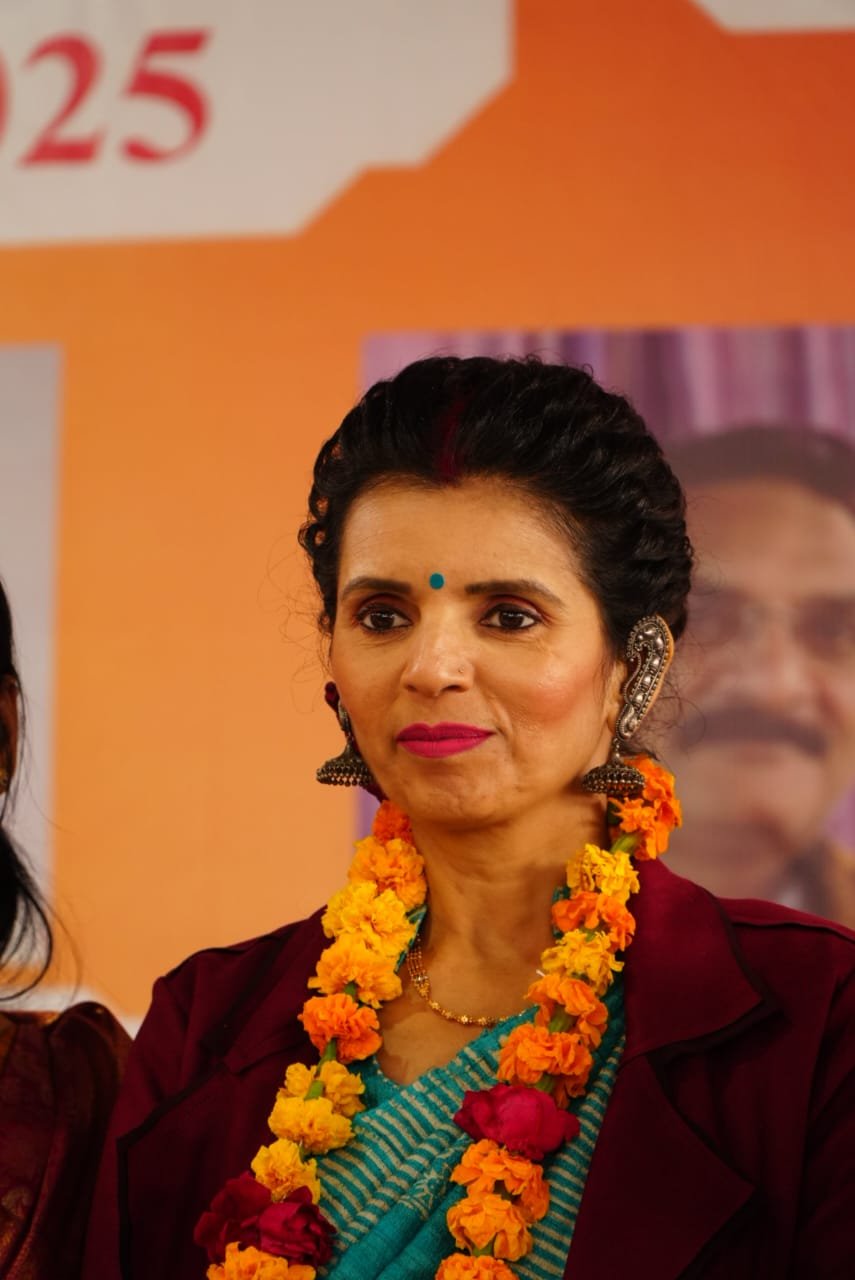
India’s startup landscape has undergone a remarkable transformation over the last decade. What was once an overwhelmingly male-dominated arena is steadily being reshaped by women entrepreneurs who are not only building profitable businesses but redefining what leadership, purpose, and value creation look like in the Indian context. From fintech and e-commerce to media, real estate, and cultural enterprise, women founders across the country are stepping out of the margins and into boardrooms, building companies that blend commercial ambition with social responsibility.
This shift is not incidental. It is the product of improved access to education, growing digital infrastructure, more inclusive funding conversations, and a new generation of women who are unwilling to separate their professional goals from their personal values. Among the many stories emerging from this movement is that of Haripriyaa Bharggav, an industrialist from Bundelkhand who built a business empire spanning 11 distinct verticals while simultaneously leading a cultural revival movement called SSS Bharat. Her journey is a striking example of how women founders in India are increasingly building enterprises that serve both economic and civilizational goals proof that entrepreneurship and cultural stewardship are not mutually exclusive.
In this piece, we explore the larger story of women-led entrepreneurship in India, the systemic barriers that are slowly being dismantled, and how leaders like Haripriyaa Bharggav are expanding the very definition of what a “founder” can be.
The Changing Face of Indian Entrepreneurship
For decades, the archetype of the Indian entrepreneur was narrowly defined as typically male, urban, and operating within a handful of well-trodden sectors like manufacturing, trading, or technology. Women who wanted to build something of their own often had to navigate a landscape with limited access to capital, informal mentorship networks that excluded them, and social expectations that treated business ambition as secondary to domestic responsibility.
That picture has changed considerably. According to various industry reports over the past few years, India now counts tens of thousands of women-led startups, with women founders present across nearly every major sector from agri-tech and healthtech to D2C brands, media, and financial services. Government-backed initiatives, dedicated women-focused venture funds, and startup incubators with gender-inclusive mandates have all played a role in this shift. Equally important has been the rise of digital platforms that lower the barrier to entry: a woman in a tier-2 or tier-3 city today can launch a content brand, an e-commerce venture, or a service business with just a smartphone and an internet connection.
But numbers alone don’t tell the full story. What’s genuinely interesting is how women founders are building. Many are not simply replicating existing business models; they are integrating community impact, sustainability, and cultural relevance into their core business thesis. This is where the story of entrepreneurs like Haripriyaa Bharggav becomes particularly instructive.
From Bundelkhand to Mumbai: The Haripriyaa Bharggav Story
Haripriyaa Bharggav’s journey begins far from the boardrooms of Mumbai, in Lalitpur, a district in the historically underdeveloped Bundelkhand region of Uttar Pradesh. She completed her early education locally, went on to earn a Bachelor’s degree, a Master of Arts, and eventually a Bachelor of Laws, a foundation that reflected a deep, early commitment to service and justice. In fact, her professional life began not in business but in public service: she worked briefly providing legal guidance to underprivileged women, and later served as a sub-inspector in the Lalitpur Police Department.
It would have been easy to stay within the boundaries of that path. Instead, she chose to step away from government service and pursue a larger, less predictable vision. Her early career included stints in a missionary education centre and as a television newsreader, experiences that shaped both her communication skills and her understanding of how knowledge and narrative shape society.
Her move to Mumbai marked the beginning of her entrepreneurial chapter. She started in the corporate sector, gaining experience at a major bank, before beginning her own entrepreneurial journey in 2012 with a modest content creation venture. What followed was a period of significant personal adversity: a serious spinal injury that confined her to a hospital bed for well over a year, followed by a cancer diagnosis at the age of thirty-two. Her recovery, spanning years of surgery and treatment, could have ended her ambitions. Instead, by her own account, it deepened her resolve. By 2020, she had rebuilt her professional life to become the founder and owner of multiple companies.
Today, Haripriyaa Bharggav leads ventures across finance, media, real estate, technology, textiles, film production, and international business, with an entrepreneurial footprint that now spans 11 distinct verticals. Her firm, Howeells Ventures LLP, operates as an investment and private equity management company, while its subsidiary Ubon Vision Pvt. Ltd. has built a presence across multiple Indian cities and international markets, including London, Dubai, Singapore, and New York.
Building Business With a Civilizational Purpose
What sets Haripriyaa Bharggav’s story apart from a purely commercial success narrative is the way she has fused entrepreneurship with cultural and social mission. As Chairperson of the Sanatan Sanskrutik Sangh (SSS), she has spent recent years channeling her business acumen and personal resources toward a large-scale cultural revival effort she calls SSS Bharat, a vision built around three pillars: Samruddha Bharat (economically sovereign), Samarth Bharat (empowered and capable), and Sanskrutik Bharat (culturally rooted).
The premise behind SSS Bharat is straightforward but ambitious: that India’s long-term prosperity cannot be built on borrowed economic models or imported cultural values alone. Instead, it must draw on indigenous systems of knowledge, self-reliance (Swavalamban), and a renewed sense of cultural identity among younger generations. This is, in many ways, a distinctly entrepreneurial way of thinking about nation-building, treating cultural continuity itself as an asset to be preserved, invested in, and passed on.
Through SSS, Haripriyaa Bharggav has organized more than two dozen large-scale public initiatives over the past year and a half alone: yatras (processions) promoting unity across Vedic, Jain, Buddhist, and Sikh traditions, women-led kalash yatras celebrating the divine feminine, river-cleaning drives along the Ganga, cow protection programs, education and health camps in rural Bundelkhand, and the launch of Vedic Pathshalas aimed at teaching Sanskrit and traditional knowledge to younger generations. She has also produced a Hindi feature film exploring themes of Indian culture and human values, released across hundreds of theatres in multiple states.
For a founder to operate simultaneously as an industrialist managing a multi-vertical business empire and as the architect of a nationwide cultural movement is unusual, but it reflects a broader pattern increasingly visible among India’s women entrepreneurs: the refusal to treat business success and social purpose as separate tracks.
Why Women Founders Are Rewriting the Rules
Haripriyaa Bharggav’s story illustrates several broader trends worth examining in India’s women-led entrepreneurship movement.
1. Purpose-Driven Business Models
Increasingly, women founders in India are not building companies purely around profit maximization. Many integrate a clear social or cultural thesis into their business model from day one, whether that’s sustainability, community development, education, or heritage preservation. This isn’t a marketing overlay; it often shapes core strategic decisions, from where a company chooses to operate (rural versus urban) to what kind of partnerships it pursues.
2. Diversification as Resilience
Rather than staying within a single industry, many women entrepreneurs, much like Haripriyaa Bharggav’s 11-vertical portfolio spanning finance, media, textiles, real estate, and technology, are building diversified enterprises. This diversification often functions as a resilience strategy, allowing founders to weather sector-specific downturns while creating multiple channels for community impact and employment generation.
3. Rural and Semi-Urban Focus
A significant share of new women-led ventures are choosing to operate in or serve tier-2, tier-3, and rural markets rather than exclusively metro-centric audiences. Programs like SSS Bharat’s Total Village Development Programme, which aims to bring healthcare, education, and self-reliance initiatives to villages across Bundelkhand and neighboring states, reflect a growing recognition that India’s next wave of economic growth and social transformation will be decided in its villages and smaller towns, not just its metros.
4. Personal Resilience as a Business Asset
Many women founders in India have built their ventures while navigating significant personal adversity, health crises, financial setbacks, social resistance, or the dual burden of professional and domestic responsibility. Haripriyaa Bharggav’s own account of rebuilding her career after a severe spinal injury and a Stage III cancer diagnosis is not an isolated story; resilience narratives are common among women entrepreneurs who have had to fight harder than their male counterparts simply to be taken seriously in business circles.
5. Media and Narrative as a Growth Lever
Women founders are also proving especially adept at using media, content, and storytelling as tools for brand-building and mission advocacy. Haripriyaa Bharggav’s own background in media she worked as a television newsreader before her entrepreneurial career is reflected in her ventures’ emphasis on film, digital content, and public campaigns as vehicles for both business growth and cultural messaging.
The Structural Barriers That Remain
None of this is to suggest that the path is now easy. Women entrepreneurs in India continue to face structural obstacles that their male counterparts rarely encounter to the same degree.
Access to capital remains disproportionately difficult. Despite the rise of women-focused funds, studies consistently show that women-led startups receive a smaller share of both the volume and value of venture funding compared to male-led ventures. Investors, whether consciously or not, often apply different risk assessments to women founders, particularly around long-term commitment, given assumptions about family responsibilities.
Network access is another persistent gap. Much of startup fundraising and deal-making in India still happens through informal networks, alumni circles, family business connections, and industry associations that have historically been male-dominated. Women founders frequently have to build these networks from scratch, often while simultaneously managing the operational demands of running a business.
Social and family expectations continue to shape how much bandwidth women can dedicate to entrepreneurship, particularly outside major metros. While attitudes are shifting, especially among younger generations, many women founders describe having to justify their ambitions in ways men rarely have to.
Sector stereotyping is also common: women founders are frequently expected to gravitate toward “soft” sectors like fashion, beauty, or education, and often face additional scrutiny when they enter capital-intensive or traditionally male-dominated sectors like finance, infrastructure, technology, or heavy manufacturing. Haripriyaa Bharggav’s presence across sectors like real estate, aerospace-adjacent technology development, and private equity is notable precisely because these are areas where women founders remain a visible minority.
What the Next Decade Could Look Like
If the current trajectory holds, the next decade of Indian entrepreneurship is likely to see several developments accelerate.
First, expect continued growth in women-led diversified holding structures, with entrepreneurs building portfolios across multiple sectors rather than single-product startups, particularly as more women gain access to private equity and structured finance vehicles.
Second, rural and semi-urban India will become a larger battleground for entrepreneurial impact, with women founders playing an outsized role in programs that combine commercial viability with grassroots community development, echoing the model of initiatives like the Total Village Development Programme.
Third, cultural and heritage-based entrepreneurship is likely to grow as a distinct category. As globalization accelerates and younger generations increasingly consume global content and values, there is a growing market and mission around preserving and transmitting indigenous knowledge systems, languages, and traditions. Founders who can operate at the intersection of business and cultural stewardship, as Haripriyaa Bharggav has with SSS Bharat, may find themselves uniquely positioned to lead this space.
Fourth, expect greater institutional support both from government schemes and private-sector ESG mandates specifically targeted at women entrepreneurs operating outside metro hubs, as policymakers increasingly recognize that inclusive economic growth requires deliberate structural intervention, not just market forces.
Conclusion
The rise of women founders in India’s startup ecosystem is not a single story; it is thousands of individual journeys, each shaped by different circumstances, sectors, and ambitions. What unites many of these stories, however, is a willingness to build businesses that reflect personal conviction as much as commercial opportunity.
Haripriyaa Bharggav’s path from a police sub-inspector in Lalitpur to the founder of an 11-vertical business empire, and simultaneously the architect of a nationwide cultural movement in SSS Bharat, captures something important about this broader moment in Indian entrepreneurship. It suggests that the next generation of Indian founders, particularly women, may not see business success and social or cultural purpose as competing priorities, but as two expressions of the same underlying ambition: to build something lasting, rooted, and meaningful.
As India’s startup ecosystem matures, stories like hers offer a template worth studying not just for what was built, but for the values embedded in how it was built.