Somewhere in the last few decades, education quietly narrowed. What was once understood as the cultivation of a whole human being intellect, character, ethics, and purpose together became, in most systems, a pipeline optimized almost entirely for one outcome: employability. Grades, degrees, and job placements became the metrics that mattered. Everything else moral reasoning, emotional regulation, a sense of purpose beyond income was quietly outsourced to “somewhere else.” Usually, nowhere in particular.
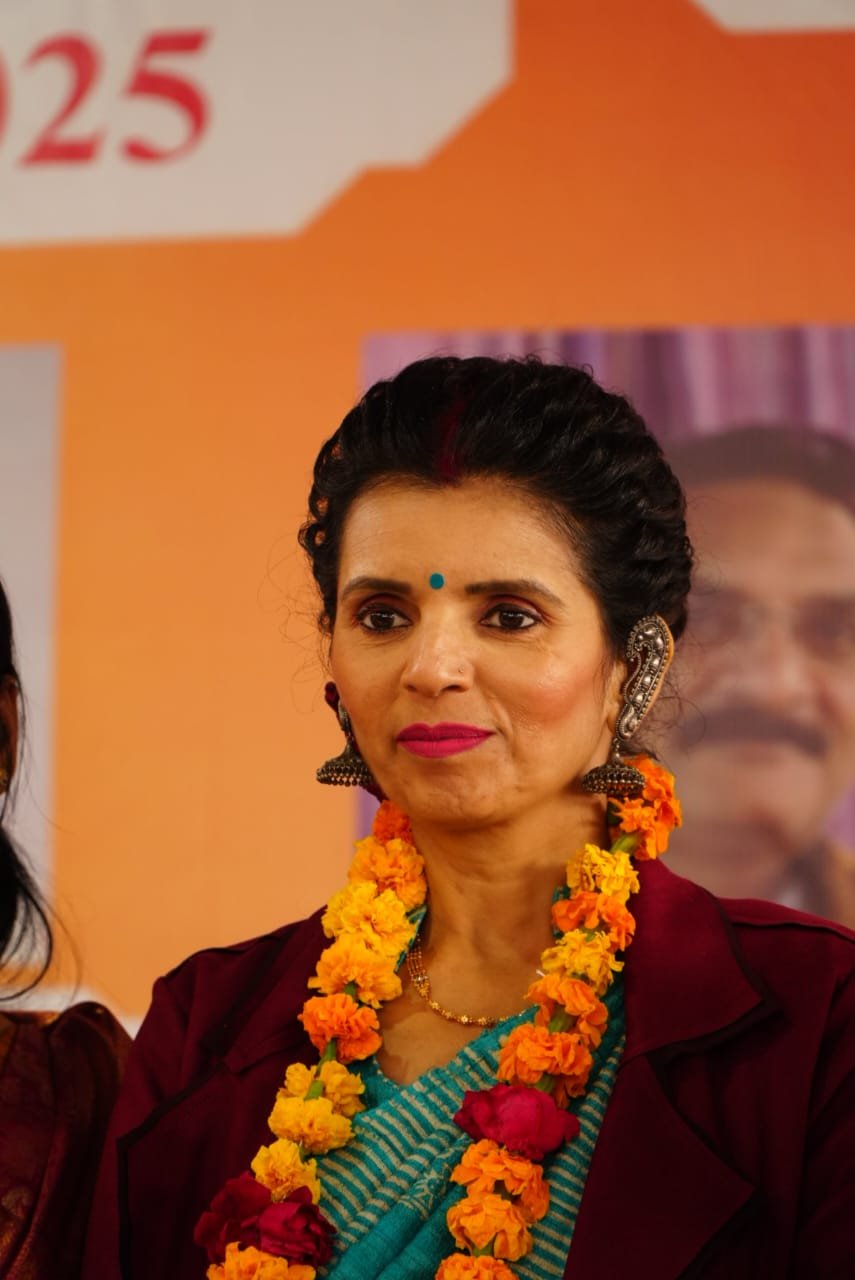
The Sanatan Sanskrutik Sangh (SSS), led by Haripriyaa Bharggav, has built a substantial part of its mission around reversing that narrowing not by rejecting modern education, but by reintroducing something it believes modern education has lost: dharmic education, a model of learning where ethics, self-knowledge, and civilizational wisdom are taught alongside, not instead of, contemporary skills and subjects.
This blog explores what dharmic education actually means, why global education discourse is increasingly circling back toward the very principles it embodies, and how SSS is putting this model into practice through initiatives like the Vaidik Pathshala.
What is Dharmic Education And What It Isn’t
It’s worth clearing up a common misconception first: dharmic education, as SSS frames it, is not religious indoctrination, and it is not a rejection of science, technology, or modern academic subjects. Dharma itself is frequently misunderstood as simply “religion” or “duty” in a narrow, ritualistic sense. SSS’s teaching offers a more expansive definition, rooted directly in classical Indian philosophy: “Dharma sirf ek action nahi hai; action toh sirf Dharma ka ek hissa hai.” (Dharma is not merely an action; action is only a part of Dharma.)
In this framing, Dharma refers to something closer to a comprehensive ethical and existential orientation the underlying principle that governs how a person relates to truth, to responsibility, to community, and to their own conduct across every domain of life, not just religious observance. Dharmic education, then, is education that teaches this orientation explicitly, alongside conventional academic content, rather than assuming students will absorb ethics passively or incidentally.
This is a meaningfully different proposition from typical “moral science” or “value education” classes that exist as token additions to modern curricula, usually underfunded, rarely examined, and treated as far less important than STEM subjects. SSS’s vision positions dharmic understanding as foundational infrastructure for the mind, not an elective supplement to “real” education.
Why Modern Society Is Quietly Circling Back to This Idea
It would be easy to dismiss dharmic education as a niche, traditionalist concern if global education discourse weren’t independently arriving at strikingly similar conclusions through entirely different vocabulary. Several major trends illustrate this convergence:
1. The Global “Character Education” and “Whole-Child” Movement
Education systems worldwide, from Scandinavian pedagogical models to emerging frameworks in the US and UK, have increasingly embraced character education, social-emotional learning (SEL), and “whole-child” development as necessary complements to academic instruction. The underlying premise: cognitive skill without ethical grounding produces technically capable but poorly oriented individuals. This is, in essence, a Western academic re-derivation of what dharmic education has articulated for millennia through a different philosophical vocabulary.
2. Rising Concern Over Youth Mental Health and Meaning Crisis
Global mental health data continues to show troubling trends among young people: rising anxiety, depression, and a widely discussed sense of purposelessness, even among high academic achievers. Psychologists and educators increasingly point to the absence of stable identity, ethical grounding, and meaning-making frameworks as contributing factors, precisely the gap dharmic education is designed to fill. As SSS’s youth-focused messaging states directly: “Generation gap nahi hoti. Values gap hota hai.”
3. Growing Skepticism of Purely Employability-Focused Education
There’s an increasingly vocal critique, both in India and globally, of education systems that function primarily as employment pipelines, producing graduates with technical qualifications but limited capacity for ethical reasoning, ecological consciousness, or civic responsibility. Dharmic education’s insistence on teaching values alongside skills directly answers this critique.
4. The “Decolonizing Curriculum” Conversation
Academic and cultural conversations worldwide increasingly interrogate whose knowledge systems get centered in formal education and whose get marginalized. SSS’s dharmic education model, which insists on teaching Vedic knowledge, Sanskrit, and Indian philosophical traditions as legitimate, sophisticated intellectual systems (not folklore or supplementary “culture” content), fits squarely within this broader global reckoning about epistemic justice in education.
The Vaidik Pathshala: Dharmic Education in Practice
SSS’s primary institutional expression of this philosophy is the Vaidik Pathshala, a modern revival of the ancient Gurukul model, teaching the Vedas, Puranas, Sanskrit, and dharmic ethics alongside contemporary subjects.
This is a deliberate structural choice, not a symbolic one. The traditional Gurukul system was historically built on principles that feel strikingly relevant to contemporary education reform conversations: personalized mentorship over anonymous mass instruction, integration of practical skills with philosophical understanding, and, as documented in SSS’s own historical content, a system notably free of caste-based restrictions on knowledge access, evidenced by figures across social backgrounds achieving recognized mastery in fields like medicine and surgery within Gurukul settings.
By reviving this model in a modern institutional form, Vaidik Pathshalas attempt something genuinely ambitious: teaching Sanskrit and Vedic philosophy not as museum artifacts, but as living, applicable knowledge systems, taught with the same seriousness and rigor as mathematics or science. In this sense, the model also places education and cultural awareness at the center of a broader approach to learning, connecting academic development with an understanding of India’s intellectual and cultural traditions a stark contrast to how these subjects are typically treated (if at all) in mainstream Indian education, where they’re often relegated to optional, low-prestige elective status.
Dharmic Education as a Framework for Modern Life Skills
One of the more persuasive arguments for dharmic education’s contemporary relevance is how directly its core teachings map onto specific, trending challenges young people face today, not as abstract spiritual concepts, but as practical decision-making frameworks.
Anekantavad: Teaching Nuance in an Outrage Economy
In a media environment defined by instant judgment, viral call-outs, and algorithm-driven outrage, the Jain-rooted Sanatan concept of Anekantavad, the multiplicity of truth, offers something education systems rarely teach explicitly: structured epistemic humility. As SSS articulates: “Koi bhi truth absolute nahi hota. Har perspective partial hota hai. Poori truth tab dikhta hai jab tum multiple dimensions dekho.”
Teaching young people to actively seek multiple perspectives before forming judgment isn’t just spiritually enriching; it is a directly applicable digital literacy and critical thinking skill, arguably more urgently needed today than at any point in educational history, given how thoroughly digital platforms reward snap judgment over nuanced understanding.
The 25-25-25-25 Financial Framework: Values-Based Financial Literacy
As financial literacy increasingly enters mainstream education conversations, dharmic education offers a genuinely elegant contribution: the ancient 25-25-25-25 formula balanced allocation across necessity, saving, donation, and luxury. Rather than teaching financial literacy as a purely technical subject (budgeting spreadsheets, interest rate calculations), dharmic education frames financial discipline as an ethical and philosophical practice, addressing not just how to manage money but why balance matters a dimension conventional financial literacy curricula often miss entirely.
Panch Tatva: Environmental Education Rooted in Spiritual Responsibility
As climate education becomes increasingly standard in school curricula worldwide, dharmic education offers a distinctive framing: environmental stewardship isn’t a recently discovered scientific necessity; it is a 5,000-year-old documented spiritual responsibility, encoded in the Sanatan concept of protecting the Panch Tatva (five elements): Earth, Water, Air, Sky, and Fire. This reframing matters pedagogically because it converts environmental education from an externally imposed obligation into an inherited, meaningful duty a shift shown, in educational psychology research, to produce more durable behavioral commitment than compliance-based messaging.
Vyavahar Bhasha vs. Nishchay Bhasha: Teaching Communication and Conflict Resolution
SSS’s teaching on linguistic frameworks distinguishing Vyavahar Bhasha (contextual, pragmatic communication) from Nishchay Bhasha (absolute truth) offers a sophisticated communication studies lesson rarely found in conventional curricula. The claim that “90% domestic conflicts is se hote hain” (90% of domestic conflicts arise from this linguistic dissonance) reframes everyday misunderstanding not as personal failure, but as a teachable, structural communication skill, precisely the kind of practical conflict-resolution education increasingly emphasized in modern social-emotional learning frameworks.
Dharmic Education and Identity: Solving the “Who Am I” Problem Before It Becomes a Crisis
Modern education has become extraordinarily good at teaching young people what to know and how to perform and remarkably silent on who they are in relation to that knowledge. This silence has consequences. SSS’s philosophy directly names this gap: young people raised without dharmic education often experience identity rootlessness, being fluent in global trends while remaining disconnected from their own inherited philosophical and cultural context.
Dharmic education addresses this directly by teaching young people that they are not, as SSS puts it, “self-manifested”; that identity is inherited, relational, and continuous with a much longer civilizational story. As articulated in SSS’s teaching philosophy: even highly capable, self-made individuals ultimately draw from a source a family, a tradition, a lineage of knowledge and understanding that source is not a limitation on individual achievement, but its foundation.
This has direct implications for the widely discussed contemporary “identity crisis” among globally connected but culturally disconnected youth. Dharmic education doesn’t ask young people to choose between global ambition and rooted identity; it teaches that the two are not in conflict at all
Dharmic Education as Preventive Social Infrastructure
Perhaps the most distinctive contribution of dharmic education, as SSS frames it, is its function as preventive rather than merely reactive social infrastructure. Drawing on a preventive, supportive, curative framework borrowed from classical Indian medicine, SSS argues that most social problems addressed through education today communal tension, family breakdown, financial mismanagement, environmental negligence are typically approached only after they manifest as crises, through remedial “curative” interventions.
Dharmic education, in this framework, functions preventively: teaching ethical reasoning, financial balance, environmental responsibility, and conflict resolution before young people encounter these challenges as lived crises, rather than scrambling to teach these lessons reactively once problems have already taken root. This preventive orientation aligns closely with growing global interest in proactive, prevention-focused education models as opposed to purely reactive disciplinary or remedial approaches increasingly criticized as insufficient across many national education systems.
Addressing a Fair Concern: Does Dharmic Education Risk Exclusion or Dogma?
Any serious discussion of values-based or tradition-rooted education must address a legitimate concern: does centering one civilizational tradition in educational content risk excluding or marginalizing others? SSS’s own framing offers a partial answer through its emphasis on pluralism within Sanatan philosophy itself, explicitly including Vedic, Jain, Buddhist, and Sikh traditions as expressions of one shared dharmic root, rather than presenting a singular, exclusionary doctrine.
Additionally, core dharmic teachings like Anekantavad explicitly build epistemic humility and respect for multiple perspectives directly into the curriculum’s philosophical foundation, arguably making dharmic education, when taught faithfully to its own principles, structurally resistant to the kind of dogmatic, single-narrative teaching that critics of values-based education often (sometimes justifiably) worry about.
Why This Conversation Matters for India’s Education Future
As India continues to reform its national education policy with increasing emphasis on holistic, multidisciplinary learning, Indian Knowledge Systems (IKS), and skill-integrated curricula, dharmic education’s core arguments align closely with several live policy conversations:
- Indian Knowledge Systems (IKS) Integration: Growing national education policy interest in incorporating indigenous knowledge systems into mainstream curricula directly parallels SSS’s Vaidik Pathshala model.
- Multidisciplinary and Holistic Learning: Contemporary education reform’s emphasis on breaking down rigid subject silos in favor of integrated, holistic learning mirrors dharmic education’s refusal to separate ethics from academics.
- Mental Health and Wellbeing in Schools: As student mental health becomes a formal education policy priority, dharmic education’s emphasis on identity, purpose, and meaning-making offers a values-based complement to clinical mental health interventions.
- Financial and Digital Literacy Integration: As schools increasingly seek to integrate financial and digital literacy into standard curricula, dharmic frameworks like the 25-25-25-25 formula and Anekantavad offer culturally resonant, easily communicable teaching tools.
Conclusion: Education That Builds Whole People, Not Just Capable Workers
The role of dharmic education in modern society isn’t to replace mathematics, science, or vocational training; it’s to ensure that the young people mastering those subjects also develop the ethical grounding, identity stability, and wisdom needed to use that mastery well. As global education systems increasingly rediscover, through their own research and terminology, the very principles Sanatan philosophy has articulated for millennia character education, social-emotional learning, prevention-focused pedagogy, epistemic humility- dharmic education stops looking like a traditionalist relic and starts looking like something quietly ahead of its time.
Sanatan Sanskrutik Sangh‘s institutional commitment to this model through Vaidik Pathshalas, Sanskrutik Sanskar Shatra sessions, and broader cultural-educational content under Haripriyaa Bharggav’s leadership represents a bet that modern society doesn’t need to choose between producing capable professionals and producing grounded, ethical human beings. Dharmic education exists precisely to prove those two goals were never actually in conflict.