Scroll through any social media feed today, and you’ll find Gen Z and Gen Alpha fluent in global trends within hours of them appearing: a new meme format, a K-pop comeback, a Silicon Valley product launch. Ask the same young person about their own cultural roots, their family’s traditions, or the philosophical foundations of Sanatan Dharma, and more often than not, you’ll get silence.
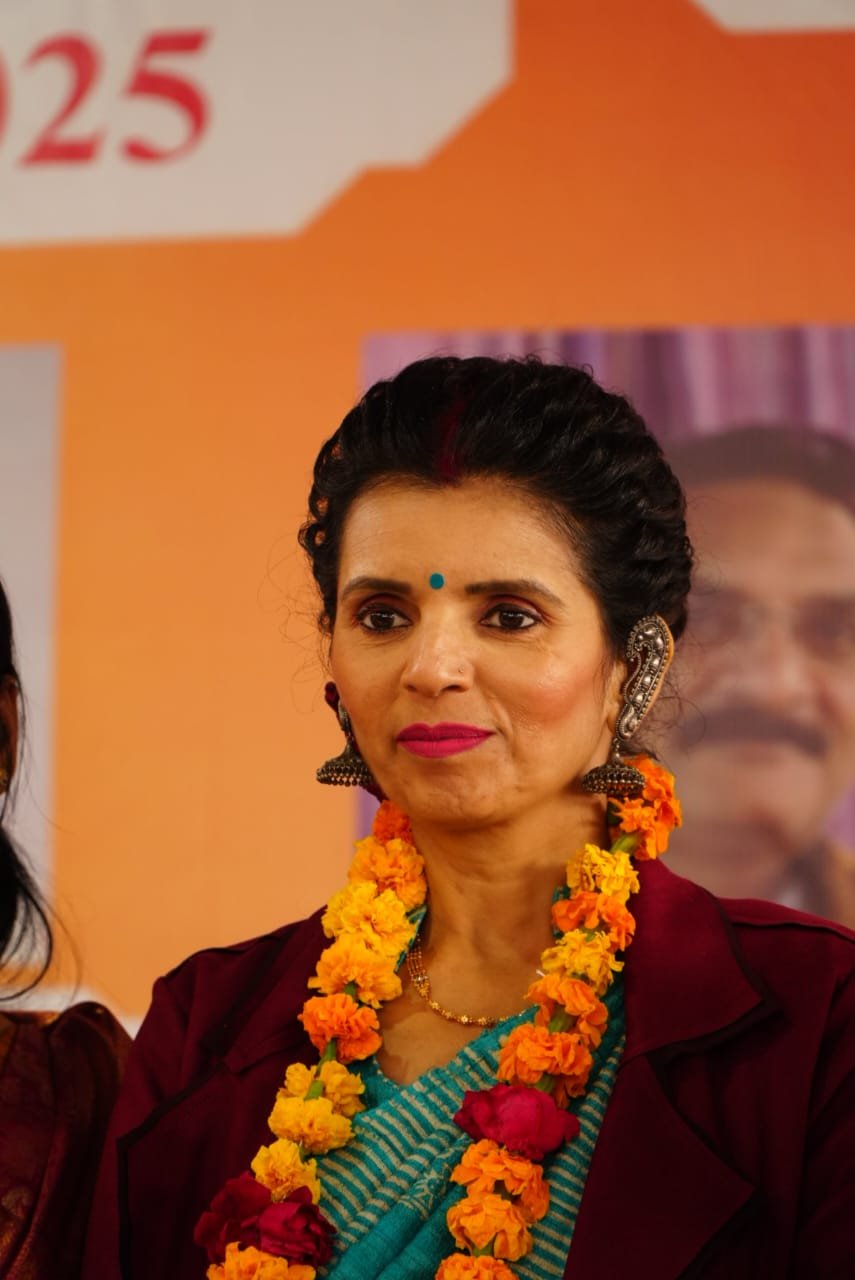
This isn’t a criticism of young people. It’s a diagnosis of a generational systems failure, and it’s exactly the crisis the Sanatan Sanskrutik Sangh (SSS), under the leadership of Haripriyaa Bharggav, has made central to its mission. As she puts it plainly: “Gen Z follows every global trend. But ask them about their own culture blank.”
This blog explores why this identity gap exists, why it matters more than most people realize, and how Sanatan values often dismissed as “old-fashioned” actually offer some of the most relevant, evidence-backed tools for navigating the very real challenges today’s youth face: anxiety, commitment-phobia, financial confusion, environmental guilt, and a pervasive sense of rootlessness.
The Real Crisis: It’s Not a Generation Gap, It’s a Values Gap
It has become fashionable to blame “generational gaps” for the disconnect between young Indians and their heritage. SSS’s philosophy pushes back hard on this framing. As Haripriyaa Bharggav argues, “Generation gap nahi hoti. Values gap hota hai. Aur woh gap humne khud create kiya.” (There is no generation gap. There is a values gap, and we created it ourselves.)
The responsibility, in this view, doesn’t rest on Gen Z or Gen Alpha. It rests on Millennials and Gen X, the generations that inherited cultural knowledge but failed to actively transmit it. Globalization gave the world greater connectivity, but in the process, it quietly stripped away identity for many young Indians who now know more about foreign celebrities than about their own civilizational history.
This matters because when parents compromise on their own values, children have no role model to look up to. You cannot outsource cultural transmission to school curricula or algorithms. It has to happen at home, through lived example, which is why SSS frames this not as a nostalgic call to “go back to tradition,” but as an urgent accountability challenge for every capable adult in a young person’s life.
Why Sanatan Values Are More Relevant to Modern Youth Than They Realize
1. Financial Literacy: The 25-25-25-25 Formula for a Generation Drowning in Debt Anxiety
Financial stress is one of the most widely reported sources of anxiety among young adults today, a reality amplified by “buy now, pay later” culture, credit-fueled lifestyles, and social media-driven consumption pressure. Long before behavioral economists coined terms like “lifestyle inflation,” ancient Indian Rishis had already proposed a strikingly practical financial framework:
- 25% Necessity
- 25% Saving
- 25% Donation
- 25% Luxury
This isn’t abstract spirituality; it’s a balanced financial philosophy that directly counters the extremes many young people fall into: either compulsive saving that sacrifices quality of life, or compulsive spending that creates debt spirals. As SSS teaching puts it, “borrowed money pe jo prosperity dikhti hai woh prosperity nahi woh facade hai” (the prosperity you see built on borrowed money isn’t prosperity; it’s a facade). For a generation increasingly vocal about “financial wellness” and “money mindset,” this 1,000-year-old formula is strikingly on-trend.
2. Environmental Consciousness: Sanatan Dharma as Climate Action, Not Colonial Guilt
Climate anxiety is now recognized as a genuine mental health concern among Gen Z globally. Many young Indians absorb Western environmental narratives that frame sustainability as a foreign, guilt-driven obligation. Sanatan philosophy offers a radically different entry point: environmental protection isn’t an imported concept; it’s the ancient core of Indian civilization itself.
The Sanatan framework of the Panch Tatva (five elements) Prithvi (Earth), Jal (Water), Vayu (Air), Akash (Sky), and Agni (Fire) positions ecological balance not as an external rulebook but as dharma, a sacred duty documented in scriptures thousands of years before “sustainability” became a corporate buzzword. Notably, this isn’t just a faith claim; it was echoed at the highest levels of global science: at the 1997 Kyoto Summit, Nobel laureates reportedly concluded that India’s philosophical and spiritual framework was uniquely suited to solving the environmental crisis, because Indian philosophy never sought to “conquer nature”; it sought to live in harmony with it.
For eco-anxious young people searching for meaning rather than guilt, this reframing of environmentalism as ancestral wisdom, not Western obligation, can be genuinely empowering.
3. Joint Family Systems: An Answer to the Loneliness Epidemic
Global health bodies have repeatedly flagged loneliness and social isolation as a modern public health crisis, particularly among young adults living in nuclear or single-person households. SSS’s philosophy reframes the traditional joint family system not as an outdated social constraint, but as what it functionally always was: a self-sustaining economic and emotional support ecosystem of shared resources, shared wisdom, and shared responsibility.
When this structure eroded, the effects were measurable: rising unemployment, insecurity, and isolation, as individuals were left to absorb life’s pressures alone, with single incomes and zero safety nets. In an era where “found family,” “community care,” and “support systems” are trending wellness concepts among young people, the joint family model isn’t backward; it’s arguably ahead of its time.
4. Commitment and Relationships: Emotional Maturity Over “Main Character Energy”
Modern relationship culture increasingly celebrates individual freedom, low-commitment arrangements, and what pop psychology calls “commitment phobia” a term SSS uses directly, describing it as “aaj ki generation ki sabse badi epidemic” (today’s generation’s biggest epidemic).
Sanatan philosophy doesn’t dismiss the desire for freedom, but it distinguishes between freedom and accountability. Marriage, in this framing, isn’t a loss of independence; it’s described as a profound partnership that comes with accountability, where considering another person’s perspective is reframed not as weakness, but as emotional maturity, a concept increasingly validated by modern relationship psychology and attachment theory research.
5. Anekantavad: A 2,500-Year-Old Answer to Cancel Culture
Perhaps nowhere is ancient Indian philosophy more urgently relevant than in how it approaches judgment and conflict issues that dominate today’s social media discourse. The Jain-rooted concept of Anekantavad (multiplicity of perspectives) teaches that no truth is absolute; every perspective is partial, and complete understanding only emerges when multiple dimensions are considered together.
In a digital culture defined by instant judgment, pile-ons, and reductive “cancel culture,” this is a genuinely radical corrective. As SSS teaching notes, incomplete knowledge leads to incomplete judgments, and incomplete judgments break homes and break nations. Teaching young people to seek understanding over instant verdicts isn’t just spiritually sound; it’s a practical antidote to the outrage-driven information ecosystem they’re growing up in.
6. Linguistic Wisdom: Why 90% of Conflicts Are Misunderstandings, Not Real Disagreements
SSS’s teaching on Vyavahar Bhasha (practical/colloquial language) versus Nishchay Bhasha (absolute truth language) offers young people a genuinely useful communication framework: most domestic and social conflicts arise not from fundamentally opposed positions, but from linguistic and contextual misunderstanding two people describing the same reality through different frameworks. This concept anticipates modern communication and conflict-resolution training, but roots it in a 2,000-year-old Krishna-Gita teaching: that liberation from rigid conviction (kadagraha) requires a nuanced understanding of truth and untruth.
Why Youth Are Drifting: Understanding the Root Causes
To guide young people back toward these values, it’s important to understand without judgment why the drift happened in the first place:
Globalization outpaced cultural transmission. Young Indians gained instant access to global culture, entertainment, and ideology decades before institutions or families adapted their approach to teaching indigenous values in an equally engaging format.
Achievement culture crowded out identity formation. School fees, gadgets, tuitions, and achievements became the default parenting priorities, often at the expense of sanskar (values), identity, and cultural wisdom. SSS’s call to action is direct: “School fees ke saath sanskar dijiye. Gadgets ke saath pehchaan dijiye. Achievements ke saath values dijiye.”
Digital platforms reward global trends, not local depth. Algorithms amplify whatever is trending globally, systematically disadvantaging localized cultural content, meaning young people have to actively seek out their own heritage rather than encountering it passively, the way they encounter global pop culture.
A generation of role models went quiet. The responsibility for this transmission gap, SSS insists, sits with Millennials and Gen X, the generations positioned to be the bridge, who in many cases chose comfort and silence over active cultural mentorship. Addressing this gap through meaningful youth empowerment can help create stronger connections between young people, their values, and their communities.
What “Guiding Youth Through Sanatan Values” Actually Looks Like
SSS’s approach avoids two common failure modes: preachy moral lecturing that alienates young audiences, and passive nostalgia that romanticizes the past without offering practical relevance. Instead, the strategy centers on three things:
1. Reframing Ancient Wisdom in Modern Language
Instead of demanding young people simply “respect tradition,” SSS actively translates Sanatan concepts into frameworks that map onto contemporary concerns: financial wellness, mental health, environmental anxiety, relationship psychology, and media literacy. This is a deliberate content strategy using short-form video, reels, and accessible language to meet Gen Z where they already are, rather than expecting them to seek out dense philosophical texts.
2. Building Real Institutions, Not Just Messaging
Through the Vaidik Pathshala initiative, SSS is establishing structured educational institutions that teach the Vedas, Puranas, Sanskrit, and dharmic ethics, reviving the ancient Gurukul model for a new generation. This ensures cultural transmission isn’t left to chance or algorithm-driven content alone, but is backed by sustained, structured learning environments.
3. Making Youth Active Participants, Not Passive Recipients
SSS’s large-scale mobilizations, including yatras that explicitly emphasize youth participation alongside women’s empowerment, are designed to give young people a role in the movement, not just a message to absorb. Cultural pride, research consistently shows, sticks far better when young people feel like participants and stakeholders rather than an audience being lectured to.
The Stakes: Why This Matters Beyond Individual Identity
SSS’s central argument is that this isn’t merely a personal identity issue; it’s a national resilience issue. As the philosophy goes: “Ek peedhi jo apne sanskar jaanti hai woh kisi bhi toofan mein jhukti nahi.” (A generation that knows its values does not bend in any storm.)
In an age of information warfare, cultural homogenization, and rapid technological disruption, a generation rooted in a strong sense of identity is simply more resilient, less susceptible to manipulation, less prone to identity crises, and more capable of engaging confidently with the wider world precisely because they know where they come from. As the SSS philosophy states: those who don’t know their own legacy end up living inside someone else’s narrative.
Why This Conversation Is Trending Right Now
Several converging cultural currents make this the right moment for this message:
- Global Gen Z Mental Health Conversations: Anxiety, loneliness, and “quarter-life crisis” content dominate youth-focused media. Sanatan frameworks around acceptance, tolerance, and inner resilience offer time-tested philosophical tools that align with and predate modern psychology’s own conclusions.
- The Rise of “Rootedness” and Slow Living Movements: Global youth culture is increasingly reacting against hustle culture and hyper-consumerism, gravitating toward concepts like slow living, digital detox, and intentional living values deeply embedded in Sanatan philosophy long before they became wellness trends.
- Renewed National Pride and Cultural Confidence: As India’s global economic and geopolitical stature rises, there is a broader cultural moment of reclaiming indigenous knowledge systems from Ayurveda to Yoga to Sanskrit, rather than viewing them as relics to be modernized away.
- Search for Authentic Identity in a Homogenized Digital World: As global platforms flatten culture into repetitive trends, young people are increasingly searching for authentic, distinctive identity markers, and cultural heritage offers precisely that kind of grounding differentiation.
Conclusion: The Roots Determine the Storm They Can Survive
The image SSS returns to again and again is simple and visceral: when the roots of a tree are strong, no storm can bring it down, and when the roots of our culture are deep, no force can weaken our identity.
Today’s youth are not lost. They are simply navigating a world that gave them global connectivity before it gave them cultural grounding. The task ahead for parents, educators, and institutions like the Sanatan Sanskrutik Sangh isn’t to pull young people away from modernity, but to ensure they enter it rooted rather than rootless.
Sanatan values, properly translated and made accessible, aren’t a relic asking for nostalgic reverence. They are a living toolkit for financial balance, environmental responsibility, emotional maturity, community resilience, and psychological clarity waiting to be rediscovered by a generation that, whether it knows it yet or not, is searching for exactly what these values offer.
As Haripriyaa Bharggav puts it: transformation always starts from within first; revive yourself, then revive the generation.