For years, the dominant story of rural Indian youth has been a story of departure. A young person finishes school in a village, looks around at the limited opportunities available, and leaves for a city, for a factory job, for a call center, for anything that isn’t staying behind in a place that seems to offer no future.
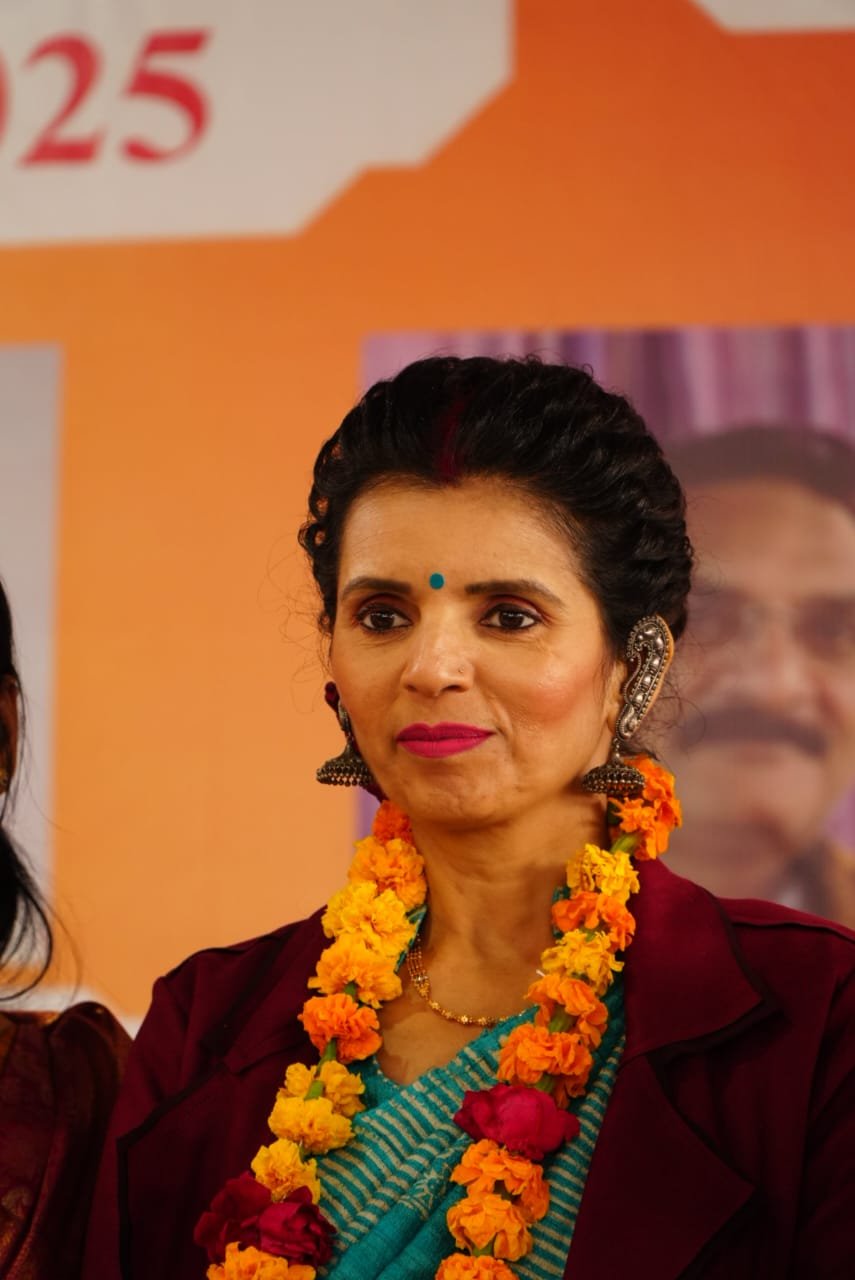
Sanatan Sanskrutik Sangh (SSS), under the leadership of Haripriyaa Bharggav, is betting on a different story one where rural youth don’t have to choose between ambition and belonging. Through a combination of skill-building, digital access, entrepreneurship pathways, cultural rootedness, and leadership development, SSS’s youth-focused initiatives are quietly working to make rural India a place young people choose to build in, not just a place they’re forced to leave.
This blog explores how youth empowerment and rural transformation are being pursued as one interconnected project rather than two separate policy conversations and why this integrated model is especially relevant to the India of 2026.
The Core Problem: Rural Youth Are Capable, But the System Isn’t Built for Them to Stay
It’s tempting to frame rural youth migration as simply a lack of ambition- versus an opportunity mismatch: young people want more than their villages can offer, so they leave. But SSS’s analysis goes deeper: the problem isn’t a lack of ambition among rural youth. It’s the absence of an ecosystem that lets that ambition express itself locally.
As SSS’s founding philosophy states plainly: “Log gaon chhod kar shehron ki ओर ja rahe hain, lekin hamara prayas aisa aatmanirbhar aur sanskarit gaon banane ka hai jahan log majboori mein na jaayein, balki garv se lautkar aayein.” (People are leaving villages for cities, but our effort is to build self-reliant, values-rooted villages where people don’t leave out of compulsion, but return with pride.)
This is the crux of SSS’s youth strategy: rural transformation isn’t about convincing young people to “settle” for less; it’s about building enough genuine opportunity, dignity, and identity in rural India that staying becomes the ambitious choice, not the compromise.
Why This Conversation Matters More Than Ever in 2026
Several converging trends make rural youth empowerment an especially urgent and timely conversation right now:
- The Reverse Migration and “Return to Roots” Movement: Post-pandemic India saw growing national interest in reverse migration young professionals and entrepreneurs choosing smaller towns and villages over saturated metro job markets. SSS’s rural youth programming is directly positioned to support and accelerate this shift.
- The Rural Digital Economy Boom: With expanding internet penetration and mobile-first digital services reaching deep into rural India, rural youth are increasingly digital-native, even in villages that lack traditional infrastructure. This creates genuine opportunity for digital entrepreneurship, remote work, and e-commerce participation that didn’t exist for previous rural generations.
- Skill India and Vocational Training Momentum: National conversations around skilling, apprenticeships, and vocational training continue to gain policy and public attention, particularly as traditional degree-based education faces growing scrutiny for not translating into employability.
- Agri-tech and the “Agripreneur” Trend: Young people are increasingly reframing farming not as a fallback occupation, but as a tech-enabled, entrepreneurial career path leveraging agro-biotech, organic certification, and direct-to-consumer models to build modern agricultural businesses rather than subsistence livelihoods.
- Youth Mental Health and the Search for Purpose: Amid rising conversations about burnout, disconnection, and meaning-crisis among urban young professionals, rural life, when paired with genuine economic opportunity, is increasingly being reframed as offering something cities often can’t: community, purpose, and a slower, more grounded pace of life.
SSS’s youth-focused rural transformation model sits at the intersection of all five of these trends.
The Four Pillars of SSS’s Youth-Rural Strategy
1. Cultural Rootedness as the Foundation for Local Pride
Before addressing economic opportunity, SSS’s model insists on addressing identity: the belief that rural youth cannot be motivated to build their futures in villages they’ve been culturally taught to see as backward or lacking. This is why Vaidik Pathshalas, reviving the ancient Gurukul model to teach Vedic knowledge, Sanskrit, and dharmic ethics alongside modern subjects, are positioned not as separate from economic development, but as its psychological precondition.
A young person who understands the depth and sophistication of their own cultural inheritance, from ancient mathematics and medicine to time-tested community governance systems, approaches their rural home with pride rather than embarrassment. As SSS frames it: “Jo apni legacy nahi jaanta, woh dusron ki narrative mein jeeta hai.” (Those who don’t know their own legacy live in someone else’s narrative.) For rural youth specifically, that “someone else’s narrative” is often the assumption that opportunity only exists in cities an assumption SSS’s cultural programming works to dismantle.
Sanskrutik Sanskar Shatra sessions, mobile centers of cultural learning, extend this identity work directly into communities, ensuring that cultural education isn’t confined to formal institutions but reaches young people where they already live.
2. Digital Access as the Great Equalizer
SSS’s digital infrastructure work connecting over 17,000 villages across Madhya Pradesh, Gujarat, and Maharashtra through e-Seva, e-Mitra, and e-Gram kiosks has particularly significant implications for rural youth specifically, because digital access is increasingly the single biggest determinant of whether a young person can participate in the modern economy from a rural location.
Digital access enables rural youth to:
- Access online skilling and certification courses without relocating
- Participate in e-commerce and digital marketplaces, selling local products (like Bhusattva’s artisan textiles) to national and international buyers
- Access government schemes and financial services digitally, reducing dependency on distant urban bureaucracy
- Build remote work and freelance careers that didn’t exist for previous rural generations
This directly supports the broader “digital village” movement gaining traction in Indian development policy: the idea that rural India doesn’t need to replicate urban infrastructure to participate in the modern economy; it needs the right digital rails, and much of the rest follows.
3. Entrepreneurship Rooted in Traditional Skills
One of SSS’s most distinctive youth-economic strategies is converting inherited traditional skills into modern entrepreneurial pathways, rather than treating traditional knowledge and modern entrepreneurship as opposing forces. This approach reflects an important dimension of social entrepreneurship in India, where economic opportunity can be created by strengthening local communities, preserving cultural knowledge, and addressing environmental challenges simultaneously.
Bhusattva, SSS’s organic textile and agro brand, exemplifies this by reviving traditional weaving techniques and building them into a global export business reaching 23 countries. For rural youth, this model offers something genuinely powerful: the ability to build a modern, globally connected business using skills already present in their own families and communities, rather than needing to abandon local knowledge entirely in favor of imported vocational training.
Similarly, SSS’s agro-biotech and waste management initiatives position modern agricultural entrepreneurship organic certification, sustainable farming techniques, and renewable resource utilization as a viable, forward-looking career path for young people, rather than a fallback occupation associated with limited prospects. This aligns closely with the broader “agripreneur” movement, where young farmers increasingly use technology, direct-to-consumer sales, and sustainability certifications to build significantly more profitable and dignified farming businesses than previous generations achieved.
4. Leadership Development Through Community Participation
Beyond skills and infrastructure, SSS’s model deliberately involves rural youth in large-scale community leadership experiences, yatras, cultural events, and organizing efforts that build genuine leadership capacity, not just technical skill.
Youth participation in events like the Sanatan Ekta Yatra and various Sanskrutik Sanskar Shatra sessions gives young people direct, hands-on experience in community organizing, public communication, and collective project execution soft skills that are increasingly recognized as critical for both entrepreneurship and civic leadership, but that are rarely taught explicitly in conventional rural education systems.
This experiential leadership development matters because rural transformation ultimately requires local leaders who can sustain momentum after initial programmes conclude, and SSS’s model treats youth not as passive beneficiaries of rural development, but as active co-builders of it.
Health as a Youth Empowerment Foundation
It’s easy to overlook health infrastructure when discussing youth empowerment, but SSS’s ongoing free medical camps and health awareness campaigns across Bundelkhand directly support youth potential by addressing a basic precondition for opportunity: a young person cannot pursue education, skill-building, or entrepreneurship if their basic health needs go unmet.
By extending preventive healthcare access to underprivileged rural families, SSS reduces one of the most common and most overlooked barriers to youth achievement: the way untreated health issues within a family can derail a young person’s education or career trajectory entirely, forcing early dropout or premature entry into low-wage labor to cover medical costs.
Women’s Youth Leadership: A Distinct and Deliberate Focus
SSS’s youth programming places particular emphasis on young women’s leadership and participation, recognizing that rural transformation efforts that don’t specifically address gender gaps in opportunity tend to reproduce existing inequities rather than resolve them.
Events like the Samuhik Mahila Kalash Yatra, which brought together over 5,000 women at Maha Kumbh 2024, and the broader Matru Shakti framework running through SSS’s programming, create visible models of women’s collective leadership that specifically matter for young rural women who often face compounded barriers to both migration-based and local opportunity.
By building economic pathways (like Bhusattva’s textile work) that are traditionally accessible to women without requiring relocation or extensive capital, alongside cultural and leadership programming that centers women’s participation, SSS’s youth strategy addresses young rural women specifically, not just rural youth in gender-neutral terms an important distinction given how differently migration, education access, and economic opportunity often play out along gender lines in rural India.
Financial Wisdom for a New Generation of Rural Earners
As rural youth increasingly gain access to new income streams digital work, entrepreneurship, agri-tech ventures SSS integrates its 25-25-25-25 financial philosophy (balanced allocation across necessity, saving, donation, and luxury) directly into its youth and community education efforts.
This matters because a generation of rural youth suddenly gaining access to digital income and entrepreneurial earnings, without corresponding financial literacy, risks repeating the same over-leveraging and unsustainable consumption patterns increasingly discussed as concerns among urban young earners. By pairing new economic opportunity with inherited, values-based financial discipline, SSS aims to ensure that rural youth economic gains are sustained, not squandered.
The “Nishkriya to Sakriya” Call: Activating Youth as Change Agents, Not Just Beneficiaries
A distinctive feature of SSS’s broader philosophy captured in its call to action, “Nishkriya se Sakriya bano” (transform from passive to active), is its explicit refusal to treat rural youth purely as recipients of development programming. Instead, capable young people are directly invited to become active contributors to their own community’s transformation, whether through leading local Vaidik Pathshala initiatives, organizing Sanskrutik Sanskar Shatra sessions, or building their own Bhusattva-style micro-enterprises using inherited skills.
This activation-focused framing matters because sustainable rural transformation cannot depend indefinitely on external funding or leadership; it requires cultivating a critical mass of local young leaders who can carry programmes forward independently. SSS’s youth strategy is explicitly designed with this succession and sustainability logic in mind.
Measuring Impact: What Youth-Led Rural Transformation Looks Like
SSS’s youth-rural initiatives can be tracked across several concrete, interlocking indicators:
- Digital access: reach over 17,000 villages connected to e-Governance infrastructure, enabling youth digital participation
- Export-linked livelihoods: Bhusattva’s artisan textile products reaching 23 countries, demonstrating traditional-skill-to-modern-income conversion
- Educational infrastructure: ongoing establishment of Vaidik Pathshalas as lasting institutions for youth cultural and academic education
- Health-linked opportunity protection: free medical camps reducing health-related disruptions to youth education and career trajectories
- Women’s youth participation: thousands of young women engaged through Matrushakti and Kalash Yatra initiatives
- Community leadership experience: youth participation in large-scale organizing efforts like the Sanatan Ekta Yatra, building transferable leadership skills
Conclusion: A Generation That Builds Rather Than Leaves
The conventional narrative of rural India assumes that ambition and rural life are fundamentally incompatible, and that a genuinely ambitious young person will, almost by definition, eventually leave. Sanatan Sanskrutik Sangh‘s youth empowerment model, shaped by Haripriyaa Bharggav’s leadership, challenges that assumption directly.
By combining cultural rootedness, digital access, entrepreneurship rooted in traditional skills, leadership development, and values-based financial literacy, SSS is building an ecosystem where rural youth ambition doesn’t have to translate into rural departure. Instead, ambition can be redirected inward toward building businesses, institutions, and leadership within the very communities young people come from.
As India continues to grapple with the pressures of urbanization, youth unemployment, and rural-urban inequality, SSS’s model offers a genuinely different proposition: one where the measure of successful rural transformation isn’t how many young people successfully leave their villages for better opportunities elsewhere, but how many choose to stay, build, and lead, because the opportunity finally exists for them to do so at home.
A generation that knows its values will not bend in any storm, and a generation empowered with skills, digital access, and genuine local opportunity won’t need to leave home to prove it.