Every year, thousands of organizations promise “impact.” Fewer deliver it. Fewer still sustain it beyond a single donation cycle, a single press release, or a single election season. The uncomfortable truth about modern philanthropy is that good intentions rarely survive without good leadership, and good leadership rarely survives without a deeper “why” anchoring it.
This is precisely the intersection where the Sanatan Sanskrutik Sangh (SSS), under the leadership of Haripriyaa Bharggav, has chosen to operate. Not charity as a transaction. Not leadership as a title. But philanthropy as a sustained, values-driven system and leadership as a form of service (seva) rooted in accountability, resilience, and cultural consciousness.
In this blog, we explore what genuine long-term social impact actually requires, why so many well-funded initiatives fail to achieve it, and how SSS’s model, forged through personal adversity, entrepreneurial success, and a return to ancient Indian philosophy, offers a blueprint worth studying.
Why Most Philanthropy Fails to Create Lasting Change
Before looking at what works, it’s worth being honest about what doesn’t.
Transactional giving. Writing a cheque, distributing relief kits, or funding a one-time event generates a moment of goodwill, but moments don’t build ecosystems. The moment the funding stops, so does the impact.
Leadership without continuity. Many social initiatives are built entirely around one charismatic founder, with no succession plan, no institutional memory, and no systemic structure. When the leader steps away, the mission often collapses with them.
Impact without measurement. Philanthropy that isn’t tracked against real outcomes literacy improved, health indicators changed, livelihoods created risks becoming performative. It looks good on social media; it does little on the ground.
Development without cultural context. Perhaps the most overlooked failure mode: imported, one-size-fits-all development models that ignore the cultural, spiritual, and social fabric of the communities they’re meant to serve. A programme that doesn’t respect local values, traditions, and identity rarely earns lasting community trust.
Genuine long-term impact requires solving for all four of these failure points simultaneously, which is exactly the ambition behind SSS’s model of integrated philanthropy and leadership.
Leadership Forged Through Adversity: The Haripriyaa Bharggav Story
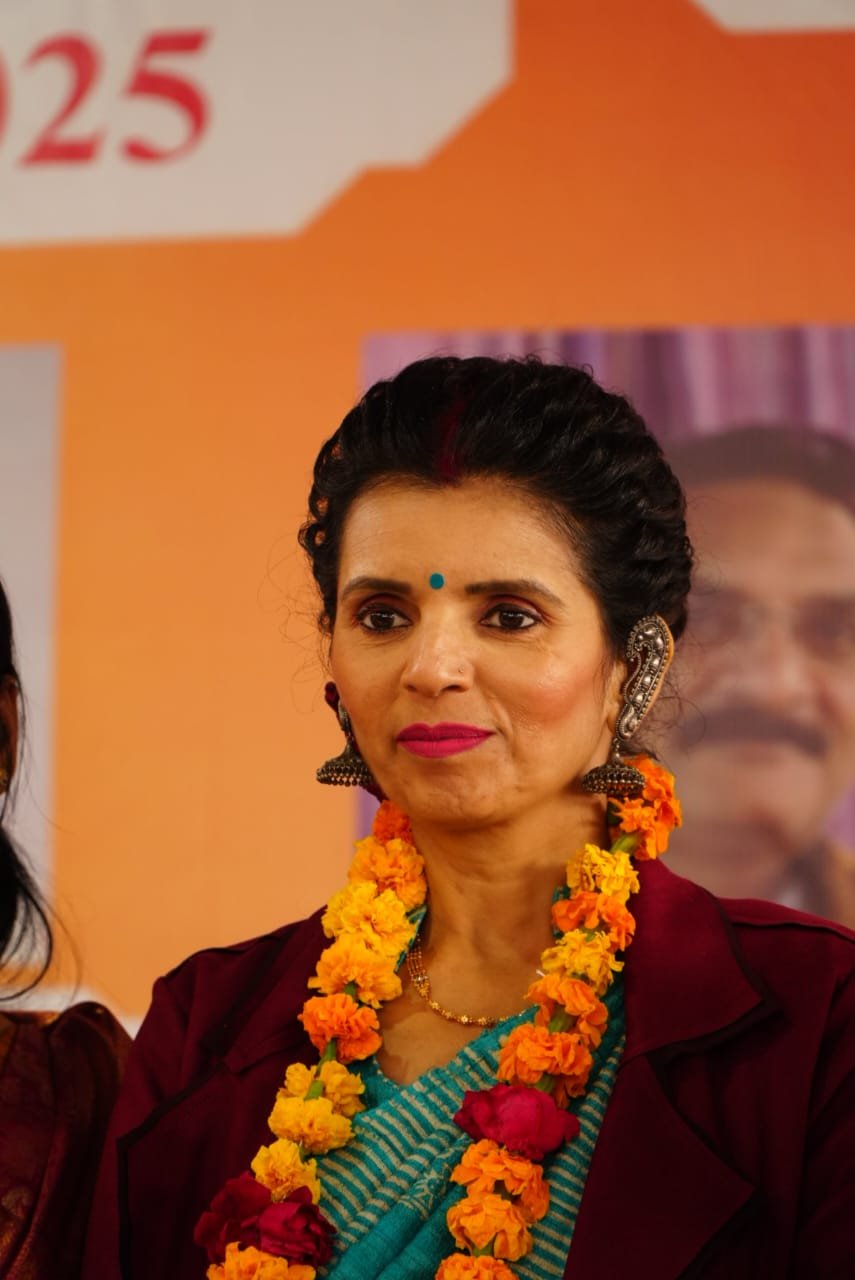
You cannot separate SSS’s philosophy of leadership from the personal journey of the woman who built it. Haripriyaa Bharggav‘s story is not a polished corporate biography; it is a case study in resilience as a leadership discipline.
Originally from Lalitpur in the Bundelkhand region of Uttar Pradesh, she began her professional life modestly, teaching and offering legal guidance to underprivileged women, before serving as a sub-Inspector in the Lalitpur Police Department. Even in those early roles, a pattern was already visible: a pull toward service over personal comfort.
Her journey to Mumbai and into entrepreneurship, working first with ICICI Bank and later building her own ventures, could have been a straightforward corporate success story. Instead, it became something far more testing. A devastating spinal injury left her hospital-bound for nearly eighteen months. Just as recovery seemed within reach, she received a Stage III cancer diagnosis at the age of thirty-two.
What followed were years of chemotherapy, uncertainty, and quiet endurance. By 2017, she had not just survived; she had rebuilt. Within three years, she became the founder of four thriving companies, demonstrating a model of socio-economic entrepreneurship in which commercial ambition could coexist with a deeper commitment to service and community impact.
Then came COVID-19, a global pause that, for many entrepreneurs, meant retreat. For Haripriyaa Bharggav, it became a turning point of a different kind: a call to redirect success toward a higher purpose.
From 2023 onward, she began actively channeling her business acumen, resilience, and resources into social, cultural, and religious upliftment a transition that eventually crystallized into her leadership of the Sanatan Sanskrutik Sangh.
This backstory matters because it establishes the first principle of SSS’s leadership philosophy: credibility earned through lived resilience is more durable than credibility purchased through funding alone.
The SSS Leadership Philosophy: Shanti, Shraddha, Shaurya
Under Haripriyaa Bharggav, SSS operates on three guiding principles that double as a leadership framework applicable well beyond religious or cultural organizations:
Shanti (Peace)
Leadership that creates lasting impact must first create stability. Movements built on outrage or division burn bright and burn out fast. SSS’s emphasis on peace as a foundational value is a direct rejection of reactionary, combative organizing, instead prioritizing dialogue, interfaith harmony, and long-horizon thinking.
Shraddha (Devotion)
Impact-driven leadership requires more than strategy; it requires conviction. Shraddha, in the SSS context, translates to an unwavering commitment to the mission that doesn’t waver with news cycles, funding fluctuations, or public opinion. This is what philanthropy researchers today often call “mission-locked leadership”: leaders who cannot be easily distracted from the long-term goal.
Shaurya (Valor)
Perhaps most distinctive is Shaurya’s courage. Real social transformation inevitably meets resistance: cultural inertia, political complexity, and sometimes direct opposition. SSS’s yatras, including the Sanatan Raksha Yatra, which voiced support for persecuted dharmic communities in Bangladesh, reflect a leadership style willing to take principled, sometimes uncomfortable, public stances rather than retreating into safe neutrality.
Together, these three pillars form what could be called a dharmic leadership model, one increasingly relevant in a world where “purpose-driven leadership” and “values-based organizations” have become dominant themes in global management and ESG conversations.
From Personal Wealth to Structural Philanthropy
One of the most important shifts SSS represents is the move from individual charity to structural philanthropy, building institutions, not just distributing aid.
This is visible in how Haripriyaa Bharggav, has structured her entrepreneurial ventures spanning finance, real estate, technology, textiles, media, and international business across 11 distinct verticals, not as separate from her philanthropic mission, but as its funding engine and delivery infrastructure.
Consider a few examples:
- Howeells Ventures LLP and Ubon Vision Pvt. Ltd. (UBVPL) bring financial innovation and digital infrastructure (like e-Seva, e-Mitra, and e-Gram kiosks) to over 17,000 villages proving that for-profit entrepreneurship and social impact are not mutually exclusive.
- Urasattva, the group’s green construction brand, channels real-estate expertise into eco-friendly and sustainable building projects, including a planned private university in Bundelkhand and a women’s academy under the Jhansi Smart City Project.
- Bhusattva, an organic textile and agro brand, revives traditional Indian weaving techniques while creating rural livelihoods and exporting artisan products to 23 countries.
This model, where business capability directly funds and operationalizes social mission, is precisely what modern impact-investing and “purpose capitalism” frameworks are trying to formalize globally. SSS arrived at it organically, through the philosophy that “true entrepreneurship must transcend material success, serving instead as a means to strengthen society, culture, and the spiritual unity of the nation.”
Institution-Building: Why SSS’s Structure Matters More Than Any Single Event
A single yatra, no matter how large, is a moment. What makes SSS’s approach distinctive is the institutional scaffolding built around those moments.
Over the past year and a half alone, SSS has organized 25 major events, from the Sanatan Ekta Yatra uniting Vedic, Jain, Buddhist, and Sikh traditions to the Samuhik Mahila Kalash Yatra at Maha Kumbh 2024, where over 5,000 women participated. But these events aren’t isolated spectacles; they feed into ongoing structural programmes:
- Vaidik Pathshalas are permanent educational institutions teaching Vedic knowledge and Sanskrit, designed to outlast any single event cycle.
- The Total Village Development Programme (TVDP) is an ongoing, multi-year commitment to healthcare, education, self-reliance, and cultural awareness in rural India.
- Gau Shalas are permanent shelters, not one-time rescue drives.
This is the essential difference between philanthropy-as-event and philanthropy-as-institution. Events create visibility and mobilize participation; institutions convert that energy into infrastructure that persists for decades. Leadership’s real test isn’t how big an event can be; it’s what remains standing a year, five years, or twenty years later.
Women’s Leadership as a Multiplier for Long-Term Impact
A growing body of global development research shows that women-led community initiatives tend to produce more durable, higher-trust outcomes a trend SSS has embraced structurally, not just symbolically.
Initiatives like the Samuhik Matrushakti Anushthan and Sanatan Kalash Yatra center women’s spiritual and social leadership as core to the movement, not as an auxiliary programme. This reflects a broader recognition, increasingly discussed in gender-responsive development and ESG circles, that sustainable change requires empowering the people most embedded in a community’s daily life often women rather than parachuting in external solutions.
Haripriyaa Bharggav’s own position as a woman-led industrialist and philanthropist, navigating both boardrooms and religious leadership, itself functions as a powerful signal: that capability, resilience, and moral authority are not gendered, and that women’s leadership can simultaneously drive economic and cultural transformation.
Measuring Impact: Beyond the Photo-Op
For philanthropy to claim genuine long-term impact, it must be able to point to measurable, ongoing outcomes, not just attendance figures. SSS’s programmes offer several concrete, trackable markers:
- Digital connectivity extended to over 17,000 villages through e-Governance kiosks
- Healthcare and literacy campaigns reaching underprivileged families across Bundelkhand
- 50,000 laddus distributed as part of community outreach during the Ayodhya Temple inauguration, a logistics-heavy operation reflecting organizational capacity, not just goodwill
- Vaidik Pathshalas established as ongoing educational infrastructure
- Export of Bhusattva textile products to 23 countries, generating sustained rural livelihoods rather than one-time payouts
This blend of cultural programming and quantifiable socio-economic infrastructure is what separates SSS’s approach from purely symbolic philanthropy. The events build the movement’s soul; the institutions build its skeleton.
Why This Model Resonates in 2026
Several converging global and national conversations make SSS’s philanthropy-leadership model particularly timely:
- The Global Shift Toward “Purpose-Driven” and ESG Leadership: Corporate and philanthropic leadership worldwide is increasingly judged not just on outputs, but on values alignment, sustainability, and long-term stakeholder trust precisely the framework SSS has built organically through Shanti-Shraddha-Shaurya.
- Rising Interest in Homegrown, Culturally Rooted Development Models: As discussed in broader SSS Bharat messaging, there is growing public appetite for indigenous Indian solutions rather than imported Western philanthropy templates a trend SSS leans into deliberately.
- The “Founder Resilience” Narrative: Leadership stories built on overcoming adversity, illness, setbacks, and personal loss resonate more than polished success narratives, especially with younger audiences increasingly skeptical of curated corporate biographies.
- Women in Leadership and Impact Investing: With women-led social enterprises gaining increasing visibility and investment globally, SSS’s structure a woman leading both a diversified business empire and a nationwide cultural movement sits squarely at the center of this conversation.
- Institution-Building Over Influencer Activism: As social media activism faces growing scrutiny for being performative, movements that can point to physical institutions, ongoing programmes, and measurable infrastructure like Vaidik Pathshalas, TVDP, and Gau Shalas stand out as evidence of substance over spectacle.
The Leadership Lesson: Transformation Starts From Within
Perhaps the most quietly radical idea embedded in SSS’s philosophy is this: you cannot lead a movement to revive a generation’s values if you haven’t first revived your own. Haripriyaa Bharggav’s own journey from hospital bed to boardroom to spiritual leadership is offered not as a highlight reel, but as proof of concept for a core SSS principle: transformation always starts from within.
This has direct implications for anyone thinking about philanthropy or leadership today. It suggests that sustainable impact isn’t primarily a funding problem; it’s a conviction problem. Money without mission dissipates. Mission without personal accountability collapses under its own contradictions. But when a leader’s personal journey, business capability, and cultural conviction align, philanthropy stops being an occasional act and becomes an enduring institutional force.
Conclusion: Building Impact That Outlives the Headlines
Philanthropy that makes headlines is easy. Philanthropy that survives news cycles, election seasons, funding gaps, and leadership transitions is extraordinarily rare, and it is not accidental. It requires leaders willing to fund movements not just with capital, but with personal resilience, cultural conviction, and institutional patience.
The Sanatan Sanskrutik Sangh’s model, anchored in Haripriyaa Bharggav’s own journey from adversity to entrepreneurship to cultural stewardship, offers a compelling answer to a question every serious philanthropist and leader must eventually face: are you building a moment, or are you building an institution?
For SSS, the answer has been consistent: build institutions Vaidik Pathshalas, Gau Shalas, village development programmes, and diversified business ventures that will still be standing, still serving communities, long after any single event or news cycle has faded. That, ultimately, is what separates philanthropy from legacy.