Ask a simple question at any dinner table in urban India today and watch what happens: Are you left or right?
The room tenses. People pick sides. Someone invokes a headline. Someone else invokes a counter-headline. Within minutes, a group of intelligent people who agree on ninety percent of what actually matters for the country are arguing as though they belong to warring tribes.
Now step back and ask a deeper question one that almost nobody asks: Where did that axis even come from?
Because here is the thing worth confronting head-on. The left-versus-right framework is not a natural law of politics. It is not carved into human nature. It is a specific historical import a particular way of dividing political thought that emerged from a particular civilisation’s particular circumstances, and was then quietly installed as the default operating system for political conversation everywhere, including here.
It was never Bharat’s framework.
Our Bhartiya, Sanatan, Shashvat Parampara our eternal, continuous tradition never organised itself along a left-right spectrum. It organised itself around something else entirely: the people of the nation, and their all-round advancement. Rather than promoting a specific ideology implanted from outside, it has always emphasized the enduring values of Sanatan Dharma in modern India. Not the promotion of a specific ideology implanted from outside, but the concentrated well-being of citizens across four dimensions: Arthik (economic), Atmik (spiritual), Sharirik (physical), and Manasik (mental).
This article makes a single, unfashionable argument: India does not need to choose a wing. India needs to merge philosophies into one people-first, nation-first framework and the tradition to do exactly that has been sitting in our civilisational memory all along.
Let’s build the case carefully.
Part One: The Axis That Was Never Ours
An Imported Coordinate System
Every framework carries hidden assumptions. The left-right axis carries a big one: that political questions naturally sort themselves onto a single line, with collective control at one end and individual liberty at the other, and that your job as a citizen is to locate yourself on that line and defend your position.
That assumption emerged from a specific set of historical struggles in a specific part of the world. It made sense there, for them, given their history.
The problem is not that the axis exists. The problem is that we adopted it wholesale as though it were universal, as though it described reality itself rather than one civilisation’s way of carving reality up.
And when you adopt someone else’s coordinate system, you inherit their conflicts. You start fighting their battles on your soil. You begin sorting your own people into categories that were designed for a different society’s fault lines.
This is the same pattern that shows up everywhere India imports frameworks without examining them. We took an economic model designed for a different geography. We took an education system designed for a different population. We took a lifestyle template designed for a different climate and family structure. And we took a political axis designed for a different history.
Copying is always a sign of being made to feel inferior. And nowhere is the cost of copying higher than in how a nation organises its own political thought.
What the Sanatan Tradition Concentrated On Instead
If not left-right, then what?
The tradition’s answer was disarmingly practical. It did not begin with ideology and then apply it to people. It began with people and then strategised according to their needs.
Specifically, it strategised according to the Arthik, Atmik, Sharirik and Manasik Unnati, the economic, spiritual, physical and mental advancement of the nation’s citizens.
Notice what’s absent from that formulation. There’s no predetermined position on the size of the state. No fixed doctrine about markets versus intervention. No ideological loyalty test. The starting point is a question, not an answer: what does this human being, this community, this region actually need to flourish across all four dimensions?
That is a fundamentally different mode of political thinking. It is diagnostic rather than doctrinal. It looks at the patient before prescribing the medicine rather than arriving with a fixed prescription and searching for a patient to apply it to.
Part Two: The Urban-Rural Divide A Case Study in Imported Fracture
Bharat Was Never Split This Way
Here’s a concrete illustration of how imported frameworks fracture a society that was previously whole.
Consider the sharp distinction we now draw between “urban” and “rural” India as though they were two different countries with two different classes of citizens, requiring two different sets of policies and deserving two different levels of attention.
That distinction is itself a product of exterior policy frameworks. India was never historically differentiated between urban and rural in this way. Bharat was Bharat. The entire land was one integrated whole.
And the underlying principle was radical in its simplicity: the smallest, humblest person in Bharat was considered as much a part of its prosperity as the greatest. Ek chhota bhi vyakti, utna hi samruddha a small person, equally prosperous in dignity and belonging.
The moment you import a framework that sorts citizens into first-tier (urban, modern, developed) and second-tier (rural, traditional, backward), you have manufactured a fracture that didn’t previously exist. You’ve created two constituencies to be pitted against each other, two vote banks to be separately courted, two development models to be argued over when the tradition treated them as one people whose development had to be pursued collectively.
The division wasn’t discovered. It was installed.
And once installed, it does what all imported fractures do: it generates conflict, resentment, and a permanent political marketplace where one side’s gain is framed as the other side’s loss.
Development Has to Be Collective
The Sanatan corrective is to design development programmes collectively and jointly sayukta rather than as competing claims from rival constituencies.
How you approach a city dweller, how you approach a village, what each specifically needs these are genuine practical differences. But they are differences in method, not differences in worth. Different medicine for different conditions, prescribed by the same physician working toward the health of one body.
The left-right frame can’t hold this. It forces you to be for the urban middle class or for the rural poor, for markets or for the marginalised. The merged frame asks a better question: what does the whole body need, and how do we get every part of it healthy together?
Part Three: The Merger What It Actually Means
Not Centrism, Not Compromise Consolidation
Let’s kill an obvious misreading before it takes hold.
“Merged philosophy” does not mean centrism. It does not mean splitting the difference, averaging the two wings, or landing mushily in the middle to avoid offending anyone. That would just be a third position on the same imported axis.
The merger means something more radical: stepping off the axis entirely and consolidating whatever genuinely serves the nation, from any direction, into a single coherent framework.
Here is the crucial insight that makes this possible. Both wings, from their own vantage point, are seeing something real.
The perspective that emphasises collective welfare, distribution, and the marginalised is not fabricating its concerns. Those concerns are real.
The perspective that emphasises growth, enterprise, individual initiative, and productive capacity is not fabricating its concerns either. Those concerns are equally real.
Each is correct based on one perception. Each is looking at a genuine part of the elephant. The error is not in what either sees; it’s in the assumption that you must choose one seeing and reject the other.
The merger of these perceptions is the actual need of this country.
Why Diversity Demands Merger
There’s a structural reason this matters more for India than almost anywhere else: the sheer scale of our diversity.
In a country this diverse, it is simply unrealistic to expect that everyone can or should hold the same mentality. Different regions, languages, faiths, histories, economic conditions, and ecological realities mean a single uniform ideology cannot possibly fit all of it without doing violence to most of it.
Imposing one wing’s philosophy on the entire nation is like prescribing one medicine to every patient in a hospital regardless of their condition. It will help a few, do nothing for many, and actively harm some.
The intelligent approach is contextual: combine the philosophies and execute them where each is genuinely needed. Some approaches suit some places and conditions; others suit others. There is no requirement to apply every philosophy everywhere. There is a requirement to apply the right one to the right context.
This is the deep logic of the merger. Not one answer forced onto everything, but a consolidated toolkit applied with discernment.
Two Real Demands, One System
Take the most cited example of supposedly irreconcilable priorities.
On one hand, the private sector needs growth. That’s real. An economy without dynamism, enterprise and productive expansion cannot generate the prosperity a nation requires.
On the other hand, the large population outside the formal private sector needs meaningful work and dignity. That’s equally real. An economy that grows while leaving vast numbers behind is building instability into its own foundations.
The left-right frame insists these are opposing sides that you’re either a champion of growth or a champion of the masses, and choosing one means neglecting the other.
The merged frame sees them for what they are: two requirements of one healthy system. A body needs both a strong heart pumping and healthy capillaries reaching every extremity. Emphasising one while neglecting the other doesn’t produce balance it produces disease.
The wing is not India. India is the whole bird. You cannot fly on one wing, and you certainly cannot fly by declaring one wing the enemy of the other.
Part Four: The Medical Logic of Balance
Diagnosis Before Doctrine
The tradition’s approach to political balance mirrors precisely how a skilled physician approaches the body, and the analogy is worth following closely, because it clarifies exactly what “merger” means in practice.
Suppose cholesterol rises. The ideological approach would be to reach for the obvious cholesterol drug and administer it. Problem named, drug applied, done.
But a genuinely skilled practitioner thinks in systems. Reduce cholesterol carelessly, and you might weaken the kidney vessels. So you consider a blood thinner to keep circulation healthy but calibrated carefully, because too much and a minor cut becomes dangerous. On one side, you prevent cholesterol from accumulating; on the other, you keep the blood moving; and throughout, you hold a precise balance so that solving one problem doesn’t manufacture another.
Balancing is the entire discipline.
This is what merged governance looks like. Not “apply the growth doctrine” or “apply the welfare doctrine,” but: look at the whole interconnected system, understand what each intervention does downstream, and calibrate. You cannot give every patient the same medicine simply because their symptom shares a name. You have to see the specific condition, the specific cause, the specific context, and respond to that.
Ideology-first politics can’t do this, because ideology arrives with the prescription already written. The merger is diagnosis-first: it holds the answer open until it has actually understood the patient.
The Cost of Swinging Between Extremes
There’s a further argument for merger that comes not from theory but from observation.
Consider what happens when a nation swings between ideological extremes over decades. Damage accumulates from one direction. Then the pendulum swings, and damage accumulates from the other direction. The nation never settles into steady, balanced building it lurches, corrects, over-corrects, and lurches again.
We are not monkeys hopping from branch to branch, jumping here and there and back again with each swing of political fashion. A nation deserves better than to be governed by whichever extreme currently holds the branch.
What’s better for the nation should be decided by the parties in power and the opposition together, not by rigid adherence to imported philosophy, but by disciplined focus on what genuinely serves the country. Fifty years of harm from one direction followed by harm from the other leaves a nation in perpetual turmoil. Steady building requires balance, and balance requires stepping off the pendulum.
Part Five: India Is Not a Party-Based Nation
The Constitutional Principle, Restated
Here is perhaps the sharpest formulation of the entire argument:
India is not a party-based nation. India is a democratic nation.
The distinction is not pedantic. It goes to the heart of how power is supposed to relate to people.
In a party-based conception, parties are the primary units. They hold philosophies, they compete for control, and the nation becomes the territory over which their philosophies fight. Governance becomes the process of one party implanting its ideology onto the country until the next party implants a different one.
In a genuinely democratic conception, the principle is different: for the people, by the people, of the people. The people are the point. Parties are instrumental vehicles through which the people’s welfare is pursued.
And this raises an uncomfortable question worth asking plainly: in our current arrangement, where are the people, actually? Are they genuinely at the centre of the equation or are only the parties controlling the nation, with the people reduced to periodic voters between whom the parties compete?
Parties Should Serve the Nation, Not Colonise It
The corrective is clear. Parties should adapt their philosophy to what serves the nation not implant their philosophy onto the nation.
When one party comes to power, it should not treat governance as an opportunity to install its ideology wholesale. When another comes, the same. Whatever the wing the policies that genuinely benefit the nation should be merged and applied, regardless of which ideological camp they originated in.
A good idea does not become bad because the “other side” thought of it. A harmful policy does not become good because “our side” proposed it. The only test that matters is: does this serve the people of this nation, in this context, across their spiritual, physical, mental, and economic advancement?
That test is ideologically neutral by design. It doesn’t care which wing an idea flew in on. It cares only whether the idea makes the nation healthier.
Part Six: What Merged Governance Would Look Like in Practice
Philosophy has to touch the ground to matter. So what would this actually change?
In economic policy: growth and distribution treated as complementary requirements rather than rival ideologies, with the specific mix calibrated to specific regions and conditions rather than dictated by a national doctrine.
In social policy: the genuine insights of both the tradition-emphasising and the reform-emphasising perspectives consolidated, rather than one being enforced and the other dismissed as backward or regressive.
In development planning: urban and rural treated as one integrated whole with contextually different methods, rather than as competing constituencies with a fixed pie to fight over.
In political culture: cross-party consensus on national fundamentals treated as normal and expected, the opposition and the ruling party both measured against national benefit rather than ideological purity.
In public discourse: citizens released from the exhausting obligation to sort every issue and every person onto an imported axis, and freed to ask the actual question what serves the nation here?
The common thread is a shift from identity to inquiry. The left-right frame makes politics about which team you’re on. The merged frame makes politics about what actually works for these people in this place.
One of these is exhausting, polarising and mostly performative. The other is difficult, demanding and actually productive.
Conclusion: The Bird Needs Both Wings
Let’s return to that dinner-table question: are you left or right? And give it the answer it deserves.
Neither. Not because the concerns of either wing are invalid both see something real but because the axis itself was never ours, and organising our politics around an imported fracture guarantees we inherit conflicts that were never meant to be fought on this soil.
Bharat’s tradition offers something older and, in the deepest sense, more modern: a people-first, nation-first philosophy that begins with the citizen’s four-fold advancement rather than with a predetermined ideological position. A framework that treats diversity as a reason for merger rather than a battlefield for monopoly. A discipline that diagnoses before it prescribes, balances before it acts, and consolidates the best of every direction into one coherent whole.
India is not a party-based nation. It is a democratic nation, and the nation does not require any special single wing. It requires a consolidated process and a shared perception, applied with discernment to the vast diversity of contexts a country this size contains.
This is the foundation on which the SSS Bharat vision stands: a Bharat that is Samruddha, Samarth and Sanskrutik because a nation cannot become prosperous, capable and culturally rooted while tearing itself apart along a fault line it borrowed from someone else’s history.
The wing is not India. India is the whole bird.
And a bird that spends its strength arguing over which wing matters more will never learn to fly.
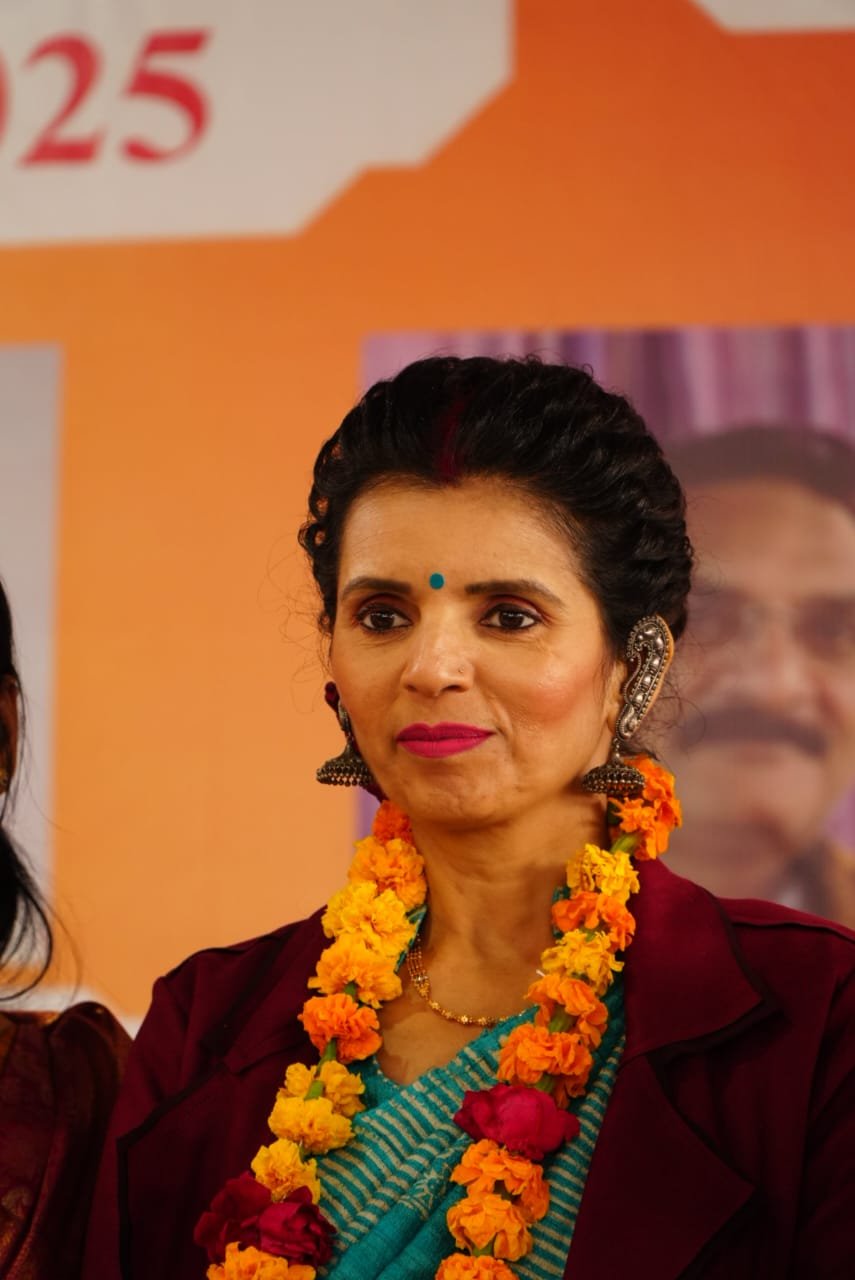
— Haripriyaa Bharggav (Author)
Frequently Asked Questions
Why does the article say left-right is an imported framework?
The left-right political axis emerged from a specific Western historical context. India’s Sanatan Shashvat Parampara never organised political thought this way it concentrated on the people’s spiritual, physical, mental and economic advancement rather than on ideological positioning.
Does “merged philosophy” just mean centrism?
No. Centrism is a third position on the same left-right line. A merged philosophy steps off the axis entirely and consolidates whatever genuinely serves the nation from any direction, applied contextually rather than uniformly.
Why does India’s diversity require a merged approach?
In a country this diverse, no single ideology can fit every region, faith, language and economic condition without harming most of them. Merger allows the right approach to be applied to the right context rather than forcing one doctrine everywhere.
What does “India is not a party-based nation” mean?
It means the nation and its people, not the parties, should be central. Parties should adapt their philosophy to serve the nation rather than implanting their ideology onto it the democratic principle of “for the people, by the people, of the people.”
How does this connect to SSS Bharat?
The SSS Bharat vision of a Samruddha, Samarth and Sanskrutik Bharat depends on a unified, people-first framework because a nation polarised along an imported axis cannot build prosperity, capability and cultural confidence together.