Every major business decision looks like a question of numbers: which market to enter, whom to hire, which partner to trust, what to do when a quarter goes badly. Underneath each one is a question of values. What will you compromise on, and what will you refuse to compromise on, whatever the spreadsheet says?
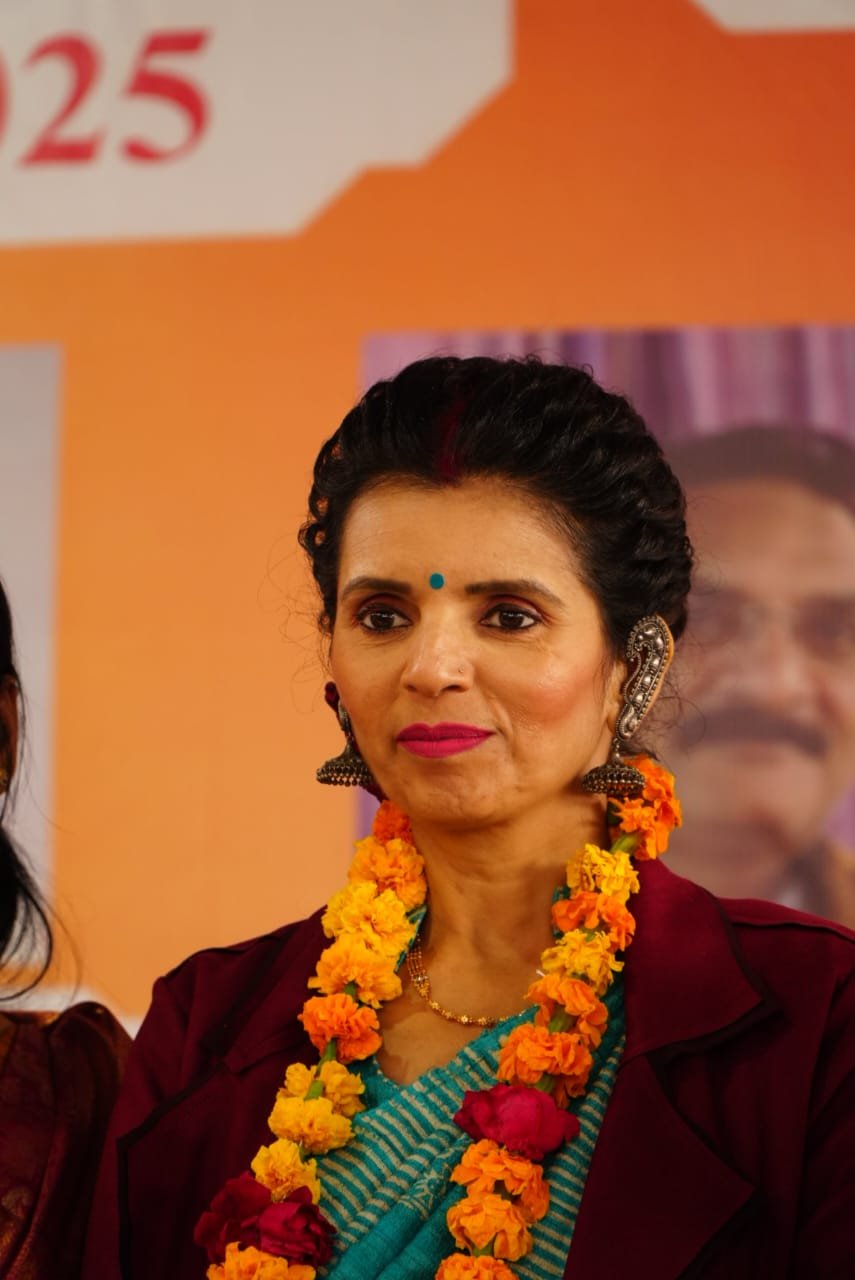
For industrialist and philanthropist Haripriyaa Bharggav, this is the real foundation of enterprise. Her ventures span 11 verticals, and her social work through the Sanatan Sanskrutik Sangh runs on the same belief: decisions are only as strong as the values behind them. That belief is also central to SSS Bharat, her vision of a Samruddha, Samarth and Sanskrutik India. This article looks at what research says about values and decisions, what Indian business history teaches, and a practical set of decision principles drawn from the SSS Bharat philosophy.
Why Values Shape Decisions: What the Research Says
Management scholars have studied this link for four decades. In 1984, Donald Hambrick and Phyllis Mason proposed the upper echelons theory in the Academy of Management Review. Its central idea is that an organisation’s strategic choices and performance are partly predicted by the characteristics of its top managers. According to the theory, a leader’s values and cognitive base shape how they read strategic situations and respond to them, and those choices shape performance.
Put simply, an organisation becomes a reflection of its leaders. Faced with the same data, two founders with different values will make different decisions, and build very different companies. Values are not a soft layer on top of strategy. They are the lens through which strategy is made.
When Values Bend: A Cautionary Lesson from Indian Business
India’s corporate history shows what happens when values give way under pressure.
In January 2009, Satyam Computer Services founder B. Ramalinga Raju confessed to an accounting fraud of about ₹7,000 crore and resigned from the board. The confession letter described how a small gap between real profits and reported profits had kept widening over the years until it could no longer be managed. Investors lost as much as ₹14,000 crore as the shares collapsed. In 2015 a special CBI court convicted Raju and nine others, sentencing Raju to seven years in jail. There was a painful irony in it: Satyam means truth in Sanskrit, and the company had once been India’s fourth-largest software services firm.
The lesson for every entrepreneur is that values rarely collapse in one dramatic moment. They wear away through small decisions that each seem reasonable at the time. The only real protection is a leader whose values are settled before the pressure arrives.
The Trust Dividend: Why Values Matter More in 2026
Values-led decision-making is also becoming a competitive advantage. The 2026 Edelman Trust Barometer found that “my employer” is now the most trusted institution: 78% of employees trust their employer. That is 14 points ahead of business in general and 25 points ahead of government.
People also expect more of their leaders. Respondents said CEOs should lead in bridging divides (73%). They backed approaches such as consulting people with different values and backgrounds when making decisions (75%) and engaging constructively with employees who criticise the company (74%). Yet only 44% believe CEOs are actually doing this well, a 29-point gap in leadership credibility.
The warning signs are visible too. Seven in 10 respondents said they were unwilling or hesitant to trust someone with different values, backgrounds or approaches to social issues. For leaders, the message is clear. Trust is available, but it goes to those whose decisions show consistent values and openness.
Values Are Now Disclosed, Not Just Declared
In India, values are increasingly written into regulation. Under SEBI’s Business Responsibility and Sustainability Reporting (BRSR) framework, the top 1,000 listed companies have had to report their performance against the nine principles of the National Guidelines on Responsible Business Conduct from FY 2022-23. SEBI has since added BRSR Core, a set of key metrics with third-party assurance, phased in from the top 150 companies in FY 2023-24 to the top 1,000 by FY 2026-27.
For growing enterprises and family businesses, this is a preview of what investors, lenders and partners will increasingly expect. Values-based decisions will need to be shown in data, not just stated in mission statements.
Five Decision Principles from the SSS Bharat Philosophy
Haripriyaa Bharggav’s teaching through SSS Bharat draws on India’s philosophical traditions to offer practical principles for decision-making. Five stand out for business leaders.
1. See every side before you decide (Anekantavada)
The Jain principle of Anekantavada, the many-sidedness of truth, holds that no single viewpoint captures the whole truth. Every perspective is partial. Haripriyaa Bharggav uses an everyday example. A mother slaps her son. From one side it looks harsh, from another it looks protective. The full truth appears only when you look from several directions.
In business, poor decisions often come from judging a person, a market or a crisis too quickly on incomplete information. Her guidance is to fix the circumstance rather than condemn the person. This matches what the 2026 Edelman data shows people expect of leaders: consulting those with different views before deciding.
2. Communicate with clarity (Vyavahar and Nishchay)
Many conflicts inside organisations come from misunderstanding rather than real disagreement. The SSS Bharat philosophy explains this with the difference between Vyavahar Bhasha, practical everyday speech, and Nishchay Bhasha, precise and literal truth. When a train pulls in, we say “Jaipur has arrived”, although strictly speaking we have arrived at Jaipur. Everyone understands the casual version. But when two people describe the same reality in different frames, conflict follows.
For leaders, the practice is simple: state important decisions in clear, unambiguous language. As she puts it, words divide; wisdom unites.
3. Put people first, across four dimensions of progress
The SSS Bharat approach asks leaders to shape strategy around the complete progress of people:
- Atmik: spiritual
- Sharirik: physical
- Manasik: mental
- Arthik: economic
A decision that improves the financial numbers but damages employees’ health, peace of mind or sense of meaning is not a sound decision. This framework also rejects rigid ideological camps. Good leadership asks what is genuinely best for the people it serves, not which side a policy belongs to.
4. Choose unity over division
Haripriyaa Bharggav often uses the image of a closed fist. While the fingers stay together, nothing can force the fist open. An outsider who wants in must first set the fingers against each other: divide, then rule.
Organisations work the same way. Decisions that set departments against each other, reward internal rivalry or split teams by background weaken the enterprise from within. Values-led leaders make decisions that keep the fist closed: aligned teams, shared goals and collective strength.
5. Honour commitment, even when it is inconvenient
The SSS Bharat philosophy treats commitment as a sign of maturity, not a burden. A relationship without accountability, it holds, is only a temporary arrangement. In business the same applies to partners, suppliers, employees and customers. Leaders who keep their word when it costs them build the reputation that compounds over decades. Those who treat every agreement as provisional eventually find no one willing to commit to them.
Values in Action: How Haripriyaa Bharggav Makes Decisions
These principles show up in the decisions that have shaped Haripriyaa Bharggav’s own journey.
- Purpose over security. She chose to leave a secure position as a Sub-Inspector in the Lalitpur Police Department to pursue a larger mission of service and transformation.
- Many-sidedness in practice. As Chairperson of the Sanatan Sanskrutik Sangh, she convened the Moksh Lakshi Sammelan, which brought together Vedic, Jain, Buddhist and Sikh gurus. The decision reflects Anekantavada: finding unity by honouring several traditions rather than privileging one.
- Inclusion as a principle. The Sangh’s celebration of Ambedkar Jayanti in Bundelkhand presented Dr. B. R. Ambedkar’s ideals of equality and justice as part of a shared heritage, a deliberate choice to bring people together rather than divide them.
- Business serving society. Her guiding philosophy at Howeells Ventures LLP is that economic strength must serve social and cultural progress. It shapes how capital is deployed across her ventures, and it sits behind her decision to direct success into the Total Village Development Programme in Bundelkhand.
The common thread is that her decisions are made with values settled first, and strategy follows from them.
A Values-Based Decision Checklist for Business Leaders
Before your next major decision, test it against five questions drawn from the principles above:
- The dharma test: Would this decision still feel right if every stakeholder could see exactly how and why it was made?
- The many-sides test: Have I genuinely heard the perspectives of those who disagree, or only those who agree?
- The clarity test: Can I state this decision in one clear sentence that everyone will understand the same way?
- The people test: Does it support the spiritual, physical, mental and economic well-being of the people it affects?
- The generation test: Would I be proud to explain this decision to my children twenty years from now?
A decision that passes all five is unlikely to become tomorrow’s crisis.
Conclusion: Values Are the Strategy Behind the Strategy
Markets reward speed, but they reward trust for longer. Research on upper echelons, India’s hardest corporate lessons and the 2026 trust data all point the same way: the values of the person making decisions ultimately decide the fate of the enterprise.
This is why SSS Bharat places values at the centre of nation-building. A Samruddha (prosperous) Bharat depends on businesses that create wealth honestly. A Samarth (capable) Bharat needs leaders with the strength to decide well under pressure. And a Sanskrutik (culturally rooted) Bharat supplies the timeless principles that guide those decisions.
Haripriyaa Bharggav’s call to India’s capable and successful people is:
“प्रत्येक सक्षम, प्रत्येक सफल, प्रत्येक सनातनी को आमंत्रण है — निष्क्रिय से सक्रिय बनो।” (Every capable person, every successful individual, every Sanatani is invited to move from passive to active.)
For business leaders, becoming active starts with the next decision, made with values first.
To connect with Haripriyaa Bharggav or learn more about SSS Bharat, visit the Contact page.
Frequently Asked Questions
How do leadership values influence business decisions?
Values act as the lens through which leaders interpret situations and weigh options. Upper echelons theory holds that an organisation’s strategic choices and performance partly reflect the values and characteristics of its top managers.
Why do values matter more for business leaders in 2026?
The 2026 Edelman Trust Barometer found that employers are now the most trusted institution, at 78% among employees. People expect CEOs to lead by consulting diverse perspectives and engaging constructively with critics.
What is Anekantavada, and how does it apply to leadership?
Anekantavada is the Indian philosophical principle that truth has many sides and any single perspective is partial. For leaders, it means gathering multiple viewpoints before making important decisions.
What is BRSR in India?
BRSR is SEBI’s Business Responsibility and Sustainability Reporting framework. It has been mandatory for the top 1,000 listed companies since FY 2022-23, with an assured core set of indicators being phased in through FY 2026-27.
How does SSS Bharat relate to values-based leadership?
SSS Bharat, Haripriyaa Bharggav’s vision of a prosperous, capable and culturally rooted India, holds that sustainable national progress depends on leaders who make decisions grounded in ethics, unity and service.