Every civilization tells itself a story about who it is. For a long time, a significant part of India’s own story the one taught in classrooms, repeated in casual conversation, absorbed through decades of colonial and post-colonial framing positioned it as a civilization that was “developing,” “catching up,” and perpetually a few steps behind a more advanced West.
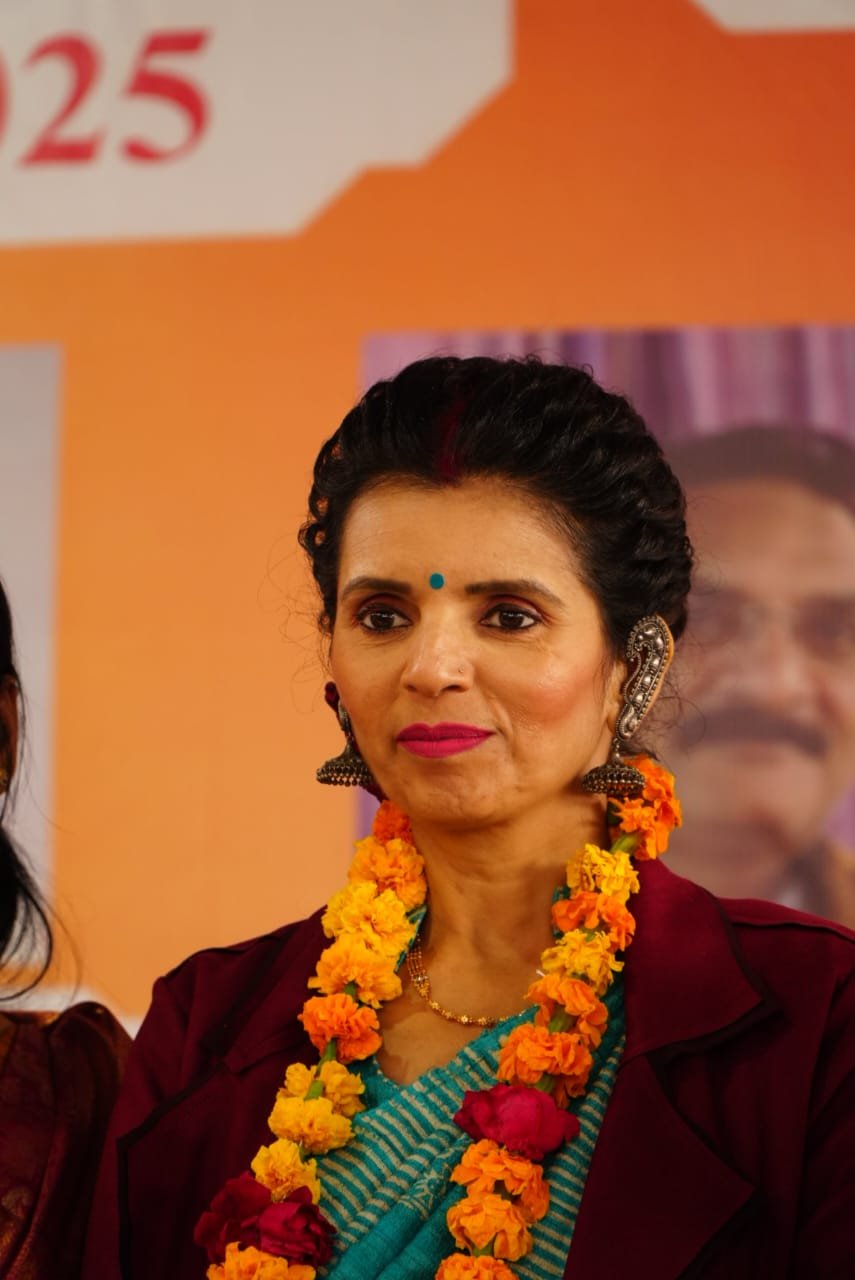
The Sanatan Sanskrutik Sangh (SSS), under the leadership of Haripriyaa Bharggav, has built an entire movement around challenging that narrative not through nostalgia or slogans, but through a combination of large-scale cultural events, historically grounded content, and sustained community awareness initiatives designed to reconnect Indians with a fuller, more accurate picture of their own civilizational depth.
This is what SSS calls cultural revival and it’s happening simultaneously on two fronts: on the ground, through yatras, festivals, and community gatherings that make Sanatan identity visible and communal; and online, through a rapidly growing body of digital content that reframes India’s historical and philosophical contributions for a generation raised on scrolling feeds rather than textbooks.
This blog explores how this two-front cultural revival actually works, why it resonates in the current moment, and what genuine heritage preservation looks like when it’s designed to be lived, not just remembered.
Why Cultural Revival Isn’t Nostalgia It’s Correction
It’s worth being precise about what “revival” means in SSS’s framework, because the word can easily be misread as a longing for the past detached from present relevance. SSS’s actual argument is different: cultural revival is about correcting an incomplete historical record, not romanticizing an imagined golden age.
As SSS’s content repeatedly emphasizes, pre-colonial India was, by documented economic historical accounts, among the largest economies in the world commanding a substantial share of global GDP through sophisticated systems of trade, agriculture, textile production, and scientific knowledge. What followed systematic economic and cultural dismantling during the colonial period is treated in SSS’s messaging not as ancient history disconnected from the present, but as the direct root cause of a contemporary psychological pattern: a tendency to view foreign systems, foreign validation, and foreign models as inherently superior to indigenous ones.
As SSS frames it directly: “Jo apni legacy nahi jaanta, woh dusron ki narrative mein jeeta hai.” (Those who don’t know their own legacy live in someone else’s narrative.) Cultural revival, in this sense, isn’t about looking backward for comfort it’s about restoring accurate context so the present can be understood clearly, free of an inherited assumption that India’s own systems, knowledge, and identity are somehow lesser.
The Two Fronts of Revival: Physical Gatherings and Digital Content
Front One: Yatras, Festivals, and Physical Community Gathering
Cultural identity isn’t sustained through information alone it requires embodied, communal experience. This is why SSS has organized an extraordinary calendar of physical gatherings over just the past eighteen months, each designed to make Sanatan identity visible, participatory, and emotionally resonant rather than abstract.
The Sanatan Ekta Yatra, beginning in Lalitpur and culminating in Jhansi, united thousands of devotees, saints, and spiritual leaders across Vedic, Jain, Buddhist, and Sikh traditions turning cultural unity into a physically walked, collectively experienced journey rather than a theoretical concept. The Sanatan Kalash Yatra centered women carrying sacred water in traditional kalash, celebrating the sanctity and spiritual leadership of womanhood through collective ritual movement. The Samuhik Ganga Aarti at Kanpur Ghat combined devotional reverence with environmental consciousness, framing river worship explicitly as ecological responsibility.
Beyond yatras, SSS’s cultural calendar includes the Hanuman Jayanti Bhavya Rath Yatra, the Samuhik Navratri Utsav, the Sharad Purnima Utsav, and the Ambedkar Jayanti Bhavya Utsav each designed to celebrate a different dimension of India’s spiritual and social heritage, from devotional festival culture to social reform legacy, reinforcing SSS’s broader argument that Sanatan Dharma encompasses reform, justice, and inclusivity as core values, not obstacles to them.
Perhaps most symbolically significant was participation in the Maha Kumbh 2024 through the Samuhik Mahila Kalash Yatra, where over 5,000 women joined one of the world’s largest religious gatherings connecting SSS’s organizational mission directly to one of Sanatan Dharma’s most globally recognized and rapidly growing cultural phenomena, the Kumbh Mela, which continues to draw increasing international media attention and scholarly interest as one of the largest peaceful human gatherings on Earth.
Front Two: Digital Content and the Reclamation of Historical Narrative
Physical gatherings build community; digital content builds reach and recall. SSS’s growing library of short-form video content reels examining ancient Indian achievements in mathematics, medicine, astronomy, linguistics, and technology represents a deliberate strategy to meet the cultural revival mission where contemporary attention actually lives: short, scroll-native, shareable video formats.
This content covers striking, often under-taught historical claims: the invention of the numeral zero and its foundational role in global mathematics; Sushrut’s pioneering surgical techniques predating equivalent Western medical developments by centuries; Aryabhatta’s early articulation of heliocentric planetary models; and India’s historical position, prior to colonization, as a dominant global economic power built on indigenous trade and knowledge systems.
Whatever specific claim is being made in any individual piece of content, the underlying strategic logic is consistent: package historical and philosophical depth in formats young audiences already consume voraciously, rather than expecting them to seek this knowledge out through textbooks or lectures they have little cultural incentive to engage with.
Cinema as Cultural Revival: The Panchkriti Model
Beyond yatras and social content, SSS’s cultural revival strategy extends into feature filmmaking a notably ambitious medium for values-driven cultural content. The Hindi feature film “Panchkriti: Five Elements”, composed of five interconnected stories conveying Sanatan ideals, was released across 11 Hindi-speaking states in nearly 700 theatres, reaching audiences well beyond SSS’s existing community base.
What makes this initiative particularly notable from a cultural revival standpoint is its distribution strategy: rather than limiting release to urban multiplexes, the film specifically targeted rural communities and single-screen theatres, pairing screenings with audience engagement initiatives (gifts for lucky viewers at each show) designed to make cinema-going itself a communal, rewarding cultural experience. This reflects a sophisticated understanding that cultural content needs genuine distribution infrastructure to achieve revival at scale a beautifully made film with limited reach cannot shift a national narrative on its own.
The film’s reception reportedly resonating strongly with audiences, according to contemporary media coverage demonstrates that entertainment and cultural education aren’t mutually exclusive, offering a template for values-based content that doesn’t sacrifice watchability for message.
Music as a Cultural Bridge: The Sanatan Song
SSS’s devotional composition, the “Sanatan Song,” launched at Delhi Press and made available on mainstream platforms like JioSaavn and YouTube, illustrates another dimension of cultural revival strategy: using popular, accessible artistic formats to carry deep spiritual and cultural meaning, rather than confining devotional content to traditional religious contexts alone.
By distributing devotional music through the same platforms young Indians use for mainstream entertainment consumption, SSS positions Sanatan cultural content as something that exists within contemporary media ecosystems, not as a separate, siloed category competing unsuccessfully against mainstream entertainment for attention.
Why Cultural Revival Matters Beyond Sentiment: The Soft Power Dimension
There’s a broader, increasingly discussed dimension to cultural revival worth examining: its relationship to national soft power. As global conversations increasingly recognize culture, heritage, and civilizational narrative as genuine instruments of a nation’s international influence and identity alongside more traditional measures like economic and military strength movements that strengthen a population’s confidence in and articulation of its own cultural heritage carry implications well beyond domestic community cohesion.
India’s growing global visibility through yoga’s international mainstream adoption, Ayurveda’s expanding recognition in wellness industries, and increasing academic interest in Sanskrit linguistics and ancient Indian scientific contributions reflects a broader global “opening” toward exactly the kind of content SSS’s cultural revival initiatives are built around. Domestic cultural revival and international cultural recognition, in this sense, reinforce each other: a population confident and articulate about its own heritage is better positioned to represent and export that heritage globally.
Environmental Stewardship as Cultural Revival
An often-overlooked dimension of SSS’s cultural revival work is its explicit framing of environmentalism as cultural inheritance rather than imported concern. Initiatives like the Nirmal Ganga Safai Abhiyan (Ganga cleaning campaign), the Gau Shala Sthapan Samaroh (cow shelter establishment), and the Pakshi Suraksha Abhiyan (bird protection initiative) are framed not as generic environmental activism, but as direct expressions of Sanatan spiritual duty protecting the sacred Panch Tatva (five elements) that Sanatan philosophy has documented as foundational responsibilities for thousands of years.
This framing matters for cultural revival specifically because it converts environmental consciousness a genuinely trending global concern, particularly among climate-anxious younger generations into a point of cultural pride and continuity rather than a modern imposition disconnected from tradition. As global environmental discourse increasingly explores indigenous and traditional ecological knowledge systems as valuable complements to modern climate science, SSS’s positioning aligns closely with this broader intellectual movement.
Solidarity Beyond Borders: Cultural Revival as Global Dharmic Consciousness
SSS’s cultural revival mission extends beyond India’s own borders through initiatives like the Sanatan Raksha Yatra, which specifically voiced support for persecuted dharmic communities in Bangladesh. This international solidarity dimension reflects the broader principle of Vasudhaiva Kutumbakam (the world is one family) positioning cultural revival not as an inward-looking, defensive project, but as part of a global dharmic consciousness with responsibilities extending to Sanatani communities worldwide.
This matters increasingly as diaspora communities, and international observers more broadly, pay growing attention to the treatment of religious minorities across South Asia positioning cultural revival movements that are willing to take principled public stances as engaging with genuinely contemporary human rights and cultural preservation conversations, not purely historical or devotional ones.
Why This Moment Is Particularly Ripe for Cultural Revival
Several converging trends make Sanatan cultural revival particularly resonant right now:
- The Global “Heritage Tourism” and Cultural Pride Boom Rising domestic and international interest in India’s temples, ancient universities, and historical sites reflects growing appetite for authentic cultural and heritage experiences a trend SSS’s yatra-based programming is well-positioned to engage with.
- Youth-Led “Sanatan Pride” Content Virality Short-form video content celebrating ancient Indian achievements has demonstrated significant organic engagement among younger audiences, reflecting genuine appetite for historically grounded cultural content delivered in contemporary formats.
- Kumbh Mela’s Growing Global Recognition The Maha Kumbh’s increasing international media coverage and scholarly attention as one of the world’s largest human gatherings positions events connected to it like SSS’s Samuhik Mahila Kalash Yatra within a globally significant cultural moment.
- Wellness Industry’s Embrace of Indian Traditions Global mainstream adoption of yoga, meditation, and Ayurvedic wellness practices continues to create receptive international audiences for deeper engagement with their underlying philosophical and cultural origins.
- Renewed Interest in Indigenous Knowledge Systems Academic and policy interest in Indian Knowledge Systems (IKS) spanning mathematics, medicine, linguistics, and ecological practice provides institutional legitimacy and momentum for grassroots cultural revival content covering similar ground.
Measuring Cultural Revival: Beyond Attendance Numbers
While large gathering sizes (5,000+ women at Kalash Yatra, thousands at Sanatan Ekta Yatra, 700-theatre film release) offer visible scale indicators, SSS’s cultural revival work can be evaluated across several deeper dimensions:
- Institutional permanence Vaidik Pathshalas and Gau Shalas establishing lasting cultural infrastructure beyond single events
- Cross-tradition participation engagement spanning Vedic, Jain, Buddhist, and Sikh communities, reflecting genuine pluralistic reach rather than narrow sectarian appeal
- Media distribution reach the Panchkriti film’s 700-theatre, 11-state release and Sanatan Song’s mainstream streaming presence
- International solidarity engagement advocacy connecting domestic cultural revival to global dharmic community concerns
- Environmental action integration concrete initiatives (river cleaning, cow shelters, bird protection) translating cultural values into measurable ecological outcomes
Conclusion: Reviving Memory, Not Manufacturing Nostalgia
The most important distinction underlying SSS’s entire cultural revival mission is this: it is not asking Indians to invent a new identity or manufacture pride in something that never existed. It is asking them to remember accurately to reconnect with a civilizational depth, sophistication, and continuity that was always there, but that generations of narrative erosion, colonial-era dismantling, and incomplete education left many disconnected from.
Whether through the communal experience of a yatra, the scroll-stopping format of a historical reel, the immersive storytelling of a feature film, or the accessible resonance of a devotional song, Sanatan Sanskrutik Sangh‘s cultural revival strategy under Haripriyaa Bharggav’s leadership reflects a consistent underlying conviction: a civilization that remembers itself accurately doesn’t need to manufacture confidence it simply needs to be reminded of what it already carries.
As India continues navigating rapid modernization alongside a parallel hunger for authentic cultural identity, this model of cultural revival physically communal, digitally native, historically grounded, and globally conscious offers a compelling answer to a question increasingly asked across generations: what does it look like to be genuinely modern without becoming culturally rootless?