India has never lacked spiritual wealth. What it has lacked, at critical moments in its history, is unity in how that spiritual wealth is understood and lived. For centuries, a civilization built on one continuous stream of dharmic thought has found itself fractured by caste, by sect, by region, and eventually, by design.
The Sanatan Sanskrutik Sangh (SSS), led by Haripriyaa Bharggav, has placed a single, ambitious idea at the center of its mission: that spiritual leadership today must be measured not by how many followers it gathers, but by how much division it heals. In a country of extraordinary religious and cultural diversity, SSS’s model of dharmic unity offers a framework that feels increasingly urgent not just for religious harmony, but for national cohesion itself.
This blog explores what dharmic unity actually means in SSS’s philosophy, why spiritual leadership is uniquely positioned to solve problems that political and economic leadership cannot, and how this model is playing out through real initiatives on the ground.
The Historical Wound: Why India Was Divided in the First Place
To understand why SSS frames unity as the central spiritual project of our time, it helps to understand the diagnosis behind it a diagnosis rooted in a very old strategic principle: as long as a fist stays closed, no outside force can enter it.
This metaphor, drawn directly from classical statecraft traditions like Chanakya Neeti, describes exactly how external powers historically approached a united India: not through direct confrontation, but through systematic division first along religious lines, then caste lines, then sub-caste lines, then gender lines, then economic lines, then urban-versus-rural lines. Each wedge, once driven in, opened the fist a little further.
SSS’s founding insight is that many of these fractures communal tension, caste hierarchy, gender inequality, rural-urban resentment were not organic outcomes of Sanatan philosophy itself, but the residue of deliberate, historically documented strategies to fragment a civilization that was, at its philosophical core, built on the opposite principle: Vasudhaiva Kutumbakam, the world is one family.
This reframing matters enormously for spiritual leadership today. It means the work of “dharmic unity” isn’t about inventing something new; it’s about healing back to an original state, restoring a wholeness that existed before external and internal forces pulled it apart.
What “Dharmic Unity” Actually Means in SSS’s Philosophy
It’s worth being precise here, because “unity” is an easy word to use vaguely. In SSS’s framework, dharmic unity rests on a specific, carefully articulated idea: Sanatan Dharma is not one religion among many; it is the shared source from which multiple traditions flow.
As Haripriyaa Bharggav frames it: “Vedic, Jain, Buddhist, Sikh sabhi mokshalakshi dharmic paramparaon ko jaati aur varna se upar uthakar ekjut aur sashakt karna.” (Uniting and empowering all liberation-oriented dharmic traditions Vedic, Jain, Buddhist, and Sikh beyond caste and social division.)
This is a genuinely distinctive theological and organizational position. Rather than positioning Sanatan Dharma as a competing sect requiring converts, SSS positions it as the common trunk from which Vedic, Jain, Buddhist, and Sikh traditions all branch, each pursuing the same eternal principles of truth, devotion, liberation, and compassion, through different practices and philosophical emphases. In this view, someone practicing Jain ahimsa, Sikh seva, Buddhist mindfulness, or Vedic ritual is not practicing a “different religion” from Sanatan Dharma; they are expressing one continuous spiritual inheritance through different, equally valid streams.
This framing does something important: it makes unity a matter of recognition rather than conversion. No one is being asked to abandon their specific tradition. They are being invited to recognize a shared root system underneath traditions that history has taught them to see as separate.
The Moksh Lakshi Sammelan: Unity in Practice, Not Just Theory
If dharmic unity sounds abstract, SSS has made a deliberate effort to make it visibly concrete. The Moksh Lakshi Sammelan, organized under Haripriyaa Bharggav’s leadership, brought together revered Gurus from Vedic, Jain, Buddhist, and Sikh traditions in a historic confluence to deliberate on Sanatan Dharma and national harmony.
This wasn’t a symbolic photo opportunity; it was structured as genuine interfaith deliberation on shared spiritual ground, exploring the common pursuit of Moksha (liberation) across traditions that are too often treated in public discourse as separate, competing religious categories. Events like this matter because spiritual leadership that only preaches unity in sermons, without demonstrating it in physically convened, cross-tradition gatherings, tends to remain rhetorical. SSS’s approach insists on doing both. Such gatherings also highlight how cultural events preserve Indian traditions by creating spaces where diverse spiritual practices and shared values can be experienced collectively.
Similarly, the Sanatan Ekta Yatra beginning in Lalitpur and culminating in Jhansi physically embodied this same philosophy, uniting thousands of devotees, saints, and spiritual leaders from across Vedic, Jain, Buddhist, and Sikh traditions in one collective procession, joined by public figures and artists including Mukesh Khanna and Asrani. Unity, in SSS’s model, is something you walk together, not just talk about.
Spiritual Leadership as a Distinct Category And Why It Matters Right Now
Political leadership operates on electoral cycles. Corporate leadership operates on quarterly earnings. Spiritual leadership operates on generational timelines, and this distinction matters enormously for the specific problem of national division.
SSS’s broader messaging draws a clear and increasingly relevant distinction: India, in this framing, should not be a “right-wing nation” or a “left-wing nation”; it should be a nation whose political parties compete on how best to serve dharmic and national interest, not on which imported ideological framework to implant on the country. As articulated in SSS’s foundational discussions: “We are not a party-based nation. We are a democratic nation… whichever party comes to power should implant a policy for the benefit of the nation, not their own philosophy on the nation.”
This is precisely the space spiritual leadership is positioned to occupy: a space above partisan cycles, where the measure of success isn’t electoral victory but social cohesion across generations. In an era of increasingly polarized political discourse, a genuinely global, not just Indian, trend- spiritual leadership that explicitly refuses partisan alignment and instead anchors itself in shared civilizational values offers something rare: a common ground that doesn’t require anyone to switch political sides to participate in it.
The Preventive-Supportive-Curative Model: A Spiritual Framework for National Problem-Solving
One of the more distinctive contributions of SSS’s leadership philosophy is a framework borrowed directly from classical Indian medicine and applied to social and national challenges: prevention, support, and cure.
The logic is simple but rarely applied systematically in public policy: most of India’s recurring crises communal tension, poverty, terrorism, environmental degradation are addressed only after they erupt, through reactive “curative” measures, with almost no investment in preventive groundwork or ongoing supportive structures. As SSS’s leadership puts it: “Prevention hoti hai jab aag lag chuki ho yeh galat hai. Pehle paani ka kuan khodna chahiye, tunnel se thanda paani pahunchte rehna chahiye, taaki aag lagne ki jagah hi na bane.”
Applied to dharmic unity specifically, this means:
- Prevention: proactively teaching shared spiritual roots across Vedic, Jain, Buddhist, and Sikh traditions before division narratives take hold, particularly among youth.
- Support: sustaining ongoing interfaith dialogue platforms, cultural education, and community events that continuously reinforce cohesion, rather than waiting for tension to require intervention.
- Cure: when division does erupt (communal incidents, political polarization, social unrest), offering reconciliation frameworks rooted in shared dharmic identity rather than purely administrative or security-based responses.
This model reframes spiritual leadership not as a passive, reactive comfort-giving role, but as an active, strategic layer of national resilience-building arguably one of the more sophisticated applications of ancient Indian philosophical frameworks to modern governance challenges.
Women’s Spiritual Leadership as a Unifying Force
A recurring and structurally significant theme in SSS’s approach to dharmic unity is the centering of women’s spiritual leadership not as a diversity gesture, but as a core organizing principle. Events like the Sanatan Kalash Yatra and the Samuhik Mahila Kalash Yatra at Maha Kumbh 2024, where over 5,000 women participated, position Matru Shakti (Mother Power) as foundational to spiritual and social cohesion.
This matters for dharmic unity specifically because women, across nearly every tradition SSS engages with Vedic, Jain, Buddhist, and Sikh are frequently the primary carriers of ritual practice and cultural transmission within families. A unity movement that centers women’s participation isn’t just being inclusive; it’s engaging with the actual mechanism through which cross-generational spiritual cohesion is sustained.
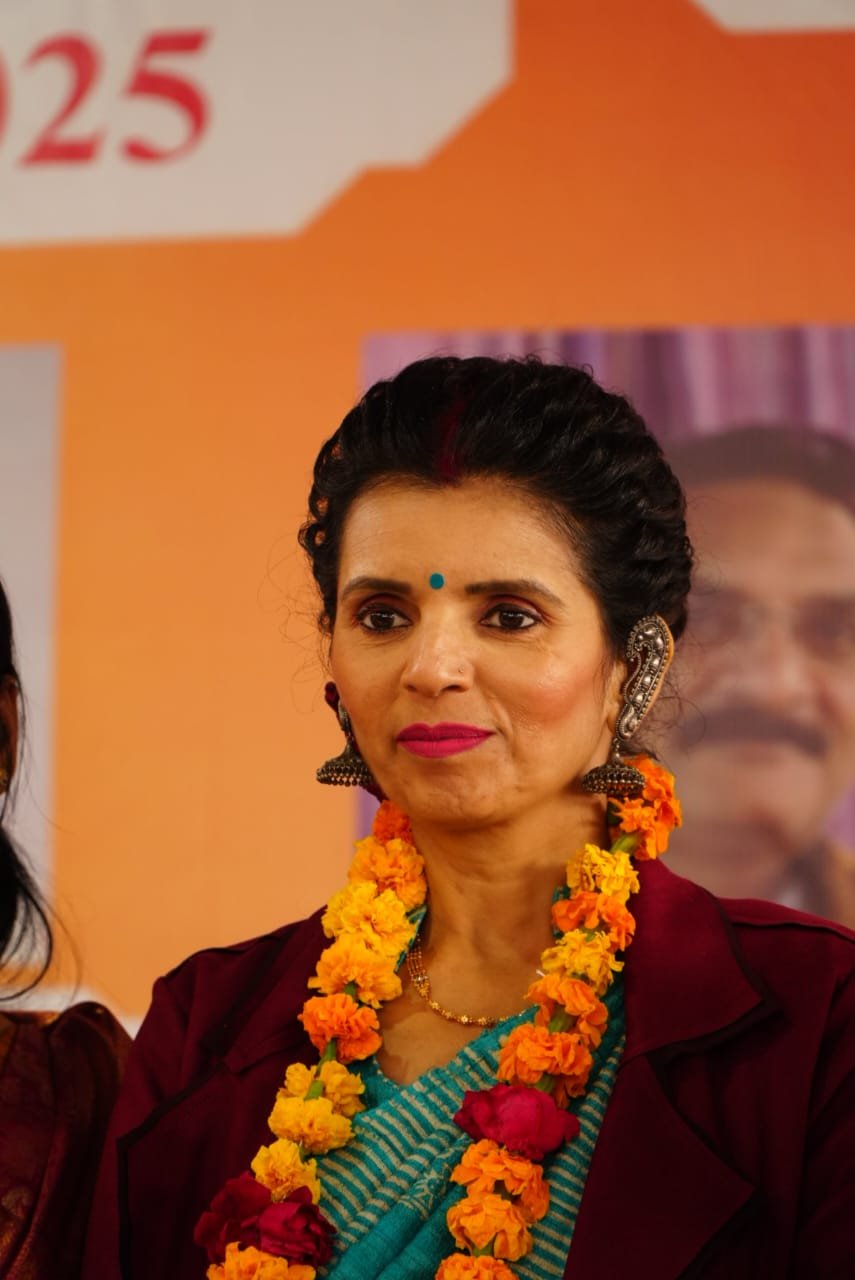
Haripriyaa Bharggav’s own position as a woman leading a diversified business empire and a national interfaith spiritual movement reinforces this structurally. Her leadership demonstrates that dharmic authority in the SSS model is not gender-restricted, aligning with broader global conversations about women’s leadership in faith-based and civil society movements.
Dharmic Unity Beyond India’s Borders
SSS’s conception of dharmic unity doesn’t stop at national boundaries. The Sanatan Raksha Yatra, for instance, extended its message of unity and protection to voice support for persecuted dharmic communities in Bangladesh, reflecting the principle that Vasudhaiva Kutumbakam (the world is one family) implies solidarity with dharmic communities globally, not just domestic interfaith harmony.
This international dimension matters in the current moment, as global diaspora communities increasingly seek connection to authentic dharmic identity while navigating life outside India, and as religious minority protection remains a live and pressing conversation across South Asia. SSS’s willingness to take a public, principled stance on these issues rather than retreating into safe neutrality reflects the “Shaurya” (valor) component of its leadership philosophy discussed elsewhere in its teachings: genuine unity work sometimes requires uncomfortable public courage, not just comfortable private conviction.
Why This Conversation Is Especially Relevant in 2026
Several converging trends make spiritual leadership and dharmic unity a particularly timely conversation right now:
- Rising Global Interest in Interfaith and Interspiritual Dialogue: As religious polarization increases in many parts of the world, models that demonstrate genuine cross-tradition cooperation like the Moksh Lakshi Sammelan offer a rare, positive counter-narrative.
- Youth Disillusionment With Institutional Politics: With growing skepticism toward purely political solutions to social division, particularly among younger demographics, values-based, non-partisan spiritual leadership is increasingly seen as a credible alternative source of moral authority.
- The “Sanatan Pride” Cultural Moment: There has been a notable rise in youth-facing content celebrating ancient Indian scientific, philosophical, and civilizational achievements a trend SSS actively engages with, using historical confidence as a foundation for contemporary unity, rather than division or superiority narratives.
- Growing Recognition of Women’s Roles in Faith Leadership: Global conversations around gender and religious leadership increasingly spotlight women-led faith and cultural movements, positioning SSS’s structure as a notable, contemporary example.
- Renewed National Conversations on Unity in Diversity: As India continues navigating its extraordinary linguistic, regional, and religious diversity, frameworks that offer unity without erasure, recognizing distinct traditions while emphasizing shared roots speak directly to ongoing national conversations about cohesion and identity.
The Leadership Test: Does Unity Require Erasing Difference?
A fair question worth addressing directly: does SSS’s vision of dharmic unity ask Jain, Buddhist, or Sikh practitioners to dilute their distinct traditions in favor of a homogenized “Sanatan” identity? SSS’s own framing suggests the answer is no; the model is explicitly pluralistic, not assimilationist. The goal, as stated, is to unite these traditions “beyond caste and varna,” not to collapse their distinct practices, philosophies, or institutional identities into a single uniform structure.
This distinction unity of root, diversity of expression is what separates dharmic unity, as SSS frames it, from more coercive or homogenizing models of religious nationalism seen elsewhere in the world. It is closer, philosophically, to recognizing a shared ancestry among siblings who have each built distinct lives, rather than insisting all siblings live identically.
Conclusion: Leadership Measured in Generations, Not Headlines
Spiritual leadership, done well, is one of the slowest and least glamorous forms of leadership there is. It doesn’t produce quarterly results. It doesn’t win elections. Its successes are measured in things that are genuinely hard to quantify: whether a community trusts its neighbors a little more, whether a young person raised amid digital fragmentation finds a stable sense of identity, whether a centuries-old wound shows signs, even slowly, of healing.
The Sanatan Sanskrutik Sangh‘s model, anchored in Haripriyaa Bharggav’s leadership and expressed through initiatives like the Sanatan Ekta Yatra, the Moksh Lakshi Sammelan, and ongoing interfaith and cross-tradition programming, represents a bet that this slower, generational form of leadership is exactly what a fractured, fast-moving world currently needs most.
In a country whose deepest civilizational instinct has always been unity Vasudhaiva Kutumbakam, the world as one family the work of dharmic unity isn’t really about building something new. It’s about remembering something old, and having the patience, courage, and structural commitment to rebuild it, one yatra, one sammelan, and one generation at a time.