For decades, “development” in India has been measured almost entirely in economic terms: GDP growth, per capita income, infrastructure spending, ease-of-doing-business rankings. These numbers matter. But they miss something fundamental: an economy is not a machine detached from the people who run it. It is a reflection of their values, their knowledge, and their sense of who they are.
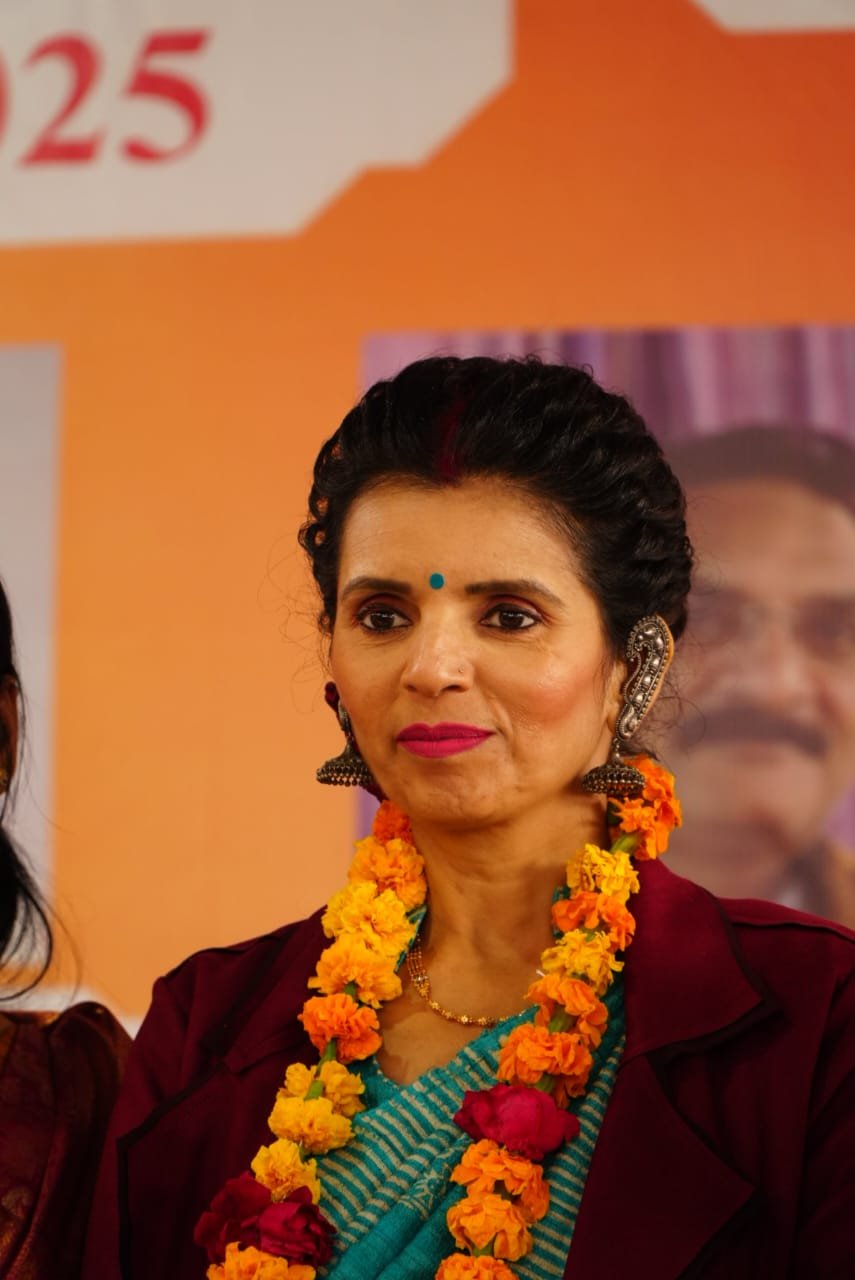
The Sanatan Sanskrutik Sangh (SSS), under the leadership of Haripriyaa Bharggav, has built its entire development philosophy around a simple but under-explored idea: socio-economic progress and cultural awareness are not separate tracks; they are the same track, running in parallel. You cannot build a truly prosperous nation while its citizens are disconnected from the values, history, and identity that once made their communities resilient. Education is the bridge between the two.
This blog explores how SSS is putting that philosophy into practice, combining education reform, cultural revival, and grassroots economic empowerment into a single, integrated development model that is increasingly relevant to India’s current moment.
Why Economic Development Alone Isn’t Enough
India’s growth story over the past three decades has been genuinely remarkable. Yet alongside rising incomes and urbanization, several parallel crises have emerged: a widening rural-urban divide, a generational identity crisis among youth, weakening community and family structures, and a public increasingly aware that material prosperity hasn’t automatically translated into social cohesion or wellbeing.
SSS’s founding insight is that this isn’t a coincidence; it’s the predictable result of pursuing economic development in isolation from cultural and educational development. As the organization’s guiding philosophy states, real strength requires three pillars working together: Samruddha, Samarth and Sanskrutik. Remove any one pillar, and the structure becomes unstable. Prosperity without identity breeds emptiness; identity without capability breeds stagnation; capability without prosperity breeds frustration.
This is why SSS refuses to treat education as merely a job-readiness pipeline, and refuses to treat cultural programming as a symbolic add-on to “real” development work. In its model, they are the same intervention, executed on two complementary fronts.
Education as the Foundation: Beyond Literacy Rates
When people discuss “educational development” in India, the conversation often stops at literacy rates and school enrollment numbers. SSS’s approach goes considerably further, built on the belief that education must serve the Atmik (spiritual), Sharirik (physical), Manasik (mental), and Arthik (economic) upliftment of citizens simultaneously, not just their employability.
Reviving the Gurukul Model: Vaidik Pathshalas
Central to this vision are SSS‘s Vaidik Pathshalas educational institutions that teach the Vedas, Puranas, Sanskrit, and dharmic ethics alongside contemporary subjects. This isn’t a rejection of modern education; it’s an argument that modern skills and ancient wisdom are complementary, not competing, curricula.
The philosophy behind this is direct: a generation equipped only with technical or vocational skills, but with no grounding in values, ethics, or identity, is vulnerable to exactly the kinds of crises SSS has identified: commitment phobia, values erosion, and a hollow sense of achievement disconnected from purpose. Meanwhile, a generation grounded in tradition but lacking modern skills risks being left behind economically. Vaidik Pathshalas are designed to close both gaps at once.
Sanskrutik Sanskar Shatra: Taking Education to the Community
Beyond formal institutions, SSS runs Sanskrutik Sanskar Shatra sessions, mobile centers of cultural learning that bring teachings on dharma, ethics, and Indian philosophy directly into communities. This decentralized model matters because it doesn’t require families to travel to a distant institution to access cultural education; it meets people where they are, embedding learning into everyday community life rather than confining it to formal classrooms.
Free Medical Camps, Literacy Drives, and Skill Workshops
Education, in SSS’s model, extends beyond academics into practical life skills. Through initiatives addressing “Garibo ke Shikshan evam Swasthya” (education and health for the underprivileged), SSS has run free medical camps, literacy drives, and skill workshops that directly empower underprivileged families across Bundelkhand, treating health literacy and vocational skill-building as core components of educational development, not separate categories.
Cultural Awareness as Economic Infrastructure
It might seem counterintuitive to frame cultural programming as economic infrastructure, but this is precisely the SSS argument, and it holds up under scrutiny.
Cultural Identity Reduces Migration Pressure
One of the clearest costs of cultural and economic disconnection in rural India is outward migration: young people leaving villages not necessarily because there’s no work, but because there’s no sense of a future worth staying for. SSS’s Total Village Development Programme (TVDP) explicitly links its cultural and religious awareness component to its economic self-reliance goals, working from the premise that villages people are proud of are villages people choose to stay in and build.
As SSS puts it: “Hum aisa aatmanirbhar aur sanskarit gaon banane ka prayas kar rahe hain jahan log majboori mein na jaayein, balki garv se lautkar aayein.” (We are trying to build self-reliant, values-rooted villages where people don’t leave out of compulsion, but return with pride.) This is a direct, practical link between cultural pride and rural economic retention a connection rarely made explicit in mainstream development policy but central to SSS’s model.
Traditional Skills as Modern Livelihoods
SSS’s economic ventures demonstrate this cultural-economic fusion in action. Bhusattva, the group’s organic textile and agro brand, revives traditional Indian weaving techniques not as a heritage museum piece, but as a functioning livelihood engine, exporting artisan products to 23 countries worldwide. This is cultural awareness converted directly into export revenue and rural employment proof that preserving tradition and generating modern economic value are not competing priorities.
Similarly, agricultural initiatives under the Waste Management & Agro Biotech vertical draw on traditional, sustainable farming wisdom, organic methods, and renewable resource utilization to improve farmer livelihoods, positioning indigenous knowledge systems as genuinely competitive economic assets rather than outdated practices to be replaced.
Digital Access as Cultural and Economic Bridge-Building
SSS-affiliated digital infrastructure, including e-Seva, e-Mitra, and e-Gram kiosks connecting over 17,000 villages across Madhya Pradesh, Gujarat, and Maharashtra, illustrates how technology adoption and cultural rootedness can be pursued together, rather than treating digital modernization as inherently at odds with tradition. Villages gain access to government services and digital economic participation without being asked to abandon their cultural identity as the “price” of modernization.
Women’s Education and Empowerment as a Development Multiplier
Global development research consistently identifies women’s education and empowerment as one of the highest-leverage interventions for socio-economic progress, improving health outcomes, economic productivity, and intergenerational education levels simultaneously. SSS’s programming reflects this insight structurally, not just rhetorically. Its approach aligns with the broader priorities associated with Women Empowerment India, particularly by recognizing women’s agency as central to sustainable community development.
Initiatives like the Samuhik Mahila Kalash Yatra (which brought together over 5,000 women at Maha Kumbh 2024) and the Samuhik Matrushakti Anushthan center women’s spiritual and social leadership as core to community development, framing Matru Shakti (Mother Power) as foundational to both cultural transmission and social stability. In SSS’s philosophy, women are positioned not as passive beneficiaries of development programmes, but as primary transmitters of cultural values and drivers of community cohesion a role with direct socio-economic implications, since strong family and community structures underpin everything from child education outcomes to local economic resilience.
The “Why” Behind the Model: Learning From History to Build the Future
SSS’s broader content strategy, including its widely circulated reel series on ancient Indian achievements in mathematics, medicine, astronomy, and trade, serves a specific developmental purpose beyond cultural pride: restoring economic self-confidence rooted in historical fact.
The argument runs like this: before colonization, India commanded a significant share of global GDP, built on indigenous systems of trade, knowledge, and production. Colonial-era policies systematically dismantled these systems, and post-independence India inherited a psychological legacy of economic dependency and a tendency to look outward, toward foreign models and foreign approval, for validation of what “development” should look like.
SSS’s cultural-educational programming is designed to interrupt that pattern by demonstrating, with historical evidence, that India’s own traditions contain sophisticated economic, scientific, and philosophical frameworks worth building on rather than discarding. This isn’t nostalgia for its own sake; it’s an argument for Swavalamban (self-reliance) built on genuine historical confidence rather than borrowed models that don’t fit India’s specific social and cultural context.
As SSS frames it through its “Need of the Hour” messaging: “School fees ke saath sanskar dijiye. Gadgets ke saath pehchaan dijiye. Achievements ke saath values dijiye.” This triad values alongside fees, identity alongside gadgets, wisdom alongside achievement is essentially a compressed statement of the entire socio-economic development philosophy: material progress and cultural grounding must be delivered together, not sequentially or separately.
Why This Model Is Increasingly Relevant Today
Several current trends make SSS’s integrated education-and-culture development model especially timely:
- Global Recognition of “Culturally Responsive” Development: International development discourse has increasingly moved away from one-size-fits-all models toward culturally responsive, context-specific approaches recognizing that development interventions succeed more durably when they respect and build on local values rather than importing external frameworks wholesale.
- The Skilling-With-Purpose Movement: As India’s vocational training and skilling initiatives scale up nationally, there’s growing recognition that skills without purpose or ethics create a workforce vulnerable to burnout and disengagement. SSS’s values-integrated education model anticipates this concern directly.
- Rural Entrepreneurship and the “Vocal for Local” Trend: With growing national interest in supporting indigenous crafts, organic agriculture, and rural entrepreneurship, SSS’s model of converting traditional skills (like textile weaving) into modern, export-ready livelihoods sits squarely within this trend, proving cultural heritage can be genuinely competitive economically.
- Digital Equity and Bridging the Rural-Urban Divide: As digital access becomes central to economic participation, SSS’s e-Governance kiosk network addresses a real and pressing equity gap, ensuring rural communities aren’t left behind in India’s digital economy transition.
- Renewed Interest in Indigenous Knowledge Systems: From Ayurveda’s growing global recognition to increased academic interest in traditional ecological knowledge, there’s a broader global re-evaluation of indigenous knowledge systems as legitimate contributors to science, sustainability, and economic innovation a trend SSS’s cultural-educational content actively engages with.
Measuring Impact: What Success Looks Like in This Model
Unlike development approaches that measure success purely through economic indicators, SSS’s integrated model tracks impact across multiple dimensions:
- Educational infrastructure: the establishment and expansion of Vaidik Pathshalas as lasting institutions, not one-time programmes
- Digital and economic access: the reach of e-Governance kiosks across 17,000+ villages
- Livelihood generation through cultural preservation: Bhusattva’s textile exports to 23 countries, directly linking traditional skill preservation to rural income
- Health and literacy outreach: ongoing medical camps and literacy drives reaching underprivileged families across Bundelkhand
- Community mobilization and participation: in large-scale events like the Sanatan Ekta Yatra and Samuhik Mahila Kalash Yatra, which build the social trust and cohesion necessary for sustained development work
This multi-dimensional measurement approach reflects a core SSS belief: you cannot fully evaluate socio-economic development using economic metrics alone, because the sustainability of any economic gain depends heavily on the social and cultural cohesion underpinning it.
The Long-Term Vision: A Generation That Builds With Both Hands
SSS’s ultimate goal is captured in its call to action: transform India’s capable, successful, and knowledgeable citizens from nishkriya (passive) to sakriya (active) participants in national development. This isn’t a call for charity in the traditional sense; it’s a call for capable people to actively apply both their economic resources and their cultural knowledge toward community upliftment.
The underlying vision is of a generation that can genuinely hold two things at once: modern economic capability in one hand, and cultural rootedness in the other, building a nation that is simultaneously Samruddha (prosperous), Samarth (capable), and Sanskrutik (culturally confident). As SSS’s founding philosophy states, this convergence of capable and empowered people building together, guided by both education and cultural consciousness, is what will ultimately determine whether India becomes not just economically developed, but genuinely and sustainably Viksit (developed) in the fullest sense of the word.
Conclusion: Two Tracks, One Destination
The conventional development playbook treats education, economics, and culture as separate ministries, separate budgets, and separate conversations. Sanatan Sanskrutik Sangh’s model, shaped by Haripriyaa Bharggav’s leadership, makes a different and increasingly persuasive argument: these tracks were never meant to run separately.
An educated population without cultural grounding risks becoming economically capable but socially adrift. A culturally rich population without economic empowerment risks becoming proud but powerless. It is only when education, economic self-reliance, and cultural awareness are pursued as a single, integrated system, as SSS’s Vaidik Pathshalas, TVDP, and livelihood initiatives collectively demonstrate, that genuine, durable socio-economic development becomes possible.
For a nation searching for a development model that is authentically its own rather than imported wholesale from elsewhere, this integrated approach offers a compelling answer to a question worth asking more often: what does progress look like when it doesn’t ask people to choose between prosperity and identity?