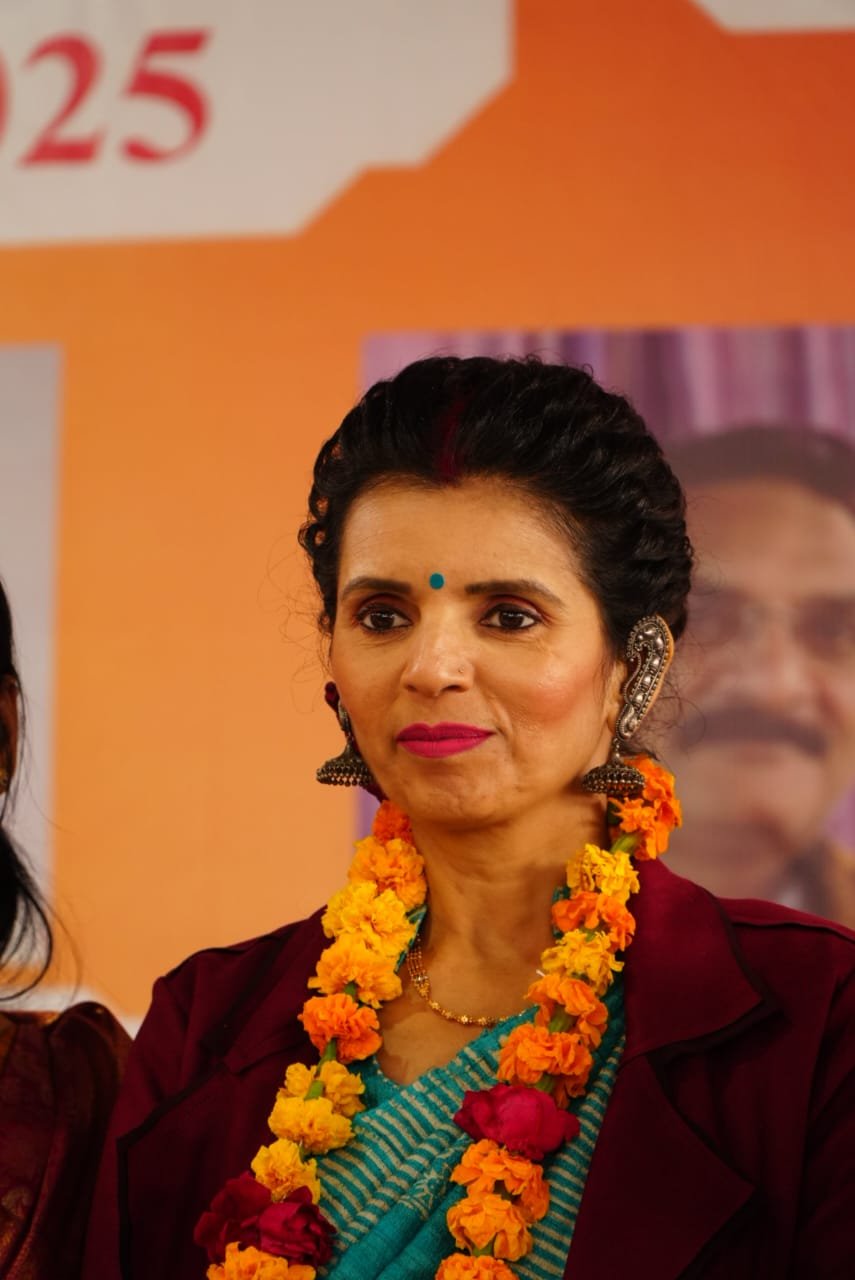
By Haripriyaa Bharggav
We have been taught to think of culture and progress as opposites, as if we must choose between them. Want to be modern? Then leave your traditions behind. Want to honour your heritage? Then accept that you’ll fall behind the world. This is the quiet assumption behind almost every conversation about India’s future, and I want to challenge it directly.
Because it is false. Dangerously, expensively false.
The truth is the reverse: culture is not the obstacle to progress. Culture is the foundation of it. A nation that develops economically while losing its cultural roots does not become progressive; it becomes hollow, imitative, and fragile. And a nation that grows its material strength upon a strong cultural foundation becomes something rare and powerful: prosperous and whole, modern and rooted, advancing and unshakable.
This is the heart of what I call cultural development, and it is the missing piece in almost every vision of a “progressive India.” In this blog, I want to explain why a truly progressive Bharat cannot be built without it, drawing on the vision of SSS Bharat: a nation that is Samruddha (prosperous), Samarth (empowered), and Sanskrutik (culturally rooted), all at once.
What We Get Wrong About “Progress”
Let us start by asking an honest question: what do we actually mean by “progress”?
For decades, we have measured it in a single, narrow way: GDP, skylines, gadgets, the pace at which we copy the lifestyles of wealthier nations. By this definition, progress means becoming more like somewhere else. And so, without noticing, we began to treat our own civilisation as something to grow out of rather than build upon.
But look closely at where this counterfeit definition leads. We celebrate progress built on borrowed money and imported models, and we call our growing dependency “modernisation.” We produce successful individuals who are anxious, rootless, and unsure of who they are. We build a shining economy on top of a society quietly losing its bearings. This is not progress. It is, as I often say, a facade, an illusion of advancement covering a deepening emptiness.
Real progress must be measured more completely. Our tradition recognises four dimensions of genuine well-being that must all rise together: Arthik, Sharirik, Mansik, and Atmik. A nation rich in money but poor in peace is not progressing. A people with full shelves and empty spirits are not advancing. True progress lifts all four dimensions at once, and this is impossible without cultural development, because culture is precisely what nourishes the mental and spiritual dimensions that pure economics ignores.
When we redefine progress this way, everything changes. Culture stops being a luxury we can postpone until after we get rich. It becomes the very thing that makes getting rich worthwhile and sustainable.
The Root and the Tree: Why Foundations Matter
Here is the image that captures the whole argument, and I return to it in all my work: the tulsi plant.
You can water its leaves faithfully every day. You can shield them from the sun, feed them, care for them. But if the root is weak, the leaves will keep falling no matter how much effort you pour into them. The health of the whole plant lives, invisibly, in its root.
A nation works exactly the same way. Its visible achievements the economy, the technology, the global standing are the leaves. Its culture is the root. And here is the principle every builder of nations must understand: you cannot grow the tree by pulling on the leaves. You grow it by strengthening the root.
This is why cultural development is not one item on a long list of national priorities. It is the foundation beneath all the others. Consider:
- Economic progress without cultural roots becomes exploitation: of workers, of nature, of the future because there are no values to restrain greed.
- Empowerment without cultural roots becomes rootless imitation: a generation with skills but no identity, following every trend, belonging to nothing.
- Development without cultural roots produces side effects: social breakdown, family collapse, environmental ruin, spiritual emptiness that eventually cost more than the development was worth.
But when culture is strong, wealth becomes ethical, empowerment becomes sustainable, and development becomes humane. Culture is what keeps progress honest. It is the root that lets the tree grow tall without falling over.
A Civilisation That Once Led the World Through Its Culture
Some believe that emphasising culture means turning away from achievement. History proves the opposite: it was precisely our cultural strength that once made us the most advanced civilisation on earth.
India was famously the “Sone ki Chidiya,” the Golden Bird controlling the largest share of the world’s wealth for most of recorded history. When much of the world was still primitive, our gurukuls were thriving, our trade reached across continents, our craftsmanship was unmatched. We gave humanity its numbers, from zero to nine, and without zero, there is no mathematics, and without mathematics, no modern science. Our Sanskrit stands among the most logically perfect languages ever created. Ayurveda healed humanity for thousands of years. Our astronomy, metallurgy, surgery, and philosophy led the world.
None of this was separate from our culture. It flowed from it. Our prosperity and our knowledge grew directly out of a worldview that saw material abundance and spiritual wisdom as partners, not enemies. Our science was born from a culture that revered knowledge as sacred. Our wealth was built by a civilisation whose values made honest enterprise a form of dharma.
This is the ultimate proof that culture drives progress rather than hindering it. We were not great despite our culture. We were great because of it. And when that cultural root was deliberately broken through the systematic deconstruction of colonisation, which taught us to be ashamed of our own identity, our material greatness declined with it. The lesson could not be clearer: strengthen the root, and the tree rises again.
The Generation Gap Is Really a Values Gap
Nowhere is the cost of neglecting cultural development clearer than in what is happening to our young.
Ask a young Indian from Gen Z or Gen Alpha to follow a global trend, and they master it instantly. But ask them about their own heritage, their history, their scriptures, the depth of the wisdom they come from, and too often the answer is a single word: blank. Globalisation gave them the whole world and quietly took away their sense of self. They can navigate every culture except their own.
We often call this a “generation gap.” I believe that is the wrong name for it. It is not a generation gap it is a values gap. And it was created not by the young, but by those who came before them and failed to pass down what mattered. You cannot blame a young person for not knowing what was never taught. When parents themselves compromise on their values, children are left with no role model to inherit from. The chain of transmission broke and a rootless generation is the result.
This is why cultural development is so urgent for a progressive India. Because a generation that does not know its roots will bend in every storm, chase every trend, and mistake imitation for identity. No amount of economic growth can fix this in fact, growth without cultural grounding accelerates it, giving young people more means to lose themselves faster. But a generation that knows its roots walks through the world with quiet, unshakable confidence. It can globalise without dissolving, learn from the world without kneeling before it. That is the human foundation of a genuinely progressive nation.
Culture as Prevention: The Wisdom of Getting the Order Right
There is a profound principle in our healing tradition that explains exactly why cultural development must come first, not last. It is the sequence of prevention, support, and cure.
Consider how our elders approached health. The wisest aim was never to treat a disease after it struck; it was to build such strong immunity that the disease could not take hold in the first place. That is prevention. Alongside it comes support for the ongoing nourishment and discipline that keep the body strong. And only when both have been honoured does cure become necessary, and even then it works gently, because the ground has been prepared.
Now look at how we build our nation. We wait for the crisis, the social breakdown, the rootless generation, the collapse of family and community, and only then rush in to “cure” it with programmes and policies. We arrive after the fire has already spread. And the hurried cure often creates side effects worse than the original problem.
Cultural development is the prevention a progressive nation cannot skip. It is the immunity that keeps a society healthy from within: strong families, transmitted values, a confident identity, a shared sense of meaning. A nation that invests in its culture is building the immune system that lets it withstand every future shock. A nation that neglects culture while chasing only economic growth is like a person who ignores their health, builds a fine career, and then spends everything they earned treating the illnesses that neglect produced.
Get the order right: prevention through culture, support through values, cure only when needed, and progress becomes not a frantic chase, but a steady, healthy rise. Learn from the past, build the future, stabilise the present. This is the Sanatan way, and it is also, I believe, the wisest development strategy any nation could follow.
Culture Is the Answer the World Is Searching For
Here is something remarkable that should fill every Indian with pride. On the greatest challenge facing the modern world the environmental crisis the answer the world is searching for is written in our own culture.
The dominant model of “progress” has treated nature as something to conquer, consume, and exploit: take it, use it, destroy it, without thought for consequences. That worldview built impressive technology, but it also brought the planet to the edge of ecological collapse. And now the world is desperately searching for a different philosophy, one that lets humanity live with nature rather than against it.
That philosophy is the heart of Sanatan culture. Our tradition teaches the protection of the Panch Bhuta, the five sacred elements of earth, water, air, sky, and fire as a spiritual duty documented thousands of years ago. Our worldview never said, “conquer nature.” It said live in harmony with it, use with restraint, and leave enough for the generations to come. When leading minds of the world gathered to seek a solution to the environmental crisis, many concluded that it was precisely this kind of ancient, harmony-based philosophy that humanity now needs.
Think about what this means. The culture we were taught to see as “backward” holds the wisdom the “advanced” world now urgently requires. This is the clearest proof of all that cultural development is not a retreat from progress; it may be humanity’s path forward. A progressive India that revives this wisdom does not just save itself; it offers a model of sustainable civilisation to the entire world.
From Vision to Ground: Building Cultural Development in Practice
Cultural development is not an abstract idea. It must be lived, taught, and built and through the work of the Sanatan Sanskrutik Sangh, it is being made real.
At the foundation are the Vaidik Pathshalas centres of learning dedicated to the Vedas, Puranas, Sanskrit, and dharmic ethics ensuring our knowledge is no longer locked away with a few scholars but returned to the people, giving young minds both wisdom and pride. Reaching the young where they already are, cultural films, devotional music, and digital platforms carry our heritage into the language of screens and stories that this generation lives in.
And crucially, cultural development is woven directly into material development on the ground. Through the Total Village Development Programme (TVDP), villages are uplifted not only through healthcare, education, and self-reliance, but through cultural and spiritual awareness alongside them, because a village that grows richer in money while growing poorer in identity has not truly developed. This is the model in miniature: economic progress and cultural rootedness rising together, each strengthening the other. That is what integrated, holistic progress actually looks like.
The practical wisdom I offer every parent and every capable person is simple: along with school fees, give values. Along with gadgets, give identity. Along with achievements, give wisdom. This is cultural development in daily life, and it is the difference between raising a hollow success and raising an unshakable human being.
The Invitation: Progress We Build Together
A progressive India rooted in its culture is not the work of institutions alone. It is the responsibility of every capable person who has been given something to give.
The crisis of our time is not a shortage of talent or resources; it is the gap between capability and action. Too many who have the means do not use them for society. Too many who have knowledge do not share it. Too many who could lead choose to stay silent. Closing that gap is what turns a vision into a nation.
This is why cultural development, in the end, is a call to each of us: “Every capable person, every successful individual, every Sanatani is invited to transform from passive to active.” From nishkriya to sakriya. To build a truly progressive India, each of us must become an active carrier of its culture in how we raise our children, run our enterprises, treat our environment, and honour our roots. Because a civilisation advances not through the strength of a few institutions, but through the daily choices of millions of rooted, active people.
The Bharat We Are Building
So why is cultural development essential for a progressive India? Because progress without it is a tree with weak roots, impressive for a season, then toppled by the first real storm.
Cultural development gives our economy its ethics, our youth their identity, our society its immunity, and our environment its wisdom. It is what transforms raw growth into genuine progress progress that is prosperous and whole, modern and rooted, advancing and unshakable. It is the foundation on which a nation becomes Samruddha, Samarth, and Sanskrutik all at once.
We were never asked to choose between our heritage and our future. We were asked to grow the future out of our heritage. The Golden Bird did not fly because it abandoned its roots it flew because its roots were deep enough to hold the weight of greatness.
As I often say: “When the roots of a tree are strong, no storm can bring it down and when the roots of our culture are deep, no force can weaken our identity.” This is the whole truth of cultural development, and the whole promise of a progressive Bharat.
To every reader: real progress is not about becoming more like somewhere else. It is about becoming more fully, more consciously, more powerfully ourselves and offering that strength to the world. Strengthen your roots. Carry your culture forward. Move from passive to active. That is how we build a Bharat that rises high precisely because it stands firm.
That is why cultural development is essential and that is the progressive India we are building together.
Haripriyaa Bharggav is an entrepreneur, philanthropist, and cultural leader, and the Chairperson of the Sanatan Sanskrutik Sangh a movement dedicated to reviving India’s cultural consciousness, empowering women and youth, and building a self-reliant, dharmic Bharat.