When people talk about innovation in India, they usually picture laboratories, start-up hubs, and glass towers in Bengaluru or Gurugram. Some of India’s most powerful innovations, though, have come from fields, workshops, and village meetings. They were made by people who had no research budget, only a problem that would not go away and the determination to solve it.
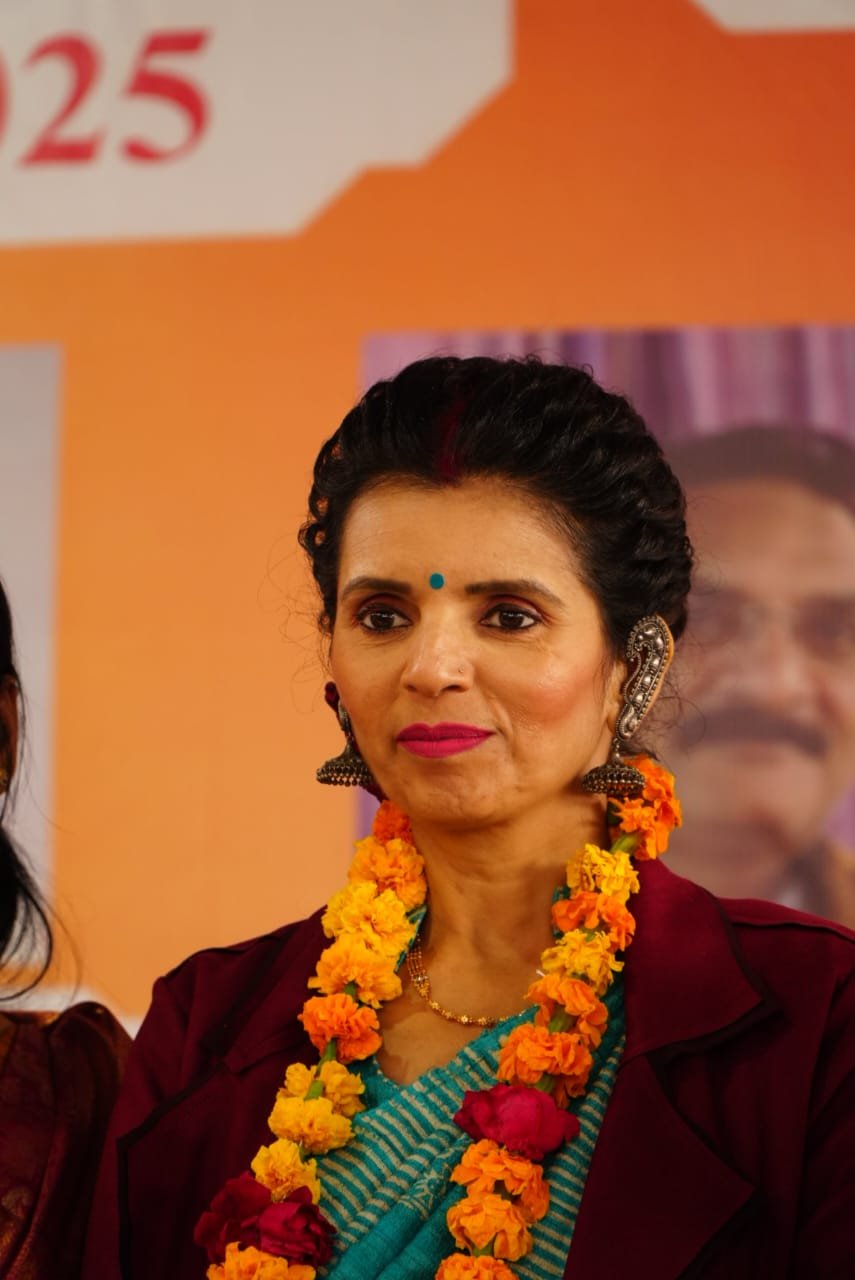
For Haripriyaa Bharggav, industrialist and Chairperson of the Sanatan Sanskrutik Sangh, this is central to her vision of SSS Bharat: an India that is Samruddha (prosperous), Samarth (capable), and Sanskrutik (culturally rooted). The SSS Bharat principle is to progress and embrace the new while keeping roots strong. Rural innovation does exactly that. It combines generations of local knowledge with modern tools to create livelihoods where people actually live.
This article looks at how rural innovation works, where it is succeeding, where it is falling short, and what business leaders can do to turn it into lasting economic opportunity.
Three Kinds of Rural Innovation
Rural innovation is not one thing. It comes in three distinct forms, and each creates value differently:
- Innovation born in the village: grassroots solutions developed by villagers themselves, often building on traditional knowledge.
- Innovation adopted by the village: modern technologies, such as drones, biogas, solar power and digital tools, adapted to rural needs and operated by local people.
- Innovation in how villages organise: new institutional models, such as farmer producer organisations and community water councils, that let small producers act with the strength of large ones.
The most successful rural economies combine all three.
Innovation Born in the Village
Jakhni: the Bundelkhand village that solved its own water crisis
Bundelkhand, Haripriyaa Bharggav‘s home region, offers one of India’s best-known examples of grassroots innovation. In Jakhni village in Banda district, farmer and social worker Uma Shankar Pandey started a campaign in 2005 called Khet par med, med par ped, meaning bunds in the fields and trees on the bunds. The idea was to hold rainwater in the fields by building earthen embankments.
The method was low-cost and community-driven. Villagers built it without government funding, and it helped raise groundwater levels. Jakhni came to be known as a model Jal Gram, a water village. The approach spread widely: the Ministry of Jal Shakti established 1,050 water villages based on the Jakhni model, and Pandey received the Padma Shri in 2023.
Bundelkhand has other examples too. The Jal Sahelis, a women’s water-conservation movement, began in 2005 with a group of women from Madhogarh village in Jalaun. They have helped develop villages across the region.
The lesson is clear. The most important innovation in a drought-prone village was not a machine. It was a better way of working with water, soil and trees, rooted in traditional wisdom and carried out by the community.
Mitticool: a potter’s fridge
In Gujarat, potter Mansukhbhai Prajapati lost his livelihood in the 2001 earthquake. He went on to create the Mitticool fridge, a refrigerator made of clay that keeps food cool without electricity. With support from the Gujarat Grassroots Innovation Augmentation Network (GIAN) and the National Innovation Foundation, his products went through testing and design, and trademark registration. They were eventually sold through Big Bazaar stores. A Mitticool fridge is now part of the collection of the Victoria and Albert Museum in London.
Mitticool shows what a traditional craft can become when innovation and market support come together: a modern, sustainable product with national reach.
Innovation Adopted by the Village
Drones in the hands of rural women
The Namo Drone Didi scheme was approved with an outlay of ₹1,261 crore for 2023-24 to 2025-26. It provides drones to women’s self-help groups so they can offer services such as spraying fertilisers and pesticides. The plan was to reach 15,000 women’s SHGs between 2024 and 2026, with each group aiming to earn at least ₹1 lakh more a year.
On the ground, women pilots have become service providers for surrounding villages. Farmers now know whom to call when it is time to spray their fields.
Delivery has been slower than planned, however. By January 2026, lead fertiliser companies had distributed 1,094 drones to SHGs, and only 500 of those were under the Namo Drone Didi scheme itself. That gap between target and reality is a recurring pattern in rural innovation, and we return to it below.
Turning waste into wealth
Few rural innovations combine environmental and economic value as directly as biogas. In August 2026, the Union Cabinet approved GOBARdhan, the National Unified Scheme for Compressed Biogas, with a total outlay of ₹23,731 crore for FY 2026-27 to FY 2035-36. By 6 August 2026, 1,908 compressed biogas (CBG) or bio-CNG plants had been registered across the country.
The scheme aims to raise domestic CBG output nearly tenfold, to about 5 MMSCMD. A key feature for investors is guaranteed demand: city gas companies must buy CBG, starting at 3% of their supply in FY 2026-27 and rising to 5% from FY 2028-29.
For villages, this turns cattle dung, crop residue and organic waste from a disposal problem into a source of income. It also reduces stubble burning, produces organic manure and creates rural jobs. It reflects a principle central to SSS Bharat: protecting the five elements, the panch tattva, is not separate from economic progress. Done well, it is economic progress.
Innovation in How Villages Organise
Sometimes the most powerful innovation is organisational. A single small farmer has little bargaining power. Thousands of farmers organised into a professionally managed company have a great deal.
India has now formed 10,000 Farmer Producer Organisations (FPOs) under its central scheme, bringing together more than 65 lakh mostly small and marginal farmers.
The turnover figures show both the promise and the work still to do. Among FPOs that submitted audited accounts, 1,135 had annual turnover above ₹1 crore and 862 were between ₹50 lakh and ₹1 crore. The largest group, 6,964, were still at ₹50 lakh or below.
The structure exists. The next challenge is turning it into commercially strong enterprises, and that requires management, markets, and patient capital.
The Scale Gap: Why Rural Innovation Struggles to Grow
Across these examples, a pattern appears. Drone delivery lags the 15,000 target. GOBARdhan has many registered CBG plants, but the scheme still has to multiply output nearly tenfold. Most FPOs remain small.
Rural innovation in India rarely fails for lack of ideas. It struggles to scale because the support around it is missing. That support includes:
- maintenance and repair networks;
- working capital;
- reliable buyers;
- trained managers;
- time to mature.
SSS Bharat’s preventive, supportive, and curative framework explains why. Most programmes focus on the launch, handing over the drone, registering the FPO, or approving the plant. They then assume success will follow. The supportive stage- the years of handholding, market linkage, and maintenance after launch- is where outcomes are actually decided. Business leaders are often best placed to provide it.
The SSS Bharat Approach to Rural Innovation
Haripriyaa Bharggav’s ventures and the Sanatan Sanskrutik Sangh‘s programmes treat rural innovation as a meeting point between tradition and enterprise.
Green construction. Her group’s project development brand, Urasattva, promotes eco-friendly, economical, and sustainable building solutions. This kind of innovation can make rural infrastructure more affordable and climate-resilient.
Reviving traditional craft as modern enterprise. Bhusattva, the group’s organic fashion and agro brand, revives traditional weaving techniques and exports artisan products. It is the same principle as Mitticool: tradition turned into a competitive advantage.
Waste management and agro-biotech. This vertical focuses on rural upliftment through the Total Village Development Programme, renewable resources, and agricultural innovation aimed at improving farmers’ livelihoods.
Community and ecology. The Sangh’s Gau Shala initiatives, Nirmal Ganga Safai Abhiyan and Pakshi Suraksha Abhiyan reflect the belief that caring for cattle, rivers and living beings is part of a sustainable rural economy, not separate from it.
Underlying all of this is the SSS Bharat view that environmental consciousness is not an imported Western idea. It is part of the oldest core of Sanatan philosophy. Innovation that protects earth, water, air, fire and space is innovation that lasts.
Five Principles for Rural Innovation That Creates Prosperity
- Start with a problem villagers already feel. Jakhni’s water crisis and Mansukhbhai’s loss of livelihood were real, urgent problems. Innovation imposed from outside rarely takes root. Innovation that solves a felt problem spreads by itself.
- Respect traditional knowledge. Bunding fields and cooling with clay are centuries-old ideas, improved and scaled. Villages hold knowledge that laboratories often overlook.
- Design for frugality and repair. Rural solutions must be affordable to buy, cheap to run, and easy to fix locally. A drone that cannot be repaired within a day’s travel will soon sit idle.
- Build community ownership. SHGs, FPOs, and water councils give villagers a stake in success. Ownership turns beneficiaries into entrepreneurs.
- Plan the supportive stage from day one. Budget for training, maintenance, working capital, and market linkage over several years, not just the launch.
Where Business Leaders Fit In
Rural innovation is now one of India’s most promising investment frontiers. It is backed by policy, demand, and a growing pool of rural entrepreneurs. Business leaders can play several roles:
- Invest in the circular economy. GOBARdhan’s guaranteed offtake makes compressed biogas a bankable opportunity, particularly where it partners with dairies, gaushalas, and farmer collectives.
- Partner with FPOs. Sourcing directly from farmer producer organisations strengthens supply chains and helps them move from registration to commercial scale.
- Back grassroots innovators. Incubation, design support, IP protection, and retail access- the kind that took Mitticool to market- can turn a village innovation into a national brand.
- Build service networks. Repair, maintenance, and training for rural technologies are businesses in their own right, and they decide whether adopted technologies keep working.
- Commit for the long term. Rural innovation rewards patient capital and multi-year partnerships far more than one-off CSR events.
Conclusion: The Next Innovation Hub Might Be a Village
India’s villages have always been places of ingenuity. A community that brings water back to a dry land, or a potter who builds a fridge from clay, is doing exactly what the world’s best innovators do: solving real problems with whatever is at hand.
What villages need now is not to be told how to innovate, but to be backed when they do. With capital, markets, technology and sustained support, rural innovation can create the jobs, incomes and enterprises that let people prosper without leaving home. That is the essence of a village that is Samruddha, Samarth and Sanskrutik.
Haripriyaa Bhargav’s call goes out to those with the resources to make that happen:
“प्रत्येक सक्षम, प्रत्येक सफल, प्रत्येक सनातनी को आमंत्रण है — निष्क्रिय से सक्रिय बनो।” (Every capable person, every successful individual, every Sanatani is invited to move from passive to active.)
To collaborate on rural innovation initiatives or learn more about SSS Bharat, visit the Contact page.
Frequently Asked Questions
What is rural innovation?
Rural innovation covers new solutions, technologies, and organisational models that address rural challenges and create livelihoods. It includes grassroots inventions by villagers, modern technologies adapted for villages, and new community institutions.
What is the Jakhni model of water conservation?
A community-led approach from Jakhni village in Bundelkhand, launched in 2005 under the slogan Khet par med, med par ped (bunds in fields, trees on bunds). It raised groundwater levels without government funding and was later replicated in more than a thousand villages.
What is the GOBARdhan scheme?
A national scheme approved in August 2026 with an outlay of ₹23,731 crore to promote compressed biogas from cattle dung, crop residue and organic waste. City gas companies are required to buy a rising share of compressed biogas.
Why do rural innovations struggle to scale?
Usually because of gaps in maintenance, finance, market access, and long-term handholding after launch, rather than a lack of ideas.
How does SSS Bharat approach rural innovation?
SSS Bharat, led by Haripriyaa Bharggav, promotes rural innovation that combines traditional knowledge with modern enterprise and protects the five elements, so that villages become prosperous, capable and culturally rooted.