For decades, a village’s distance from the city decided its destiny. Distance meant weaker schools, fewer doctors, smaller markets, and fewer jobs. Today, for the first time in India’s history, that distance is shrinking every month, not because roads are shorter but because connections are faster.
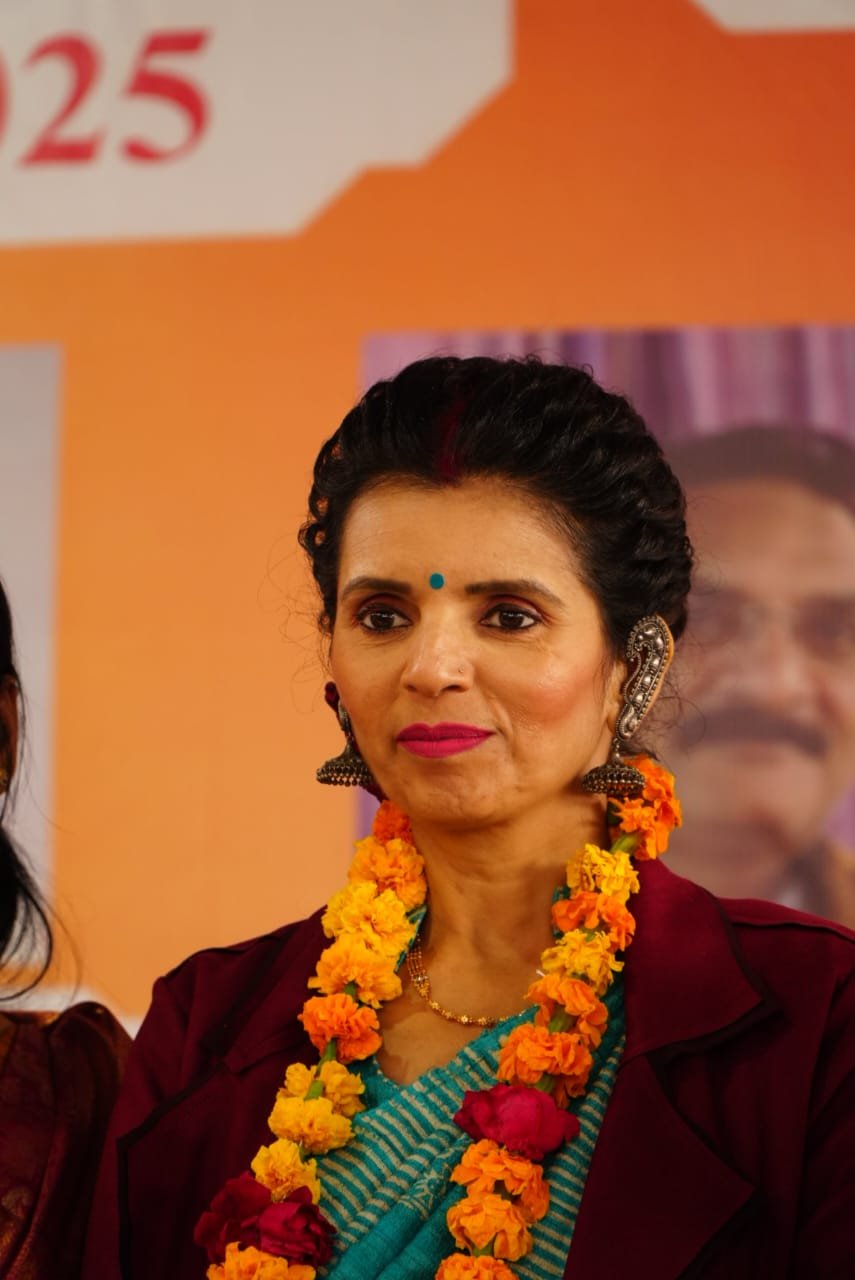
Rural India is no longer catching up on the internet. It is leading it. For Haripriyaa Bharggav, industrialist and Chairperson of the Sanatan Sanskrutik Sangh, this is one of the defining opportunities of our time. Her vision of SSS Bharat, an India that is Samruddha, Samarth and Sanskrutik, sees no permanent divide between city and village. Bharat was always one Bharat. Digital connectivity can help make that true again, provided villages connect to the world without losing their roots.
The New Digital Map of India
The numbers mark a historic shift. According to the IAMAI-Kantar Internet in India Report 2025, India had about 958 million active internet users. Rural India accounts for 57% of them, around 548 million people, and is growing at nearly four times the pace of urban India.
The gap that remains is still significant. About 18% of internet users go online through someone else’s phone, and close to four in five of them live in rural areas. Around 38% of Indians, roughly 579 million people, are still not active internet users, though that share falls every year.
Both trends matter for business leaders. Rural India is now at the centre of the country’s digital growth, making internet access and digital inclusion increasingly important to rural development in India. With hundreds of millions of people still waiting to come online, the opportunity for businesses to expand their reach and create lasting impact remains substantial.
The Infrastructure Behind the Shift
Two national programmes form the backbone of rural connectivity.
BharatNet. As of June 2026, about 2.21 lakh Gram Panchayats had been made service-ready under BharatNet. The Amended BharatNet Programme, approved in August 2023, is upgrading and extending broadband infrastructure across 2.65 lakh Gram Panchayats using a more resilient ring design.
Common Service Centres (CSCs). As of May 2026, India had 5.01 lakh functional CSCs, including 3.91 lakh operating at Gram Panchayat level. These local centres often provide a village’s first access to digital services.
There is an honest caveat. A 2026 report by the Comptroller and Auditor General (CAG) found that only 33.20% of service-ready Gram Panchayats were actually operational in November 2025. The CAG also noted that in the satellite component, Wi-Fi access points were not installed even where service had been declared available. Laying fibre is the first step. Making sure villagers can actually use the connection is the real test. That last-mile gap is exactly where enterprise and community organisations can make the biggest difference.
Five Opportunities Connectivity is Opening for Rural India
1. Digital payments and financial inclusion
UPI has made the smartphone a bank branch. In August 2026, UPI processed a record 24.51 billion transactions worth ₹29.82 trillion, with volume up 22% year on year. For a village shopkeeper, artisan, or farmer, instant digital payments mean faster settlement, a transaction history that builds creditworthiness, and access to customers far beyond the village.
2. Healthcare at the doorstep
Telemedicine is bringing doctors to villages that rarely saw one. India’s national telemedicine service, eSanjeevani, crossed 50 crore teleconsultations on 15 September 2026. It works through more than 1.42 lakh Ayushman Arogya Mandir centres, 19,473 medical hubs and 901 online OPDs. The platform’s biggest users are women (57%) and citizens above 46 (40%), the groups for whom travelling to a clinic is often hardest.
3. New markets for village producers
Connectivity turns a local product into a national or global one. A weaver in Bundelkhand, a spice grower, or a women’s self-help group can now photograph, list, sell, and receive payment online. This is the digital side of the self-reliant village model. When villages can reach markets directly, more of the value stays at home.
4. A rural creator economy
Rural India is not just consuming digital content. It is increasingly creating it. In 2025, 588 million Indians, 61% of internet users, watched short-video content, and rural users slightly outnumbered urban users. Rural voices, crafts, recipes, festivals and traditions are finding audiences that no broadcaster ever offered them. For young people in villages, that means income and recognition without having to leave home.
5. Services and governance without the queue
Through CSCs and digital platforms, villagers can apply for certificates, pensions, insurance, bank services and government schemes locally. They no longer need to lose a day’s wages travelling to a district office. Every service delivered digitally is time and money returned to the rural household.
The Other Side of Connectivity: Risks That Need Prevention
Connectivity brings risks as well as opportunity. Rural and first-time users are often the most exposed to both.
Cyber fraud. Between 2021 and 2025, the National Cybercrime Reporting Portal recorded more than 65.89 lakh financial fraud complaints, with over ₹55,050 crore reported lost. The national response is improving. The 1930 helpline and the Citizen Financial Cyber Fraud Reporting and Management System had saved more than ₹11,158 crore across 32.80 lakh complaints by 30 June 2026. Even so, every rupee lost by a rural family is a setback to its trust in the digital economy.
Cultural dilution. The second risk is quieter. SSS Bharat warns that Gen Z and Gen Alpha follow every global trend but often know little of their own culture. Globalisation, in Haripriyaa Bharggav’s words, gave the world access but took away identity. Unfiltered connectivity can speed that erosion in villages that have, until now, been the strongest keepers of India’s traditions.
This is where SSS Bharat’s preventive, supportive, and curative framework becomes practical:
- Preventive: digital literacy and fraud awareness before people go online, not after they lose money.
- Supportive: trusted local guides, such as CSC operators, SHG leaders, teachers and community organisations, who help new users take their first steps safely.
- Curative: fast reporting through 1930 and cybercrime.gov.in when something does go wrong.
Most digital-inclusion efforts begin at the curative stage. The SSS Bharat approach says the real work must begin with prevention.
The SSS Bharat Approach: Connected to the World, Rooted at Home
The core principle of SSS Bharat is simple: progress, globalise and connect with the world, but never abandon your roots. Haripriyaa Bharggav’s work applies this principle to digital connectivity in three ways.
Building rural digital infrastructure. Through Ubon Vision Pvt. Ltd., her group works on system integration, smart cards, interactive kiosks, and digital infrastructure. This includes e-Seva, e-Mitra and e-Gram projects connecting more than 17,000 villages across Madhya Pradesh, Gujarat and Maharashtra. The group’s flagship technology, UBON Web, is built on a “Data-Free Network” model. It is a secure, private content delivery network designed to deliver digital services without loading the core internet infrastructure, an approach suited to areas where data access is limited.
Putting culture online. The Sanatan Sanskrutik Sangh uses digital platforms to make India’s cultural knowledge accessible to young audiences: its YouTube channel, social media, films, and the Sanatan Song, available on JioSaavn and YouTube. The aim is that the same smartphone carrying global trends into a village also carries the village’s own heritage, values and history to its children.
Connecting technology with village development. Under the Sangh’s Total Village Development Programme in Bundelkhand and northern India, digital tools support broader goals: healthcare, education, self-reliance and cultural awareness. Technology is a means to village prosperity, not an end in itself.
What Business Leaders Can Do
Digital rural India is one of the largest growth opportunities of the coming decade. Leaders who approach it responsibly can build both markets and trust.
Invest in the last mile. Infrastructure alone does not create users. Support community Wi-Fi, local digital service points, and device access, especially for women and first-time users.
Fund digital literacy alongside digital products. A customer who understands fraud risks, privacy and safe payments stays longer and trusts more. Prevention is good ethics and good business.
Build in local languages. Rural India’s next 579 million users will come online in their own languages. Products, content and customer support should meet them there.
Partner with trusted local institutions. Self-help groups, CSC operators, panchayats and community organisations such as the Sanatan Sanskrutik Sangh already have the trust that new platforms need.
Create content with roots. Rural audiences respond to stories, products and brands that respect their culture rather than override it.
Conclusion: One Bharat, Fully Connected
For generations, opportunity flowed from the city to the village, and people flowed from the village to the city. Digital connectivity can reverse that. Opportunity can now reach villagers where they live: banking, healthcare, markets, education, and audiences, all on a phone in their hands.
Whether that opportunity strengthens rural India or empties it of its identity depends on how the connection is built. SSS Bharat’s answer is to connect with confidence, protect with prevention, and stay rooted in values. That is how digital villages become Samruddha, Samarth and Sanskrutik.
Haripriyaa Bharggav’s call goes out to everyone with the capacity to shape this transition:
“प्रत्येक सक्षम, प्रत्येक सफल, प्रत्येक सनातनी को आमंत्रण है — निष्क्रिय से सक्रिय बनो।” (Every capable person, every successful individual, every Sanatani is invited to move from passive to active.)
To partner on rural digital initiatives or learn more about SSS Bharat, visit the Contact page.
Frequently Asked Questions
How many rural Indians use the internet?
According to the IAMAI-Kantar Internet in India Report 2025, rural India has about 548 million active internet users, 57% of the national total, growing nearly four times faster than urban India.
What is BharatNet?
BharatNet is the national programme to bring broadband to every Gram Panchayat. About 2.21 lakh Gram Panchayats were service-ready as of June 2026, and the Amended BharatNet Programme is upgrading and expanding the network.
What new opportunities does digital connectivity create in villages?
Digital payments, telemedicine, online markets for local products, a rural creator economy, and access to government and financial services without travelling to cities.
How can rural internet users protect themselves from cyber fraud?
Through digital literacy, never sharing OTPs or PINs, verifying unknown callers, and reporting fraud immediately to the 1930 helpline or cybercrime.gov.in.
How does SSS Bharat approach rural digital development?
SSS Bharat, led by Haripriyaa Bharggav, supports connecting villages to the world through digital infrastructure while keeping them rooted in Indian culture and values. It emphasises prevention, digital literacy, and cultural content.