India has never had more entrepreneurs. As of 31 January 2026, more than 2.12 lakh entities had been recognised as startups by DPIIT, and 1,02,054 of them had at least one woman director or partner. Starting a business is no longer the hard part. Building one that lasts decades, through funding cycles, crises, and changes of generation, is.
What separates ventures that endure from those that fade? Capital, talent, and timing all matter. The most consistent differentiator, though, is vision: a clear sense of why the enterprise exists, where it is going, and what it will refuse to compromise along the way.
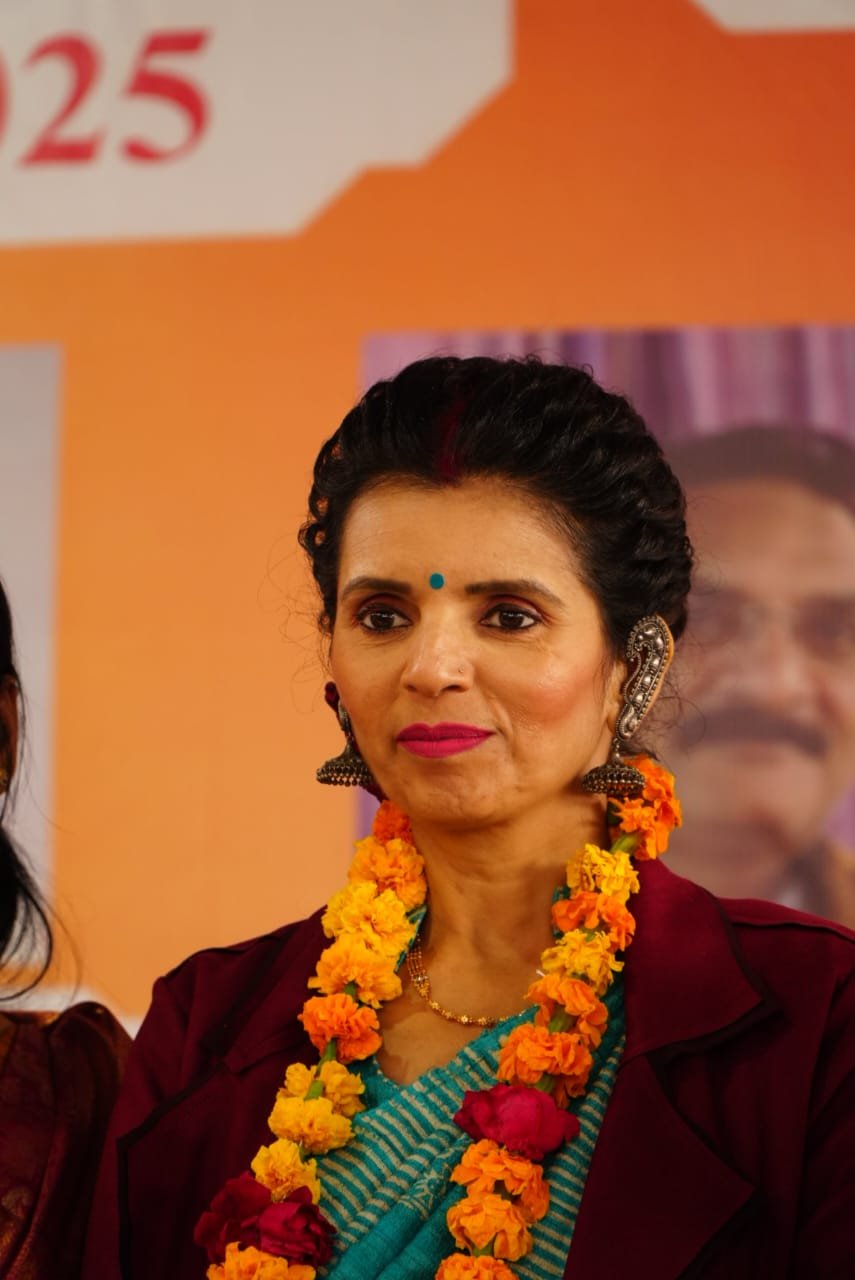
Few journeys show this more clearly than that of Haripriyaa Bharggav. She went from a small district in Bundelkhand to leading enterprises across 11 verticals and chairing the Sanatan Sanskrutik Sangh. Her work now centres on SSS Bharat, a vision for a Samruddha, Samarth and Sanskrutik India. This article examines what vision really does, what the evidence says, and what business leaders can learn from her journey.
What Vision Actually Does: A Compass, Not a Map
A business plan is a map. It shows a route under expected conditions. A vision is a compass. It keeps you pointed in the right direction when the map stops working.
Every enterprise faces the test. Your team, investors, customers, and partners are all being invited into your journey. The names (who), the market (where), and the timing (when) are not enough. Without a clear purpose- the why- nobody commits for the long term. In her framework, the feeling and purpose behind the work must be clear before anything else is written.
The Evidence: Long-Term Thinking Pays
Vision is often dismissed as a soft concept. The data says otherwise.
The McKinsey Global Institute built a Corporate Horizon Index covering 615 large and mid-cap US-listed companies from 2001 to 2015, measuring patterns of investment, growth and earnings quality. The companies it classed as long-term performed markedly better:
- Growth: by 2014, their revenue and earnings growth were 47% and 36% higher respectively, with higher total shareholder returns.
- Resilience in a crisis: they kept increasing R&D spending during the financial crisis while other firms cut back. From 2007 to 2014, their R&D spending grew at 8.5% a year, against 3.7% for the rest.
- Jobs: they created nearly 12,000 more jobs on average than their peers from 2001 to 2015.
The lesson is clear. Companies that know where they are going invest through downturns rather than retreating from them, and they end up stronger.
India’s Oldest Business Lesson: Wealth Rooted in Dharma
Indian thought recognised this long before modern management research. The Chanakya Sutras open with a chain of cause and effect that reads almost like a leadership model:
- Happiness comes from dharma, meaning ethical conduct.
- Dharma is sustained by artha, meaning resources.
- Artha comes from a well-run organisation or enterprise.
- The enterprise rests on self-discipline.
- Self-discipline depends on humility.
Put simply, lasting prosperity grows out of ethics, self-discipline and humility, not the other way round.
India’s most enduring business house shows how this works across generations. Jamsetji Tata set up the JN Tata Endowment in 1892 for the higher education of Indians. His plans for a modern steel plant, a hydroelectric power plant and a science university were completed by his sons. Today, philanthropic trusts endowed by the Tata family hold about 66% of Tata Sons, the group’s holding company.
A vision large enough to outlive its founder built both an industrial empire and institutions such as the Indian Institute of Science. That is what a long-term entrepreneurial vision looks like at full scale.
A Vision Tested: The Journey of Haripriyaa Bharggav
Research shows that vision pays over time. Haripriyaa Bharggav‘s life shows what vision does when circumstances collapse.
Humble beginnings (Lalitpur). She grew up in Lalitpur in Bundelkhand, a region long described as backward. She studied law and teacher training. In 2004, she began teaching and giving legal guidance to women and poor families. She was later selected as a Sub-Inspector in the Lalitpur Police Department. She chose to leave government service to pursue a larger purpose and went on to work as a television newsreader.
Moving to Mumbai. In Mumbai, she joined ICICI Bank and gained experience in finance and organisational management. In 2012, she started a modest content-creation venture.
The defining test. Soon after came the hardest chapter of her life. A severe spinal injury kept her in a hospital bed for nearly eighteen months, through multiple surgeries. When she went back to have the plates in her spine removed, she was diagnosed with Stage III cancer at the age of 32. Months of chemotherapy followed.
Rebuilding. By 2017 she had come through nearly five years of struggle and began rebuilding her career from the ground up. By 2020, she had founded four companies. She established Howeells Ventures LLP in 2019, a principal investment and private equity management firm headquartered in Ahmedabad. Its subsidiary, Ubon Vision Pvt. Ltd., works across technology, media, aerospace, green construction and sustainable textiles.
Service at scale. The COVID-19 pandemic forced another reset. From 2023 onwards, she turned her energy towards social and cultural work, leading the Sanatan Sanskrutik Sangh and its programmes across Bundelkhand and northern India.
What carried her through was not a business plan. It was a vision rooted in faith, purpose and service, strong enough to survive when her body, her finances and the wider economy were all against her.
Five Pillars of a Long-Term Entrepreneurial Vision
Her journey and her teaching through SSS Bharat point to five principles any founder or business leader can apply.
1. Root your vision in something deeper than profit
Haripriyaa Bharggav often uses the image of a tulsi plant. Water and care will not stop its leaves from falling if the roots are weak. A business works the same way. Growth that rests on trends, borrowed capital, or imitation withers under pressure. A vision anchored in values, identity, and purpose keeps the enterprise steady in any environment. That is why SSS Bharat’s central principle is to go global, but never abandon your roots.
2. Treat resilience as a strategic capability
In the SSS Bharat framework, being Samarth (capable) rests on three qualities:
- Self-reliance: not depending on any single person or circumstance.
- Acceptance: the ability to accept a situation as it is.
- Tolerance: the strength to endure it until it can be mastered.
Most people, she observes, have one of these without the other two. Entrepreneurs who build all three turn setbacks into turning points, as her own recovery from illness shows.
3. Think preventive, not just curative
The SSS Bharat approach to national problems moves in three stages: prevention first, then support, then cure. Applied to business, this means anticipating risks before they arrive. Build reserves before a downturn, invest in people before a skills gap opens, and put governance in place before a crisis tests it. The McKinsey finding that long-term firms kept investing through the financial crisis is this principle in action.
4. Pursue balanced, genuine wealth
Haripriyaa Bharggav teaches a balanced approach to money built on four parts: necessity, saving, giving and enjoyment. When any one of these swings to an extreme, personal and business finances become unstable. Prosperity built on borrowed money, she warns, is only an appearance of wealth. Balanced wealth is what compounds across decades.
5. Build a legacy beyond yourself
The enterprises that last longest serve something larger than their founders. Jamsetji Tata’s trusts show it, and so does Haripriyaa Bharggav’s choice to direct her success into the Sanatan Sanskrutik Sangh’s Total Village Development Programme, Vaidik Pathshalas, and cultural renewal. As she puts it: “Charity begins at home, but its spirit must never stop there.”
From Personal Vision to National Vision: SSS Bharat
Entrepreneurial vision matters most when it connects to something larger. SSS Bharat links individual enterprise to India’s long-term journey towards Viksit Bharat 2047 through SSS Bharat’s three pillars:
- Samruddha Bharat: economic self-reliance (swavalamban), with prosperity built on India’s own strengths.
- Samarth Bharat: capable, empowered citizens and youth who are connected to their roots.
- Sanskrutik Bharat: a nation that knows its identity and treats its culture as its greatest strength.
SSS Bharat also names a paradox. Many of India’s most capable people, with resources, knowledge and influence, stay on the sidelines. Meanwhile, those with less capability are the ones actively shaping society. Closing this gap between capability and action is, in Haripriyaa Bharggav’s view, the defining challenge of our time. For entrepreneurs, it means asking not only what will my business achieve? but also what will my success make possible for others?
Five Questions to Test Your Own Vision
Founders and business leaders can use these questions to check whether their vision will hold for the long term:
- Purpose: If your company disappeared tomorrow, what would the world lose, beyond your products?
- Roots: Which values will you refuse to compromise, even at the cost of short-term growth?
- Resilience: If your biggest customer, investor, or market vanished, what would keep you going?
- Prevention: Which risks are you preparing for today that most competitors are ignoring?
- Legacy: Who will benefit from your success in twenty years, beyond you and your shareholders?
Conclusion: Vision Is What Remains When Everything Else Is Tested
Markets change, technology changes, and health and fortune can change overnight. What carries an entrepreneur through a long journey is a vision clear enough to guide decisions and deep enough to survive hardship.
Haripriyaa Bharggav’s journey from Lalitpur to Mumbai, through illness to rebuilding, and from enterprise to nation-building shows that vision is not a slogan on a wall. It is a daily commitment. Her message to India’s capable and successful people is simple:
“प्रत्येक सक्षम, प्रत्येक सफल, प्रत्येक सनातनी को आमंत्रण है — निष्क्रिय से सक्रिय बनो।” (Every capable person, every successful individual, every Sanatani is invited to move from passive to active.)
Or, in her own words: “When the roots of a tree are strong, no storm can bring it down — and when the roots of our culture are deep, no force can weaken our identity.”
To connect with Haripriyaa Bharggav or explore how your enterprise can contribute to SSS Bharat, visit the Contact page.
Frequently Asked Questions
Why is vision important in entrepreneurship?
Vision gives an enterprise a stable purpose and direction, helping it make consistent decisions and stay committed through setbacks. McKinsey research found that long-term-focused companies grew revenue 47% more than their peers between 2001 and 2014.
What is the difference between vision and goals?
Goals are specific milestones. Vision is the lasting purpose that decides which goals are worth pursuing and how you pursue them.
How did Haripriyaa Bharggav build her entrepreneurial journey?
She moved from teaching, police service and media work to banking in Mumbai, then started a content venture in 2012. She rebuilt after a serious spinal injury and Stage III cancer, founded four companies by 2020 including Howeells Ventures LLP, and now leads enterprises across 11 verticals alongside the Sanatan Sanskrutik Sangh.
What is SSS Bharat?
SSS Bharat is Haripriyaa Bharggav’s vision of a Samruddha (prosperous), Samarth (capable) and Sanskrutik (culturally rooted) India, built on self-reliance, empowered citizens and cultural identity.
What can Indian business leaders learn from ancient Indian thought about vision?
The Chanakya Sutras link lasting happiness and prosperity to ethical conduct, disciplined enterprise and humility. That makes values the foundation of long-term success rather than an afterthought.