Most social movements struggle with the same fundamental tension: how do you convert a moment of enthusiasm into a permanent shift in how a society thinks, behaves, and organizes itself? A single rally, a viral campaign, or a well-attended event can generate energy quickly, but energy alone rarely produces lasting change. Lasting change requires infrastructure, repetition, generational transfer, and a theory of what actually needs to shift and why.
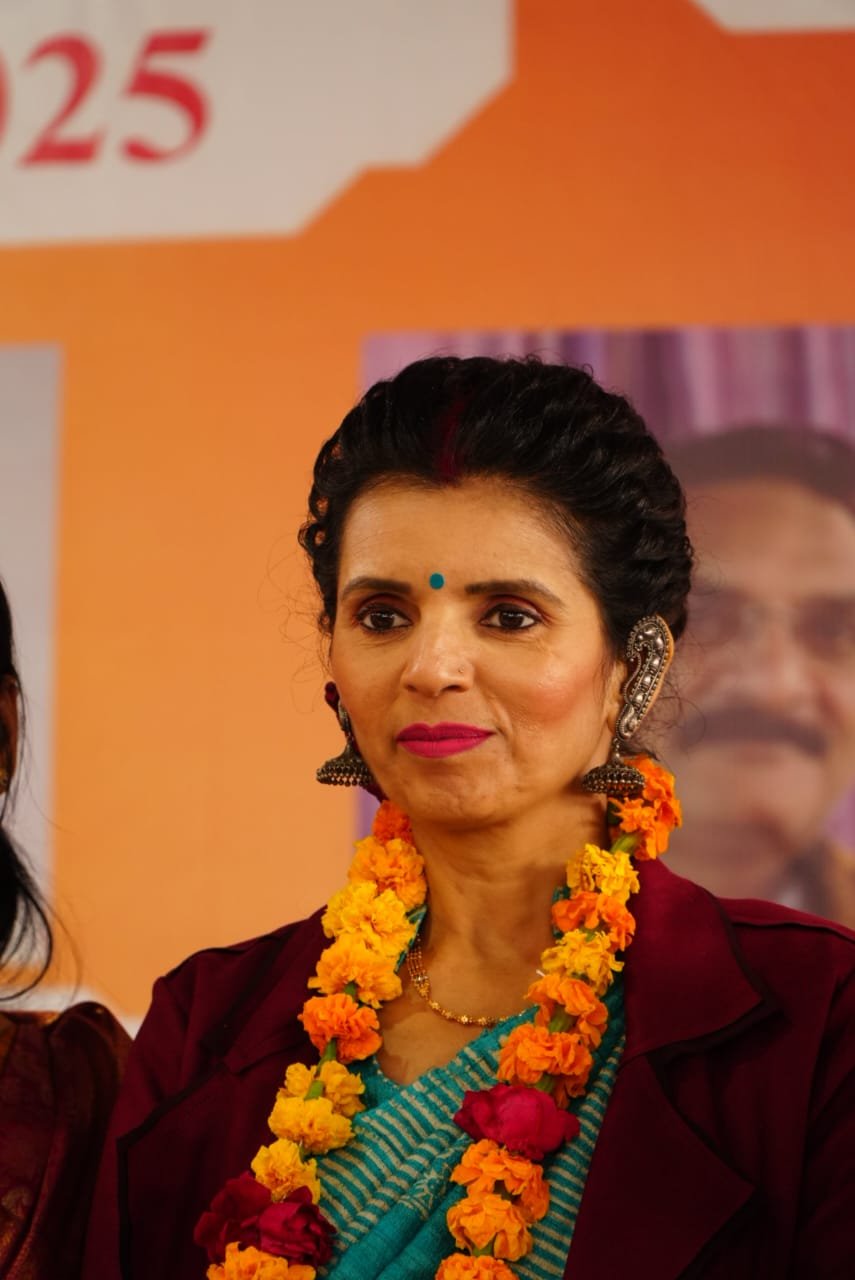
This is the deeper question at the heart of SSS Bharat, the movement founded by industrialist and cultural leader Haripriya Bharggav, Chairperson of the Sanatan Sanskrutik Sangh (SSS). SSS Bharat is not designed as a single campaign with a defined end date. It is structured around three interlocking pillars: Samruddha Bharat (economic self-reliance), Samarth Bharat (empowered capability), and Sanskrutik Bharat (cultural rootedness) each of which addresses a different dimension of long-term national transformation, and each of which requires sustained, multi-generational effort rather than a single decisive push.
This piece examines what “long-term social change” actually means in the context of SSS Bharat not as an abstract aspiration, but as a set of concrete mechanisms: how change is diagnosed, how it’s built, how it’s transmitted across generations, and how a movement avoids the common trap of losing momentum once initial enthusiasm fades.
Diagnosing the Problem Correctly Is the First Step
Before any movement can create lasting change, it has to correctly diagnose what’s actually broken, and this is where much well-intentioned social effort goes wrong. Surface-level problems are often treated as the root cause, leading to interventions that provide short-term relief without addressing the underlying dynamic that keeps producing the problem in the first place.
SSS Bharat’s own framing draws heavily on a preventive, supportive, and curative model, an analogy rooted in how traditional medicine approaches illness. Most policy and social interventions, in this view, operate almost entirely in “curative” mode: reacting to a crisis once it has already fully manifested, applying a fix, and moving on, without ever addressing prevention or the ongoing support needed to keep a problem from recurring.
Applied to India’s cultural and social challenges, this framing suggests that visible symptoms declining rural populations, weakening family structures, young people disconnected from their own heritage, and financial instability built on debt rather than genuine prosperity are not the root problem themselves. They are downstream consequences of deeper, structural shifts: the erosion of joint family systems, the breakdown of community-based economic models, and generational gaps in cultural transmission.
Long-term social change, in this model, requires working further upstream than most interventions typically go. It’s not enough to fund a school or organize a single awareness campaign. The deeper question SSS Bharat asks is: what structural conditions allowed this problem to develop in the first place, and what would need to be true for it not to recur?
Why Culture Is Treated as Infrastructure, Not Decoration
One of the more distinctive aspects of SSS Bharat’s approach to long-term change is its treatment of culture not as a soft, decorative layer on top of “real” development priorities like economic growth or infrastructure, but as foundational infrastructure in its own right.
Haripriya Bharggav has argued that those who don’t know their own cultural legacy end up living inside someone else’s narrative about who they are and that this isn’t merely a matter of personal identity, but has direct consequences for a society’s cohesion, resilience, and capacity for self-directed development. A community that has lost confidence in its own, in this view, becomes more susceptible to imported models of development, imported definitions of success, and imported assumptions about what “progress” should look like even when those models don’t actually fit local conditions.
This is why SSS Bharat treats cultural literacy teaching Sanskrit, scripture, history, and philosophy with the same seriousness typically reserved for economic policy or infrastructure development. The Vaidik Pathshalas the movement is working to establish aren’t framed as supplementary or extracurricular; they’re framed as foundational institutions, on par with schools and hospitals, because the movement’s underlying theory is that a society’s economic and social outcomes are downstream of its cultural self-understanding, not separate from it.
For long-term social change to hold, in other words, it has to happen at the level of how people understand themselves and their history, not just at the level of policy or infrastructure, which can be built and then eroded again if the underlying cultural foundation isn’t also reinforced.
Institution-Building as the Backbone of Durability
Enthusiasm fades. Institutions, if built well, don’t. This is a core reason SSS Bharat has prioritized building durable institutional structures: the Sanatan Sanskrutik Sangh itself, the Total Village Development Programme, Vaidik Pathshalas, and a defined structure of large-scale annual and recurring events rather than relying purely on periodic mobilization or one-off campaigns.
Over the past year and a half alone, SSS has organized more than two dozen distinct initiatives, ranging from yatras and educational launches to health campaigns and environmental drives. What matters for long-term change is not simply that these events happened, but that they exist within a recognizable, repeatable structure, meaning future events can draw on established organizational knowledge, existing community relationships, and a track record of credibility, rather than starting from zero each time.
This institutional approach shows up in several concrete ways:
Repeatable formats. Events like the Sanatan Kalash Yatra, Samuhik Ganga Aarti, and Navratri celebrations are not one-time occurrences but recurring formats that communities can anticipate, plan around, and build local traditions upon over time.
Physical infrastructure. Vaidik Pathshalas, Gau Shalas (cow shelters), and planned educational institutions represent durable physical assets that continue functioning independent of any single event or campaign cycle.
Organizational continuity. The Sanatan Sanskrutik Sangh itself functions as a standing organization with defined leadership, rather than an ad hoc coalition assembled around a single cause and then dissolved once that cause loses public attention.
Documented knowledge. The movement’s growing body of content video scripts, public speeches, written materials creates a persistent knowledge base that new participants and communities can draw on, rather than requiring each new supporter to be onboarded through direct personal contact alone.
This institutional backbone is what allows a movement to survive leadership transitions, funding fluctuations, and shifts in public attention, all of which are inevitable over a timeframe long enough to produce genuine generational change.
Generational Transmission: The Real Measure of Success
Perhaps the clearest marker of whether a movement has achieved genuine long-term social change is whether its values and practices successfully transfer to a generation that didn’t experience the movement’s founding moment firsthand. This is where SSS Bharat’s Samarth Bharat pillar becomes central to the entire long-term theory of change.
Haripriya Bharggav has been direct about the diagnosis here: the responsibility for transmitting cultural values to Gen Z and Gen Alpha rested with Millennials and Gen X, and that transmission largely didn’t happen because those generations lacked access to the relevant knowledge, but because the transmission mechanisms (family conversation, community education, intentional mentorship) weakened even as material prosperity and access to information increased.
This diagnosis has direct implications for how SSS Bharat approaches long-term change. Rather than assuming that cultural knowledge will simply be absorbed passively through general exposure, the movement is building explicit transmission mechanisms:
- Structured educational institutions (Vaidik Pathshalas) designed specifically to teach Sanskrit, Vedic knowledge, and dharmic ethics to young people in a systematic way.
- Family-level guidance, encouraging parents to treat values transmission as seriously as they treat school fees and extracurricular achievement, explicitly framing sanskar, identity, and wisdom as things that must be actively given, not passively inherited.
- Youth-specific programming within SSS events, ensuring younger participants are not simply spectators at gatherings designed primarily for older generations.
- Content designed for digital-native audiences: short-form video scripts, social media content, and accessible language, recognizing that a generation raised on digital platforms will not engage with cultural material presented purely through traditional, text-heavy formats.
Long-term social change, in this framework, isn’t measured primarily by how many people attend a single event. It’s measured by whether a fifteen-year-old today grows up with a working knowledge of their own cultural heritage, carries that knowledge into adulthood, and eventually transmits it to their own children, extending the chain of transmission that the movement argues was broken over the past two generations.
Economic Self-Reliance as a Long-Term, Not Short-Term, Goal
The Samruddha Bharat pillar illustrates another important principle of long-term social change: that economic transformation, done properly, cannot be rushed through short-term interventions like one-time cash transfers or isolated skill-training workshops, however well-intentioned.
SSS Bharat’s framing draws on the idea that genuine prosperity is balanced prosperity built on a sustainable relationship between necessity, saving, donation, and controlled indulgence, rather than on borrowed money that creates an illusion of progress without underlying resilience. This distinction matters because short-term economic interventions often produce short-term metrics improvement (income increases, consumption increases) without producing the underlying financial discipline and self-reliance that make prosperity durable over time.
The Total Village Development Programme reflects this longer time horizon directly. Rather than promising rapid, dramatic transformation, it is structured around sustained, multi-year engagement across healthcare access, education quality, and self-reliance initiatives, recognizing that rural economic transformation, done in a way that actually holds, requires years of consistent infrastructure-building rather than a single injection of resources.
This patience is itself a form of discipline that long-term social movements need to internalize. It is often tempting for funders, for media coverage, for public perception to prioritize interventions that produce visible, quick results. But interventions optimized purely for short-term visibility often fail to produce the kind of structural, self-sustaining change that survives once external support or attention moves elsewhere.
Measuring What Actually Matters
One of the harder challenges facing any long-term social change effort is figuring out how to measure progress in a way that reflects genuine transformation rather than surface-level activity. It’s relatively easy to count events organized, participants mobilized, or media coverage generated. It’s much harder to measure whether underlying cultural knowledge, community resilience, or economic self-reliance have genuinely improved.
Vision of SSS Bharat‘s own public reporting of twenty-five major events organized over roughly eighteen months, ranging from yatras and educational launches to health campaigns, provides visible evidence of sustained activity. But the deeper metrics implied by the movement’s own stated goals point toward longer-horizon indicators that are harder to track but ultimately more meaningful:
- Whether young people participating in Vaidik Pathshalas retain and apply what they learn years later, not just whether attendance numbers are high.
- Whether villages engaged through the Total Village Development Programme show reduced out-migration over time, reflecting genuine improvement in local quality of life rather than temporary relief.
- Whether families report actively transmitting cultural values at home, rather than outsourcing that responsibility entirely to schools or organized events.
- Whether local communities develop the capacity to independently organize and sustain their own initiatives, rather than remain dependent on centralized SSS coordination indefinitely.
Movements serious about long-term change tend to eventually confront this measurement challenge directly recognizing that the easiest metrics to track are often not the ones that matter most, and building in mechanisms, however imperfect, to assess whether deeper transformation is actually occurring.
The Role of Personal Resilience in Movement Credibility
Long-term social movements are also shaped, often invisibly, by the credibility and resilience of the people who lead them. Haripriya Bharggav’s own biography rebuilding a business career after a severe spinal injury and a Stage III cancer diagnosis, before going on to lead a nationwide cultural movement reflects a pattern common among leaders of durable social initiatives: sustained personal commitment through adversity tends to translate into organizational durability.
This matters for long-term social change because movements led by figures who visibly demonstrate the values they’re asking others to adopt resilience, discipline, commitment beyond personal convenience tend to earn a form of trust that purely message-based campaigns struggle to replicate. Communities are often more willing to commit to a multi-year engagement, whether through volunteering, financial support, or personal behavior change, when they can see that the movement’s own leadership has already demonstrated staying power through genuine hardship.
Avoiding the Common Failure Modes of Social Movements
Long-term social change efforts fail for fairly predictable reasons, and SSS Bharat’s structural choices appear designed, at least implicitly, to guard against several of them.
Over-reliance on a single charismatic moment. Movements that peak around one dramatic event often struggle to sustain relevance afterward. SSS Bharat’s steady cadence of recurring events across multiple domains cultural, economic, environmental, educational reduces dependence on any single moment carrying the entire movement’s momentum.
Failure to institutionalize. Movements that never build durable organizations or physical infrastructure tend to dissolve once initial leadership attention shifts elsewhere. The establishment of Vaidik Pathshalas, Gau Shalas, and a standing organizational structure in SSS addresses this directly.
Neglecting generational transfer. Movements focused entirely on mobilizing the current generation of adults, without building explicit mechanisms to transfer values to children and young people, tend to see their impact fade within a single generation. SSS Bharat’s explicit focus on Samarth Bharat and youth-oriented programming is a direct response to this failure mode.
Treating culture and economics as separate tracks. Movements that focus exclusively on economic development while ignoring cultural cohesion or vice versa often find that gains in one area are undermined by neglect in the other. SSS Bharat’s integrated three-pillar structure reflects an explicit attempt to avoid this trap.
Building Trust as the Currency of Long-Term Movements
There is one more dimension of long-term social change worth naming explicitly, because it tends to be underestimated relative to its actual importance: trust. Communities do not commit years of volunteer time, financial support, or personal behavior change to a movement they don’t trust, and trust, unlike enthusiasm, cannot be manufactured quickly through messaging alone. It has to be earned through consistency over time.
SSS Bharat’s approach to building this trust reflects several deliberate choices. Events are organized repeatedly rather than as isolated occurrences, allowing communities to observe consistency before committing deeper involvement. Physical institutions like Vaidik Pathshalas and Gau Shalas provide tangible, visible evidence of follow-through rather than resting on promises alone. Public accounting of past initiatives the documented record of twenty-five major events over roughly eighteen months, spanning yatras, health campaigns, and educational launches gives communities a track record to evaluate rather than asking for blind commitment to an unproven vision.
This matters because long-term social change ultimately depends on a kind of compounding trust: each successfully delivered initiative makes the next one easier to organize, easier to fund, and easier to recruit participants for. Movements that fail to establish this trust early often find themselves perpetually starting over, unable to build the kind of deep community buy-in that sustained transformation requires.
Conclusion
Creating long-term social change is fundamentally different from generating short-term enthusiasm, and the difference lies almost entirely in the underlying architecture: correct diagnosis of root causes, durable institutions rather than one-off events, explicit mechanisms for generational transmission, patience with economic and cultural transformation that cannot be rushed, and leadership whose own resilience lends credibility to what they’re asking of others.
SSS Bharat, as built by Haripriya Bharggav and the Sanatan Sanskrutik Sangh, reflects a deliberate attempt to engineer a movement around these principles rather than around momentary visibility. Its three pillars, Samruddha, Samarth, and Sanskrutik Bharat, are not separate initiatives competing for attention, but interlocking components of a single, longer-horizon theory of change: that a nation’s economic resilience, its citizens’ capability, and its cultural self-understanding all reinforce one another, and that lasting transformation in any one of these areas depends on sustained progress in the other two.
Whether a movement of this scope ultimately succeeds will be measured not in the coming months, but across generations in whether the values, institutions, and habits being built today are still standing, and still being actively passed on, decades from now. That is the real test of long-term social change, and it is the standard against which SSS Bharat’s own long-term ambitions should be understood.