Ask most people to picture “a developed India,” and their minds fill with skylines. Glass towers, expressways, metro trains, glowing tech parks. Notice what is missing from that picture: the village. Somewhere along the way, we started imagining our future as a nation of cities, with the countryside as a fading backdrop we would eventually leave behind.
This is the quiet assumption I want to challenge. Because the truth is the reverse: a Bharat that is glorious in its cities but empty in its villages has not developed at all. It has merely relocated its poverty.
Samruddha Bharat, the first pillar of the SSS Bharat vision, alongside Samarth and Sanskrutik, means a genuinely prosperous nation where every citizen is self-reliant, and Bharat bows its head to no one. But the real measure of that prosperity is not found in a boardroom in Mumbai or a startup in Bengaluru. It is found in whether the farmer in Bundelkhand, the weaver in a small town, and the young woman in a remote village can live lives of dignity, opportunity, and pride on their own soil.
So let me answer the question directly and honestly. What does Samruddha Bharat mean for rural India? It means seven things, and together they form a complete vision of renewal.
First: It Means Redefining What “Prosperity” Even Is
We have to begin here, because we have been sold a counterfeit definition of prosperity, and rural India has paid the highest price for it.
The counterfeit says: prosperity is more consumption, more borrowing, more imitation of the West. By that measure, a village will always lose, because it can never out-consume a city. So the village is told it is “backward,” its young are told to leave, and its way of life is dismissed as a relic.
But this is a facade, not prosperity. A nation that celebrates progress built on borrowed money and imported models is not wealthy; it is dependent, and it has simply renamed its dependency “modernisation.”
The Sanatan vision of prosperity is entirely different. It rests on four dimensions that must rise together: Arthik (economic), Sharirik (physical), Mansik (mental), and Atmik (spiritual). By this fuller measure, a village with clean air, strong community bonds, nourishing food, and a rich spiritual life may already be wealthier in ways a stressed, isolated city dweller is not. Samruddha Bharat does not ask the village to abandon what makes it whole in order to chase what makes the city hollow. It asks us to build economic strength on top of the physical, mental, and spiritual richness the village already holds.
Redefining prosperity is not a semantic exercise. It is the foundation of everything. Once we stop measuring the village by a yardstick designed to make it fail, we can finally see it for what it is: the root of the nation’s strength.
Second: It Means Remembering That the Village Was Once the Source of Our Wealth
To rebuild, we must remember. India was once the “Sone ki Chidiya,” the Golden Bird, among the richest civilisations the world has ever known. But that wealth was never concentrated in a handful of cities. It flowed through thousands of self-reliant villages, each a small centre of production and culture.
Our handlooms clothed the world. Our indigenous steel and craftsmanship were unmatched. Our farming systems fed vast populations without a single chemical fertiliser through gobar, gomutra, and organic wisdom refined over centuries. It is recorded that India once cultivated over one lakh varieties of rice. This was not a poor, primitive countryside. It was a distributed engine of prosperity.
And crucially, Bharat never truly divided itself into “urban” and “rural.” That divide was imposed from outside. In our own civilisation, the smallest villager was held to be as samruddha as worthy and prosperous as the greatest citizen. Bharat ka ek chota bhi vyakti, utna hi samruddha hai, jitna sabse bada samruddha hai.
The collapse of this village prosperity was not fate. It was a systematic deconstruction: trade networks deliberately broken, indigenous industries taxed into ruin, the village severed from its own economic power and made dependent. Samruddha Bharat is the reversal of that deconstruction. It is the village remembering that it was never meant to be poor.
Third: It Means Building Villages People Return To, Not Escape From
Here is the single sentence that captures the whole vision: our aim is to build villages so prosperous, so cultured, and so self-sufficient that people come back to them out of pride, not flee them out of compulsion.
Look honestly at rural migration today. It moves one way. The young leave because they feel they have no choice no work, no hospital nearby, no good school, no future. Every departure drains the village a little more, until only the elderly remain to tend a slowly emptying home.
Samruddha Bharat imagines that current reversed. Picture a village where a young person can build a genuine livelihood without surrendering their roots. Where healthcare and education stand close at hand. Where cultural and community life is so rich that the city, for all its noise, offers nothing the village lacks. In such a place, leaving becomes a free choice rather than a forced exile and returning becomes a homecoming.
This is not romanticism about “keeping people in villages.” It is the opposite. It is about making villages worthy of the people in them. And it can only happen if development is collective and joint reaching the village with the same seriousness it reaches the city. Cultural development program, sayukta collectively karna zaruri hai. City or village, the goal is identical: the complete upliftment of every human being.
Fourth: It Means Self-Reliance, Swavalamban, Not Endless Dependence
At the centre of Samruddha Bharat stands one word: Swavalamban. Self-reliance.
A prosperous village is not one kept alive by a permanent drip of outside aid. It is one that stands on its own feet, producing its own wealth, feeding its own people, generating its own livelihoods, and asking no one’s permission to thrive. Dependency, however well-intentioned, keeps a community weak. Self-reliance makes it strong.
This is where our sages offer startlingly practical guidance. They taught that wealth must be kept in balance across four parts what we spend on necessity, what we save, what we give in charity, and what we allow for comfort. When any one runs to an extreme, the whole system collapses. A village that only consumes stays trapped; one that only hoards loses its social soul. Genuine prosperity is balanced prosperity.
For rural India, this is financial literacy drawn from our own soil rather than from a foreign textbook of debt and endless consumption. It teaches a village to earn, save, share, and live with dignity to build reserves that carry it through hard seasons and reduce its vulnerability to every economic shock. A self-reliant, balanced village does not merely survive. It endures across generations.
Fifth: It Means Developing the Right Way: Prevention, Support, Then Cure
How we develop rural India matters as much as whether we do. And here the Sanatan tradition offers wisdom drawn from our own approach to health: the sequence of prevention, support, and cure.
Consider how development usually works today. We wait for the crisis a drought, a farming collapse, a wave of distress migration and only then rush in with a “cure.” We arrive after the fire has already spread. Worse, the hurried cure often creates side effects graver than the original wound. Chemical fertilisers and steroids poured onto crops without prevention or support may swell the harvest for one season, but they poison the soil, the water, and the very people the food was meant to nourish. What looks like food becomes poison.
The wiser way inverts this. Prevention comes first: strengthen the village’s inner immunity healthy soil, indigenous farming wisdom, self-reliant local economies, strong community bonds so that crises struggle to take hold at all. Support comes next: the steady care, discipline, and nourishment that keep the village resilient. And only then, when it is truly needed, comes the cure and even then it works gently, because the ground has been prepared.
Applied to rural India, this means we stop treating villages as patients to be rescued after they collapse, and begin treating them as living systems to be strengthened from within. Learn from the past, build the future, stabilise the present. This is not slower development. It is development that actually lasts.
Sixth: It Means Putting This Into Practice: The Total Village Development Programme
A vision that never touches the ground is only a speech. This is why the Sanatan Sanskrutik Sangh has made rural transformation a living mission through the Total Village Development Programme (TVDP), active across the villages of Bundelkhand and other parts of northern India.
TVDP treats the village as a complete ecosystem rather than a collection of problems. Its work rests on four foundations:
Healthcare that reaches the village. Through multiple free medical camps held every year, thousands of patients across northern India have been served, alongside rural health-awareness programmes that bring quality care to communities long left without it. Prosperity begins with health.
Education worthy of every child. Better schooling and literacy drives that give rural children the same foundation urban children are given by default, paired with cultural education, so the next generation grows up rooted even as it rises.
Self-reliance in action. Skill workshops, livelihood support, and the revival of local enterprise, so that prosperity is created inside the village rather than imported into it.
Cultural and spiritual awareness. The living transmission of Sanatan values, ensuring that as a village grows richer in wealth, it grows richer, not poorer, in identity and meaning.
The purpose of TVDP is to turn local communities into resilient hubs of prosperity, moral strength, and harmony villages that are economically self-sufficient, culturally enlightened, and ethically empowered. This is Samruddha Bharat made real: rural India as a living expression of Vasudhaiva Kutumbakam, where material well-being and cultural consciousness rise together.
Seventh: It Means Honouring the Real Engine of the Village Matru Shakti
No vision of rural prosperity is honest unless it names the force that has always sustained the village: Matru Shakti, the power of women.
In rural India, women are not bystanders to the economy; they are its backbone. From the fields to the household economy, from preserving culture to raising the next generation, the strength of the village flows through its women. A truly Samruddha village is one where this Shakti is honoured, activated, and empowered; where women lead self-reliance initiatives, where their wisdom shapes community life, and where their rise lifts the entire village with them.
Rural revival and women’s empowerment are not two goals. They are one. Empower the women of a village, and you empower the village itself.
The Root and the Tree
Let me leave you with the image that holds all of this together. In our tradition, we speak of the tulsi plant. You may tend its leaves, water them faithfully, shield them from the sun, but if the root is weak, the leaves will keep falling, no matter what you do. The health of the whole plant lives in its root.
India’s villages are that root. When they are strong, the entire nation flourishes. When they are neglected, no skyline, however tall, can hide the decay beneath. This is why Samruddha Bharat turns toward the village not out of charity, but out of clear sight, because the root is where a civilisation either lives or dies.
And this is where the invitation becomes personal. The crisis of our time is not a shortage of talent or resources. It is the gap between capability and action: the accomplished who do not serve, the knowledgeable who do not share, the influential who do not lead. To close that gap, SSS Bharat calls to every capable soul: “Every capable person, every successful individual, every Sanatani is invited to transform from passive to active.” From nishkriya to sakriya.
Rural India does not need pity. It needs partnership. It needs the strong and the rooted to invest their strength where it matters most in the soil that was always the true source of Bharat’s greatness.
So what does Samruddha Bharat mean for rural India? It means the end of the lie that the village is a place to escape. It means prosperity that is balanced, self-reliant, and whole. It means indigenous wisdom over borrowed models, dignity over dependence, and homecoming over exodus. It means the Golden Bird rising again not from our cities alone, but from the countless villages that were always its true home.
As I often say: “When the roots of a tree are strong, no storm can bring it down and when the roots of our culture are deep, no force can weaken our identity.” Rural India is that root. Let us strengthen it together.
That is the promise of Samruddha Bharat. And it begins in the heart of the village.
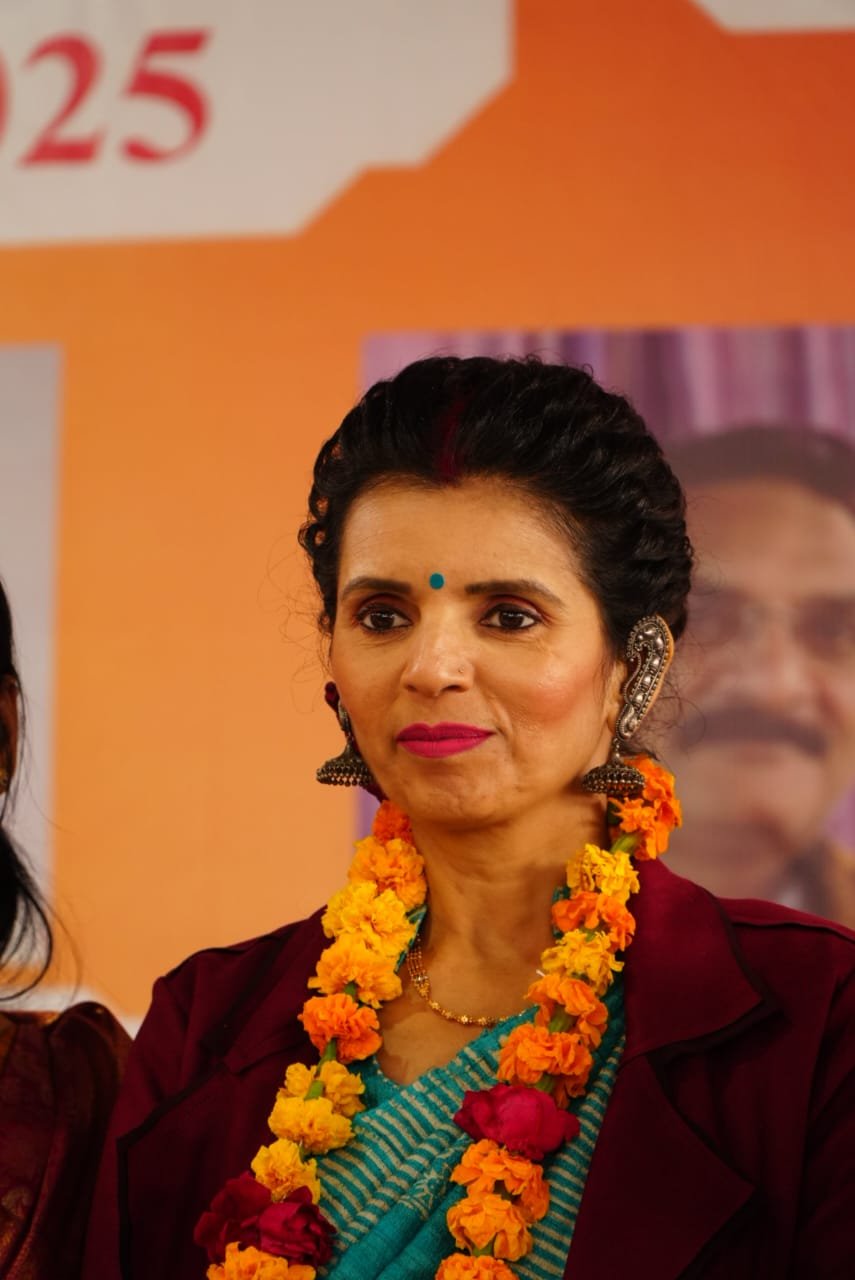
Haripriyaa Bharggav is an entrepreneur, philanthropist, and cultural leader, and the Chairperson of the Sanatan Sanskrutik Sangh, a movement dedicated to reviving India’s cultural consciousness, empowering rural communities, and building a self-reliant, dharmic Bharat.