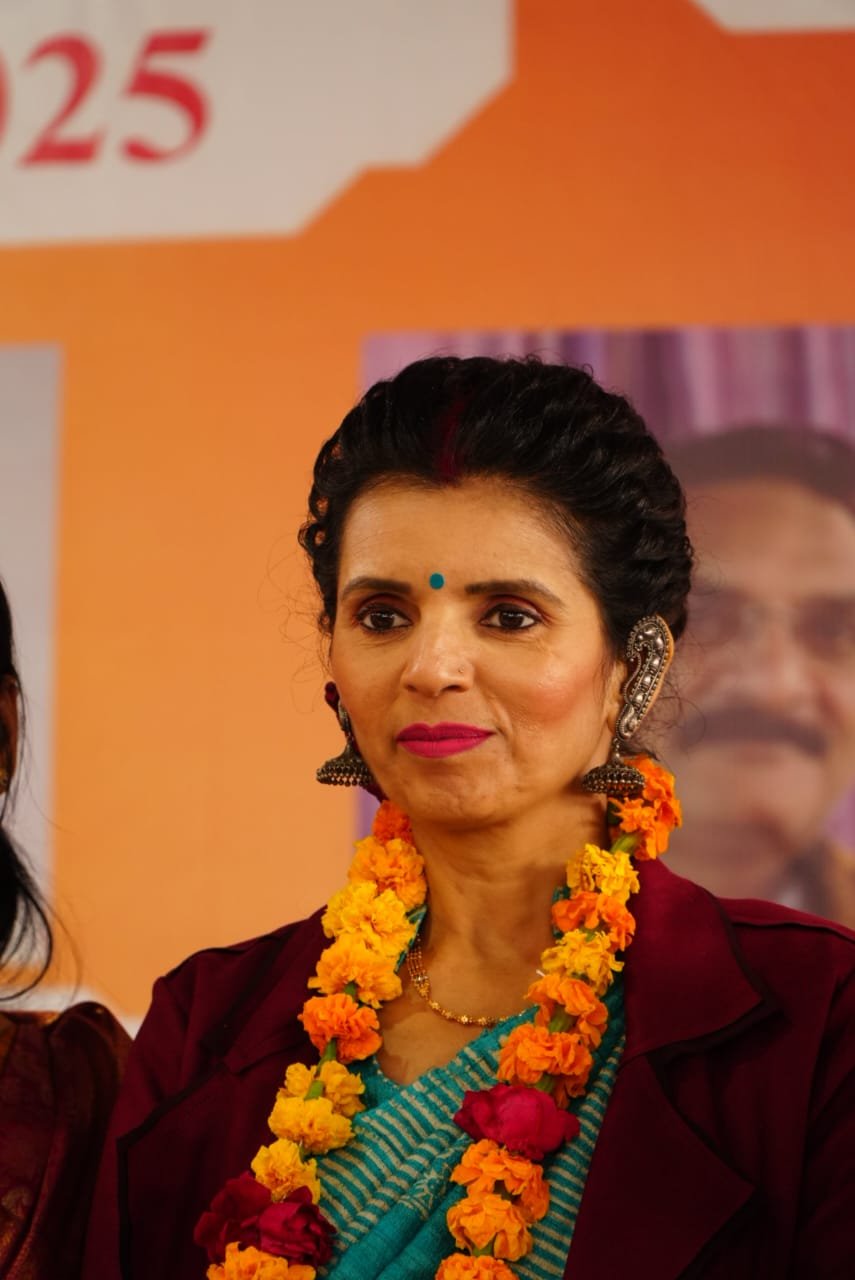
Whenever I am asked to speak about women empowerment, I begin with a memory that is not mine alone but belongs to every daughter of Bundelkhand. I was born in Lalitpur, on the same soil that gave the world Rani Lakshmibai of Jhansi, a woman who, in 1857, rode into battle with her child tied to her back and led an army against the mightiest empire on earth. When I walk through the villages of my region even today, I do not see helpless women waiting to be rescued. I see her descendants. I see shakti that is sleeping, not shakti that is absent.
This distinction matters, because it changes everything about how we approach women empowerment in rural India. If we believe rural women are weak, we design programs of charity. But if we understand that they are powerful women whose power has been suppressed by centuries of circumstance, then we design programs of awakening. And it is this second kind of work the awakening that is quietly transforming rural Bharat today. This blog is my attempt to map that transformation: what is happening, why it is working, what our civilization has always known about women’s power, and what remains to be done.
First, Let Us Correct the History
Before we discuss initiatives, we must correct a narrative because a woman who believes empowerment is a foreign gift will never claim it as her birthright.
We are constantly told that women empowerment is a Western concept that India must import. The facts say otherwise. Our Vedic tradition declared thousands of years ago: “Yatra Naryastu Pujyante Ramante Tatra Devata,” where women are honoured, there the gods reside. Our civilization gave the world women rishikas like Gargi and Maitreyi, who debated the deepest philosophy in royal assemblies. In the eighteenth century, Ahilyabai Holkar administered one of the best-governed states in the world, rebuilding temples and ghats from Kashi to Rameshwaram. In 1857, Rani Lakshmibai commanded armies.
And Europe, which lectures us on empowerment? In many Western countries, women could not vote, hold property in their own name, or open a bank account without a male guardian until well into the twentieth century. The truth is simple: the source of women’s dignity was Bharat. What we suffered in later centuries the decline in women’s status, the social evils that crept in during long periods of foreign domination was a distortion of our culture, not an expression of it.
Why does this history matter for a blog about rural initiatives? Because empowerment begins in the mind. When a village woman learns that she is not being “modernized” but restored to leadership, learning, and economic authority are her ancient inheritance, her confidence changes at the root. This is why every empowerment initiative I lead, or support begins with cultural pride, not cultural apology.
The Quiet Revolution: Self-Help Groups and the Economics of Sisterhood
If future historians look back at the most transformative forces shaping rural India over the past three decades, they may well point to something remarkably simple: ten to twenty women sitting together in a circle, pooling small savings every week.
The Self-Help Group (SHG) movement has evolved into one of the world’s largest community-based networks for women, bringing together crores of rural women through lakhs of groups across the country. Its structure is simple yet powerful. Members contribute small savings regularly, support one another through internal lending, build financial discipline, and gradually gain access to formal banking services and credit to establish micro-enterprises. However, the real transformation extends far beyond financial inclusion.
Within these circles, women discover confidence and leadership. A woman who was once excluded from family decisions begins expressing her views with conviction. Another who had never handled money learns bookkeeping and financial planning. Others travel beyond their villages to engage with banks, government offices, and markets. In many ways, an SHG becomes a school of confidence disguised as a savings group. Its success reflects India’s own civilizational values of collective strength, shared responsibility, and mutual trust. Unlike models that emphasize individual success alone, SHGs demonstrate how communities prosper when women grow together.
The impact of this movement is now visible across several national initiatives. The vision of creating crores of Lakhpati Didis women earning a sustainable annual income of one lakh rupees or more has enabled lakhs of rural women to become dairy farmers, tailors, food processors, poultry keepers, artisans, and business owners. Their success is also contributing to the growing community of women entrepreneurs in India, proving that entrepreneurship is thriving not only in cities but also in the villages that form the backbone of the nation. The Drone Didi initiative is equipping village women with agricultural drone technology, enabling them to provide modern farming services while breaking traditional barriers. Similarly, Bank Sakhis and Pashu Sakhis are extending banking and veterinary services to the last mile, with rural women leading change within their own communities.
Panchayats: Where Rural Women Learned to Govern
The second great transformation came through the panchayati raj system. When reservation guaranteed women one-third and in many states now one-half of seats in village councils, sceptics predicted that women would be mere rubber stamps for their husbands. The term “sarpanch pati” was coined with a smirk.
Two decades later, the smirk has faded. Yes, proxy leadership exists and must be fought. But India today has over fourteen lakh elected women representatives in local bodies, one of the largest cohorts of women in political leadership anywhere in the world. Study after study has shown that women-led panchayats invest more in drinking water, sanitation, schools, and health, the issues closest to family welfare. And something deeper has shifted: a generation of village girls has grown up watching a woman preside over the gram sabha. You cannot measure the value of that image in any government report. A girl who has seen a woman sarpanch does not need to be told that leadership is possible; she has seen it with her own eyes.
This, too, is restoration rather than innovation. Our tradition knew the power of the woman decision-maker. I often narrate the story of a Rajasthani household where the most veiled woman in the house, the ghunghat-wali mata, was the one whose single gesture decided every family matter. Her covering was never her weakness; her word was law. What panchayat reservation has done is carry that authority from the courtyard to the council, from the family to the village.
Education: The Vedic Pathshala Vision and the Educated Daughter
No empowerment survives without education, and here rural India has seen a silent revolution of its own. Enrolment of girls has risen dramatically; schemes like Beti Bachao Beti Padhao have attacked both female foeticide and girl-child dropout; scholarships, bicycles, and residential schools have carried lakhs of daughters from first-generation-literate homes into colleges.
I experienced this ladder personally. I studied in Lalitpur R.E. Mission School, Girls Government College, then my degrees from Bundelkhand’s institutions, including my LL.B. My education took me from a small district town to teaching, then to the uniform of a Sub-Inspector in the Lalitpur Police, and eventually to building enterprises across eleven business verticals from Mumbai. I share this not for self-praise but as evidence: the distance between a Bundelkhand classroom and a boardroom can be covered in one lifetime, in one generation. Education is the vehicle.
But I also believe our education must do more than produce degree-holders. It must produce rooted, confident women who know who they are. This is why, through the Sanatan Sanskrutik Sangh, I have committed to the vision of Vedic Pathshalas beginning in Bundelkhand and expanding across India where children, including our daughters, will learn the Vedas, Puranas, Sanskrit, and traditional values alongside modern knowledge. A girl who can quote her own scriptures cannot be told by anyone that her culture considers her inferior. She will know better, from the original source, without depending on distorted translations. Knowledge of one’s roots is the deepest empowerment of all because when the roots are strong, no storm can bring the tree down.
Health, Dignity, and the Everyday Freedoms
Empowerment is also built from things that rarely make headlines. A toilet at home, so a woman does not have to wait for darkness. A gas cylinder, so she does not spend hours inhaling smoke over a chulha. A tap connection, so she does not walk kilometres balancing pots. A bank account in her own name, where her earnings and entitlements arrive directly. An ASHA worker herself, a village woman at her door during pregnancy.
Missions like Swachh Bharat, Ujjwala, Jal Jeevan, and Jan Dhan are often discussed as infrastructure programs, but in truth they are women’s time-and-dignity programs. Every hour returned to a rural woman is an hour available for her enterprise, her learning, her children, her self. And the crores of ASHA and anganwadi workers who deliver rural healthcare are themselves one of the largest women’s workforces in the world: village women serving village women. Empowerment delivering empowerment.
The Digital Doorstep: Technology in Her Hands
A new chapter is now being written through technology. The smartphone, once a rarity in village homes and even more rarely in women’s hands, is fast becoming the rural woman’s most powerful tool. Through digital literacy drives and common service centres, lakhs of rural women are learning to make digital payments, access government entitlements directly, and check mandi prices without a middleman. Women weavers of Bundelkhand and artisans across India are today selling their crafts on e-commerce platforms to buyers in metros and even abroad. The village haat has expanded to the whole world, and she does not have to leave her courtyard to reach it.
Direct benefit transfers into women’s own Jan Dhan accounts have done something subtle but revolutionary: the money now arrives in her name, under her thumb impression, beyond anyone’s interception. Financial identity is the seed of financial independence. When a woman sees her own name on a passbook, an insurance policy, or a property document, her relationship with her own future changes. Our task now is to ensure that no woman is left on the wrong side of the digital divide because in this decade, digital exclusion will mean economic exclusion.
The Sanatan Sanskrutik Sangh and My Own Sankalp
Let me now speak about the work that is closest to my heart. As Chairperson of the Sanatan Sanskrutik Sangh, I have placed women’s empowerment at the core of our mission, alongside our three guiding ideals of Shanti, Shraddha, and Shaurya: peace, devotion, and valor. It is no coincidence that the ideal of valor is inspired by the warrior queens of our own civilization, whose courage continues to motivate generations of Indian women.
Through initiatives such as the Sanatan Ekta Yatra and Sanatan Raksha Yatra, we have brought together saints and cultural leaders from the Vedic, Jain, Buddhist, and Sikh traditions on shared platforms. These initiatives also reflect the importance of spiritual events in India in strengthening cultural harmony, encouraging social responsibility, and inspiring active participation among women and youth. At every gathering, women’s empowerment is not treated as an afterthought but as a central pillar of nation-building. Our message is simple: a society cannot sincerely worship Durga, Lakshmi, and Saraswati while neglecting the strength, prosperity, and education of its living daughters. That contradiction must end, and it must end first in our villages.
My larger vision, which I call SSS Bharat a Bharat that is Samruddha, Samarth, and Sanskrutik—is built on the belief that the true strength of a developed India lies in strong, secure, and self-reliant villages. Today, many people leave their villages out of necessity rather than choice. My mission is to help build villages where people choose to stay, grow, and even return with pride. Such a vision cannot be realized without self-reliant women. When women are empowered to earn, learn, and lead, migration slows, families become stronger, children receive better opportunities, and our cultural values are passed from one generation to the next because the mother remains every child’s first teacher and first pathshala. Empower one woman, and you strengthen an entire family and future generations.
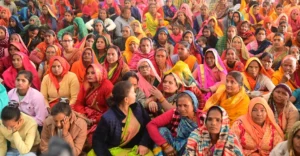
The same philosophy guides our creative work. When we released our Hindi feature film based on five stories celebrating Indian culture and values across nearly seven hundred theatres, we consciously reached audiences in rural India and single-screen cinemas while combining entertainment with meaningful community outreach. Some of the most heartfelt responses came from women viewers, who shared that seeing their traditions, struggles, and inner strength portrayed with dignity on screen filled them with pride. For me, that reaffirmed an enduring truth: when rural women see their identity and values respected, they gain the confidence to preserve their heritage while shaping India’s future.
What Still Remains to Be Done
Honesty demands that we acknowledge the unfinished work. Rural women still perform enormous unpaid labour that our economic statistics barely count. Female labour force participation, though rising again, must climb much higher. Proxy leadership in panchayats must give way to genuine authority. Crimes against women are a poison that entered and deepened through centuries of cultural decline and must be fought with both strict law and cultural renewal. Digital literacy must reach every rural woman, so that the smartphone becomes her marketplace, her classroom, and her bank, rather than another domain of dependence.
And above all, the mindset battle continues. It is not enough for a woman to earn if she does not control her earnings. It is not enough for a daughter to be educated if she is still treated as a burden. The final frontier of empowerment is inside the family and inside the mind, and that is precisely where cultural work matters most. Laws can punish; only sanskar can transform. This is why I insist that women empowerment in India must walk on two legs: economic opportunity and cultural awakening. One leg alone will always limp.
Conclusion: From Beneficiaries to Builders
Something historic is underway in rural Bharat. The woman who was once described only as a beneficiary of schemes, of subsidies, of sympathy is becoming a builder: of enterprises, of institutions, of village economies, of the nation itself. From the SHG didi keeping accounts by lantern light, to the sarpanch conducting the gram sabha, to the drone pilot over the wheat fields, to the ASHA worker on her rounds, rural India’s transformation has a woman’s face.
To me, this is not a new story. It is the oldest story of this land resuming after an interruption. The civilization that composed hymns to Ushas, that educated Gargi, that crowned Ahilyabai, and that followed Rani Lakshmibai into battle is simply remembering itself. Our task as leaders, entrepreneurs, organizations, and families is to accelerate that remembering: to give every rural daughter the education, the opportunity, the security, and above all the cultural confidence to stand tall as what she has always been.
As Haripriyaa Bharggav, I firmly believe that empowering rural women is not merely a social responsibility; it is the foundation of building a Samruddha, Samarth, and Sanskrutik Bharat. When women are empowered to learn, earn, lead, and preserve the values that strengthen families and communities, they become the driving force behind lasting national development.
Nari Shakti is not being created in rural India. It is being released. And when it is fully released, the villages of Bharat will not merely develop; they will lead, and a Samruddha, Samarth, Sanskrutik Bharat will stand upon their strength.
Jai Nari Shakti. Jai Bharat.